“Everything Flows” — Heraclitus the Dark #384
Dear friends and supporters of Daily Philosophy,
I’m back (a bit late) with the past weekend’s article. This time we return to our premium series on ancient Greek thought, that you can find in full right here:
https://dailyphilosophy.substack.com/s/ancient-greek-thought
I’m sorry that I have to keep this series in the paid tier, but, as some of you know, my employment situation is not very stable and I do need to make preparations for the time when I’ll have to feed my family in other ways — and this is one of them. So if you’ve thought about supporting the work of Daily Philosophy with the equivalent of two Starbucks coffees a month, now would be a good time to do it! You would not only support giving a voice to many great authors who don’t have access to other outlets, either because of a lack of “official” philosophy credentials, or because of their opinions, or their geographical location — you would also make sure that I can continue to do this educational work for the foreseeable future. If this appeals to you, here’s a handy button:
And if you already are one of our paying subscribers, thank you so much for your generous support!
Before we dive into Heraclitus’ philosophy, one last thing: yesterday we had an outage of the host@daily-philosophy.com email address that lasted about a day. Now everything should be working again, but if you sent anything to me in the past two days, it’s safer to send it again, just to make sure that it arrived.
Thank you so much, and have a great week!
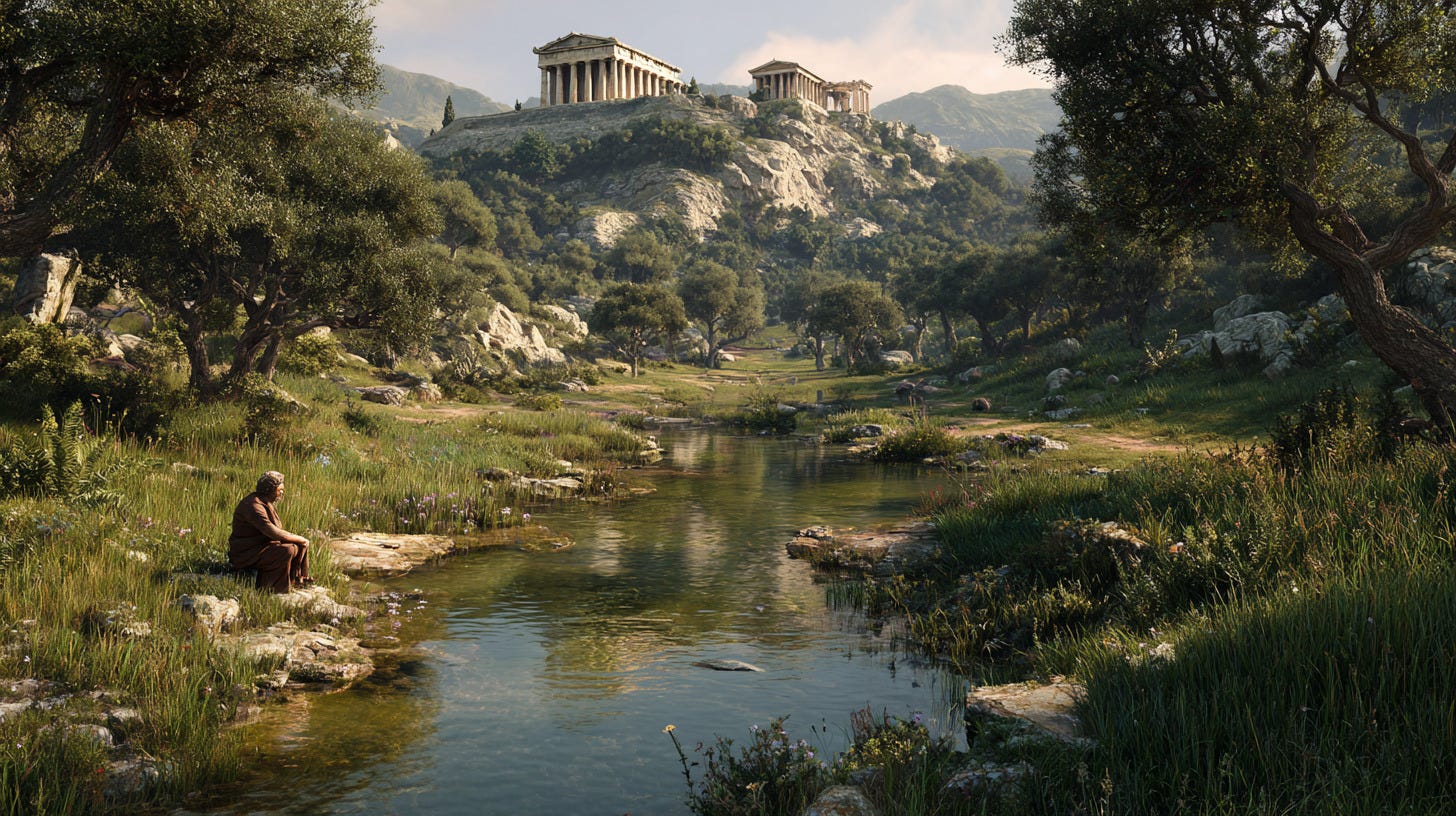
“Everything Flows” — The Dark Philosophy of Heraclitus
You cannot step twice into the same stream.
Everything flows. (Attributed to Heraclitus)
The ancient philosopher Heraclitus did not only write in riddles — he was one himself. We don’t know when he was born or died, but he probably reached fame around 500 BC, about 80 years after the “first philosopher,” Thales of Miletus. But Heraclitus was not from Miletus — he was from Ephesus, a nearby city, which he hated:
...The Ephesians ought to hang themselves, every one who is of age, and leave the city to the boys. They who threw out Hermodorus, the worthiest man of them, saying: “Let no one of us be the worthiest, but if there is one, let him go somewhere else, among
This excerpt is provided for preview purposes. Full article content is available on the original publication.