"The system sucks," or what a federal lawyer's comments really tell us about the Trump admin
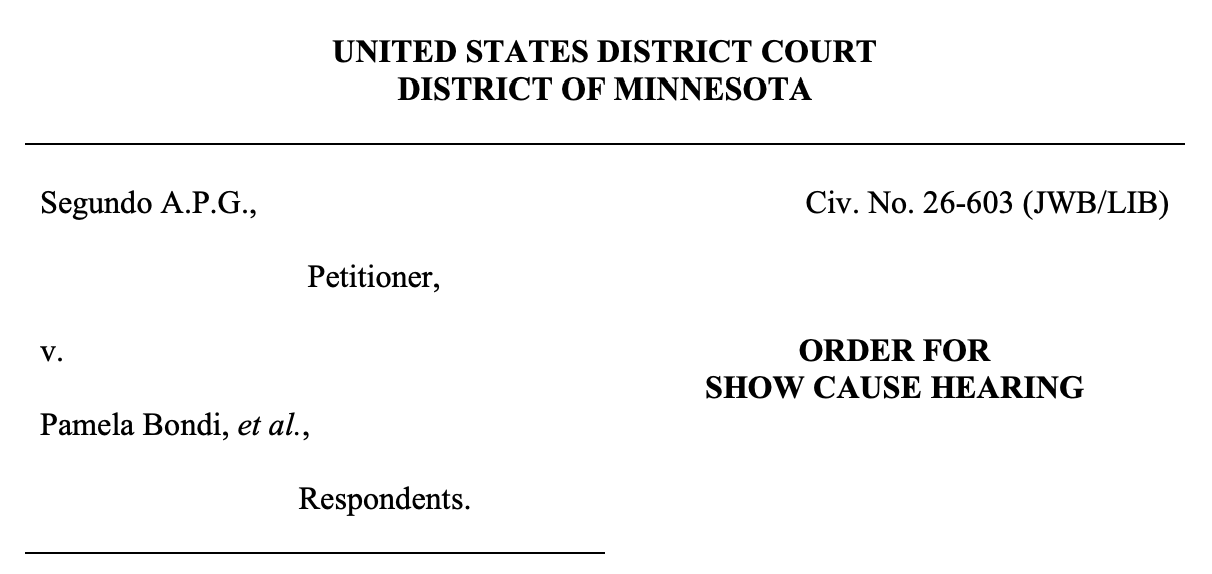
The news over the past week has included significant discussion about whether the U.S. Department of Homeland Security — specifically, U.S. Immigration and Customs Enforcement — is violating federal court orders.
The short answer is: Yes.
The longer answer is: Yes, it’s happening, though it appears to be caused by a variety of factors and is a problem of the Trump administration’s own making, but initial non-compliance does appear to — for the most part — get resolved when a judge puts their foot down.
The longer answer does suggest that the current situation is dire. It’s not at all how things should work and it is not a sustainable system, but that does — at least in areas where a lot is happening quickly — appear to be what is happening.
As was seen in court on Tuesday.
Fox News 9’s Paul Blume reported that an attorney working with the U.S. Attorney’s Office in Minnesota told U.S. District Judge Jerry Blackwell on Tuesday, “I wish you would just hold me in contempt of court so I can get 24 hours of sleep.”
Julie Le’s comments came as Blackwell, a Biden appointee, was asking about “non-compliance with orders.“ Blackwell was not the first judge in Minnesota to do so, and he almost certainly won’t be the last.
Le — representing the federal government in court — told Blackwell, “The system sucks, this job sucks, I am trying with every breath I have to get you what I need.“
To understand what this means, though, we have to take a step back before we can move forward.
DHS’s unilateral change on mandatory detention
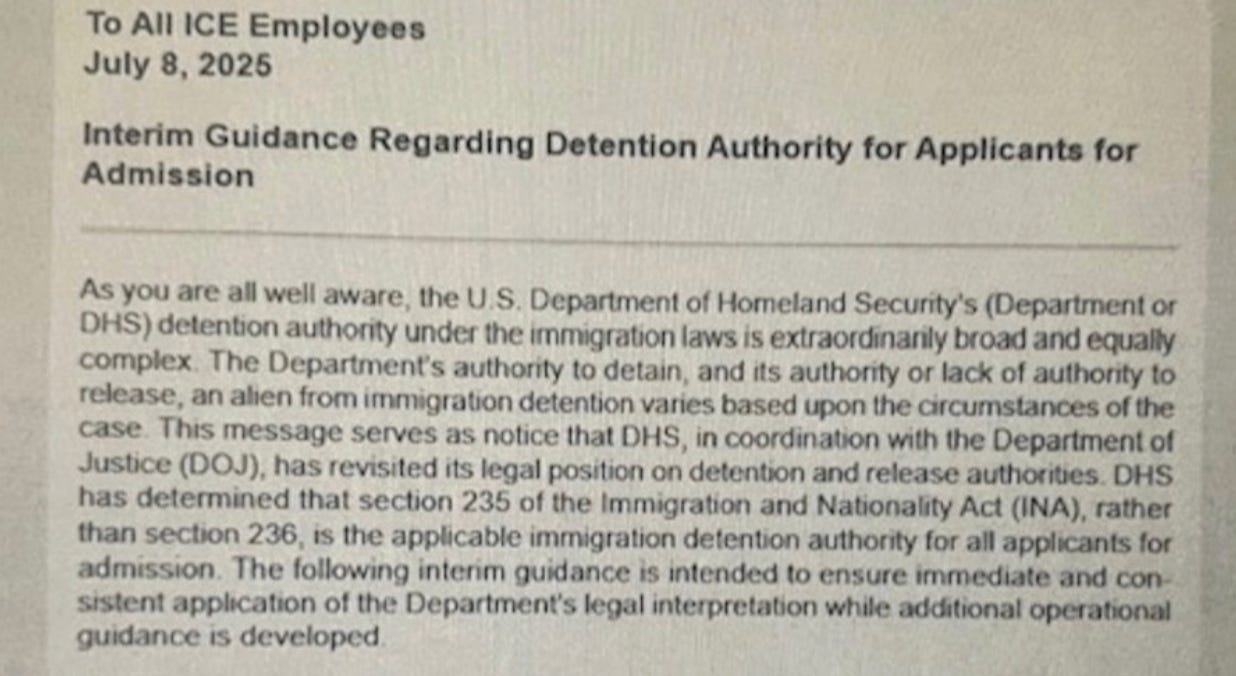
Like senior DHS officials unilaterally decided in May 2025 that ICE was going to change its interpretation of the Fourth Amendment when it comes to entering private residences when trying to arrest people for deportation, DHS and the Justice Department announced internally on July 8, 2025, that the executive branch unilaterally decided — “revisited its legal position“ — about how a key aspect of immigration enforcement works.
In short, the administration decided that anyone in the country who was never legally admitted to the country is subject to a section of law that requires mandatory detention, as opposed to a different section of law that allows release and requires bond hearings.
Here’s the problem with that: Virtually everyone thinks they’re wrong, for many reasons.
One key ruling
...This excerpt is provided for preview purposes. Full article content is available on the original publication.