The Software Engineer’s Guidebook: a recap
Deep Dives
Explore related topics with these Wikipedia articles, rewritten for enjoyable reading:
-
Vanity press
11 min read
The article discusses the author's choice between traditional publishing and self-publishing, including the economics of each. Understanding the history and evolution of vanity/self-publishing provides valuable context for why the author's approach was viable and how the publishing industry has changed.
-
ISBN
12 min read
The author specifically mentions purchasing ISBN numbers for self-publishing and notes regional differences. Understanding how ISBNs work, their history, and the global system behind book identification adds depth to understanding the self-publishing logistics described.
-
LaTeX
11 min read
The author mentions hiring a LaTeX expert for print layout and using Overleaf. Understanding LaTeX's origins in academic typesetting and why it remains the gold standard for complex document formatting explains why technical books often require this specialized knowledge.
Before we start: I’ll be in San Francisco on 11 Feb, 2026. I’m working on something special for engineers and engineering leaders. I can’t wait to share more. 11 February – save the date!

Two years ago almost to the day, I published The Software Engineer’s Guidebook. Originally, it came out in paperback, then as an ebook and an audiobook. I’m happy to share that it is now available as a hardcover, and is also on the O’Reilly platform.
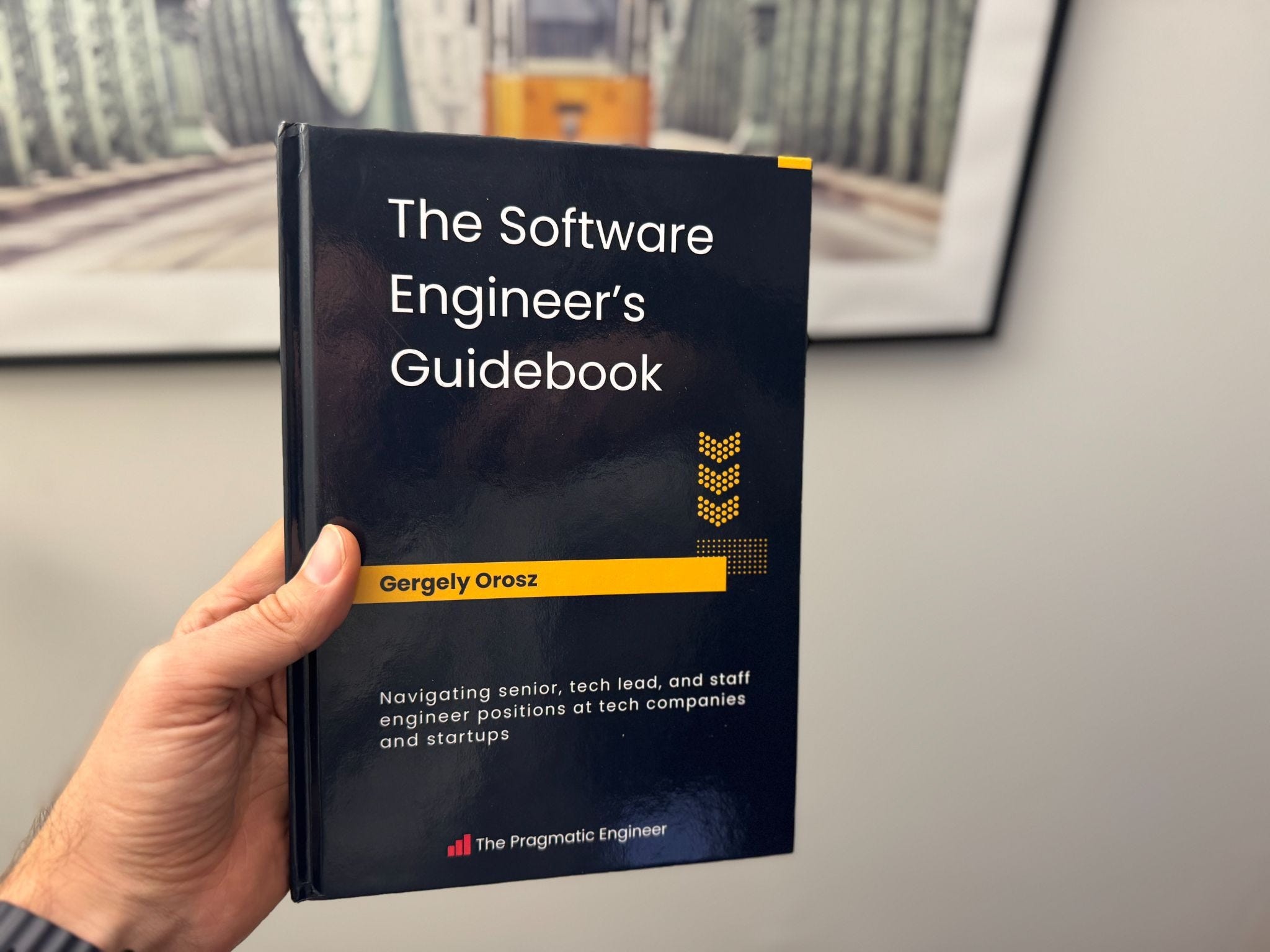
Today, I’d like to draw back the curtain on the process of writing a book as a techie:
Pitching to publishers. And why I ended up breaking up with a publisher.
Self-publishing. The tools I used for writing and the platforms I published on.
Traveling to Mongolia to meet the startup which translated the book. A 30-person startup called Nasha Tech translated the book for the benefit of their company and the Mongolian tech ecosystem.
How much did my book earn? $611,911 in two years from royalties on 40,000 copies sold, to date. We need more good books in tech, so I hope that sharing these numbers inspires other techies to write them.
Learnings from writing my book. It’s hard to judge a book’s impact, but good books stay valuable for longer – that’s why they’re hard to write.
1. Pitching to publishers
In late 2019, I was an engineering manager at Uber, the ridesharing app. For the first time in my career, I was a manager of managers: suddenly, I had “skip level” software engineers, and it was here that the inspiration came to write a book that provides some advice and observations for these tech professionals.
During a 1:1 catchup with a new joiner skip-level engineer, they asked about getting up to speed in the workplace faster. They were at the Software Engineer 2 (L4), and wanted to figure out how to get to the Senior engineer level (L5A at Uber). I thought it would’ve been nice to give them a book with a bunch of pointers about what it takes to become an effective software engineer in this environment.
With that inspiration to write a book about professional growth at large tech companies and startups, I looked for publishers who could help make it a reality. I pitched
...This excerpt is provided for preview purposes. Full article content is available on the original publication.