The Boomcession: Why Americans Hate What Looks Like an Economic Boom
Yesterday, Donald Trump nominated candidate Kevin Walsh to become Chair of the Federal Reserve. Warsh is mostly an orthodox Wall Street GOP pick, though he is married to the billionaire heiress of the Estee Lauder fortune and was named in the Epstein files. He’s perceived not as a Trump loyalist but as an avatar of capital; here’s Obama advisor and Democratic economist Jason Furman making the case for Warsh.
There’s a lot to say about the politics of the Fed, but a contact of mine in Trump-world told me the way these guys understand political success or failure is pretty simple. Are the wages of middle class Americans increasing? That’s it.
In other words, Warsh’s job is to make sure the public likes Trump’s economy. And that’s tough. In Trump’s first term, people were happy with the economy, this time they are not. In fact, if you judge solely by consumer sentiment, Trump’s first term was the third best economy Americans experienced since 1960. Trump’s second term is not only worse than his first, it is the worst economic management ever recorded by this indicator.
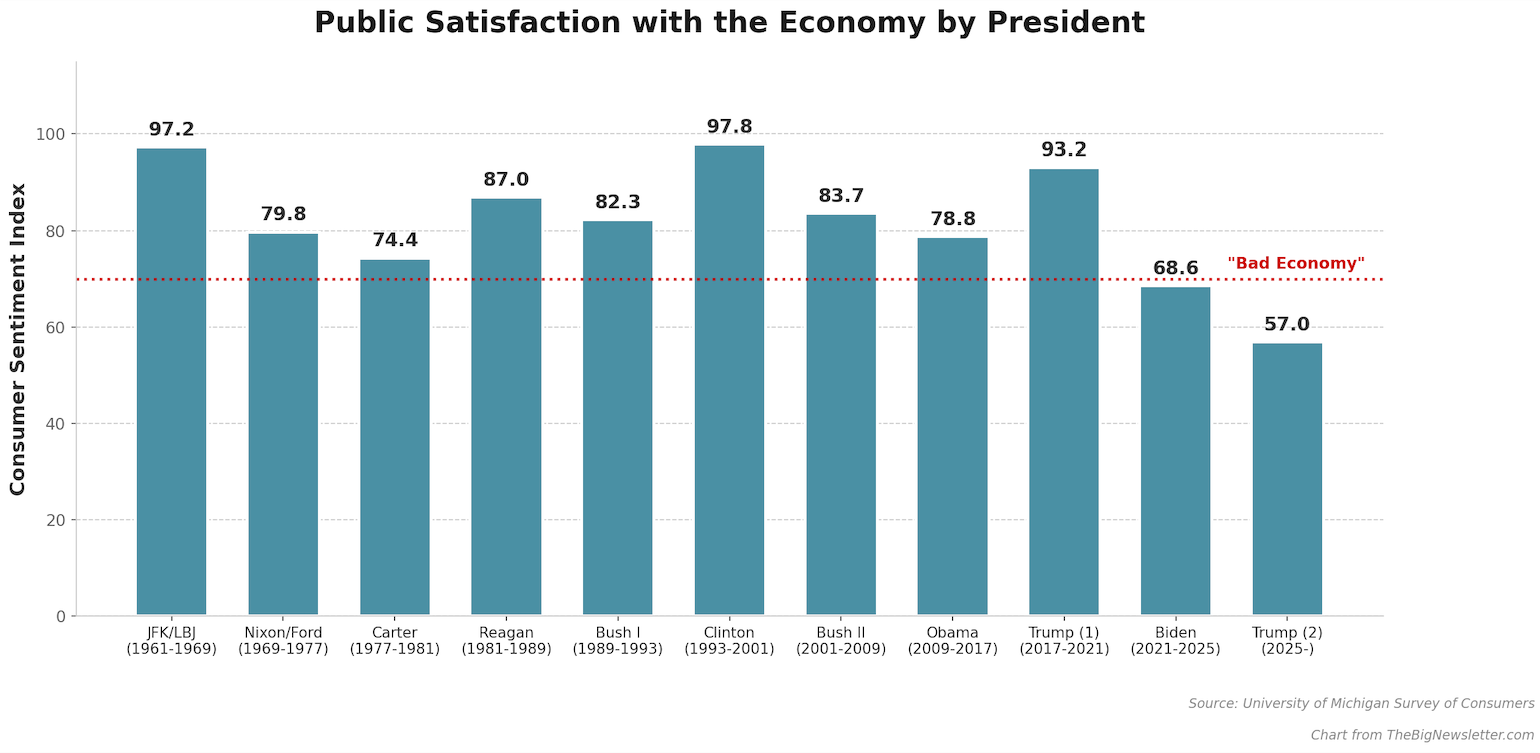
Seen in this light, it makes sense that there were the beginnings of a political realignment under Trump. Americans were genuinely getting rich in ways they hadn’t experienced in decades, and they did experience a horror show under Joe Biden. It also explains why Trump is so unpopular today, with Americans complaining about the economy in a way they didn’t in his first term.
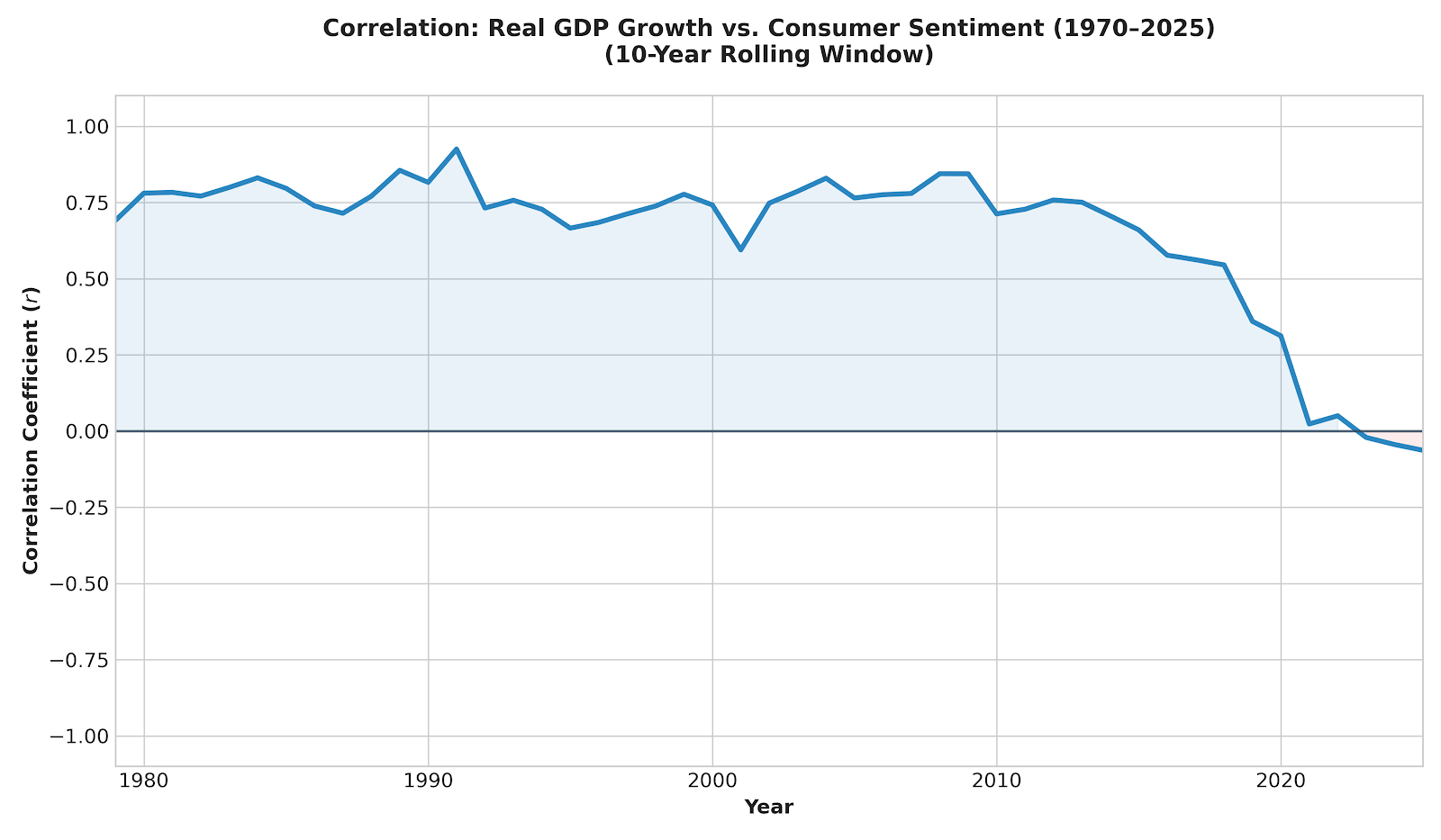
This observation isn’t a commentary about Biden or Trump, but about a structural change in the economy. You can see how people think about economic growth itself has shifted. Here’s the relationship between growth and consumer sentiment. They used to rise in parallel, higher growth meant more consumer confidence, but they started breaking down in the mid-2010s, and fell apart completely post-Covid.
If you look not at whether sentiment is correlated with growth, but at absolute levels, the situation is even more clear. Growth has been pretty good from 2021-2025, but the public is really mad.
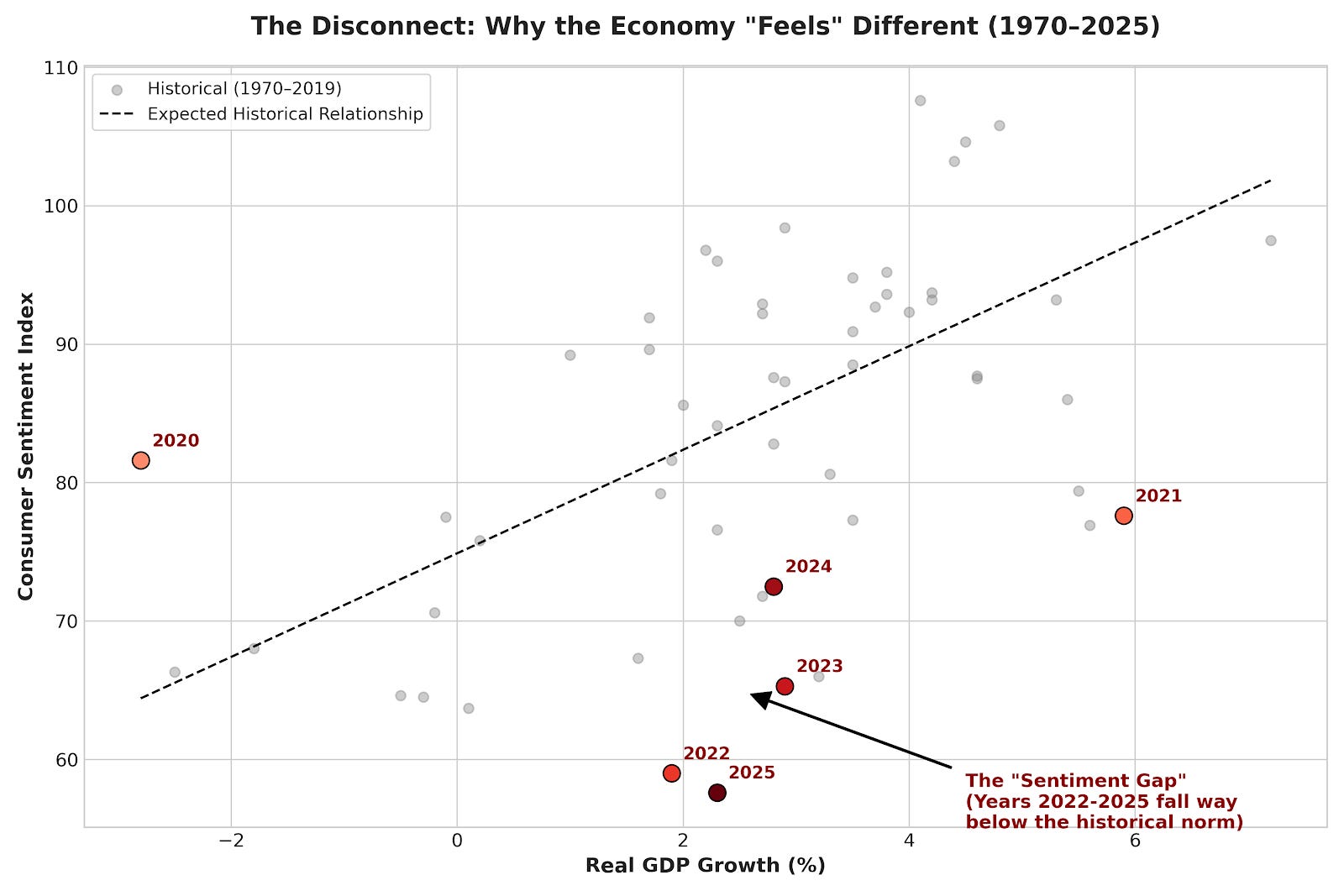
What’s odd is that wages are increasing today about the same as they were in Trump’s first term. In 2018, when the University of Michigan consumer sentiment indicator was at a buoyant 98.4, real average hourly wages were up annually by 1.1%. In 2025, when the sentiment indicator was at 57.6, the lowest ever recorded,
...This excerpt is provided for preview purposes. Full article content is available on the original publication.