At Colombia-Venezuela border, vulnerable brace for Trump war
Deep Dives
Explore related topics with these Wikipedia articles, rewritten for enjoyable reading:
-
Venezuelan refugee crisis
9 min read
The article centers on Venezuelan migrants fleeing to Colombia - understanding the full scale, timeline, and regional impact of this crisis (the largest displacement in Latin American history) provides essential context for the humanitarian situation described
-
Cúcuta
12 min read
The article is set in this Colombian border city but doesn't explain its unique history as a crossing point, its role in Colombian-Venezuelan relations, or why it has become ground zero for the migration crisis
-
Cuban Missile Crisis
14 min read
The article references the current U.S. military deployment as the largest in the Caribbean since this 1962 crisis - understanding that historical precedent helps readers grasp the severity of current tensions

Featured Subscriber’s Comment:
“I have been a reader from the beginning, but now that I have a few bucks to spare, yours is the first publication I am subscribing to. Keep up the necessary work!”
By: Michael
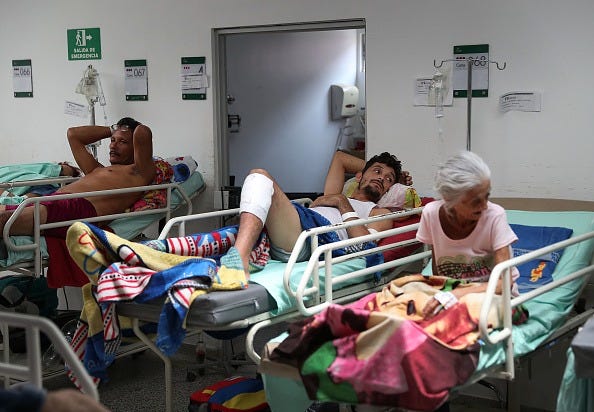
CÚCUTA, Colombia – The emergency room of Hospital Erasmo Meoz, just miles from the Colombia-Venezuela border, heaves with patients.
Stretchers squeeze through narrow gaps. Dozens of Venezuelan migrants pack the hallways, sitting shoulder-to-shoulder on the floors. IV tubing crosses the room, and bandaged feet rest on wheelchair steps, while fans push the humid air — failing to clear the smell of sweat and desperation.
Patients, many Venezuelan migrants, crowd the emergency room of Erasmo Meoz Hospital in Cúcuta, Colombia on Nov. 16. (Video by Abby Pender)
By law, the hospital must treat every patient regardless of immigration status. Most are fleeing hunger, political repression and economic collapse in Venezuela, a crisis that has deepened as President Nicolás Maduro has cemented his authoritarian rule.
Tensions between President Donald Trump and Maduro have escalated sharply in recent months, and the United States has deployed its largest military presence in the Caribbean since the Cuban Missile Crisis. Local officials and migrants fear that any escalation could trigger a humanitarian emergency on a region already stretched to the limit.
Trump claims the military initiative is combating narcotrafficking. Since the operation began in September, at least 76 people have died in extrajudicial killings in South American waters, The Guardian reports. The Trump administration has provided no evidence linking the victims to drug trafficking, and in at least one case the Colombian government claims an innocent fisherman was killed in a boat strike.
Maduro, insisting the U.S. seeks regime change, has countered by swearing in six million civilian militia members.
“I sort of have made up my mind,” Trump said this past weekend, on his Venezuela strategy – without outlining what he plans.
There is a sort of jaded acceptance among those in Cúcuta, which has been no stranger to humanitarian tragedies and violent conflict. For them, Trump’s potential strikes have added a new dimension of danger, but they are long accustomed to a jungle of intertwining risks and
...This excerpt is provided for preview purposes. Full article content is available on the original publication.