Housing is at the heart of America's economic problems
Deep Dives
Explore related topics with these Wikipedia articles, rewritten for enjoyable reading:
-
Exclusionary zoning
10 min read
The article discusses how 'extremely strict zoning laws and restrictions on building more housing' benefit existing homeowners at the expense of younger generations. Understanding the history and mechanics of exclusionary zoning in America provides crucial context for why housing has become so expensive in economically productive areas.
-
Intergenerational equity
14 min read
Thiel's concept of a 'generational compact' that's failing to pass prosperity from old to young is central to the article. This Wikipedia topic explores the ethical and economic frameworks for understanding obligations between generations, which directly informs the debate about housing policy and wealth transfer.
-
Peter Thiel
16 min read
The article frames its argument around Thiel's critique of capitalism and real estate. Understanding his background as a libertarian tech billionaire and PayPal co-founder adds important context for why his housing critique is notable and somewhat unexpected given his political positioning.
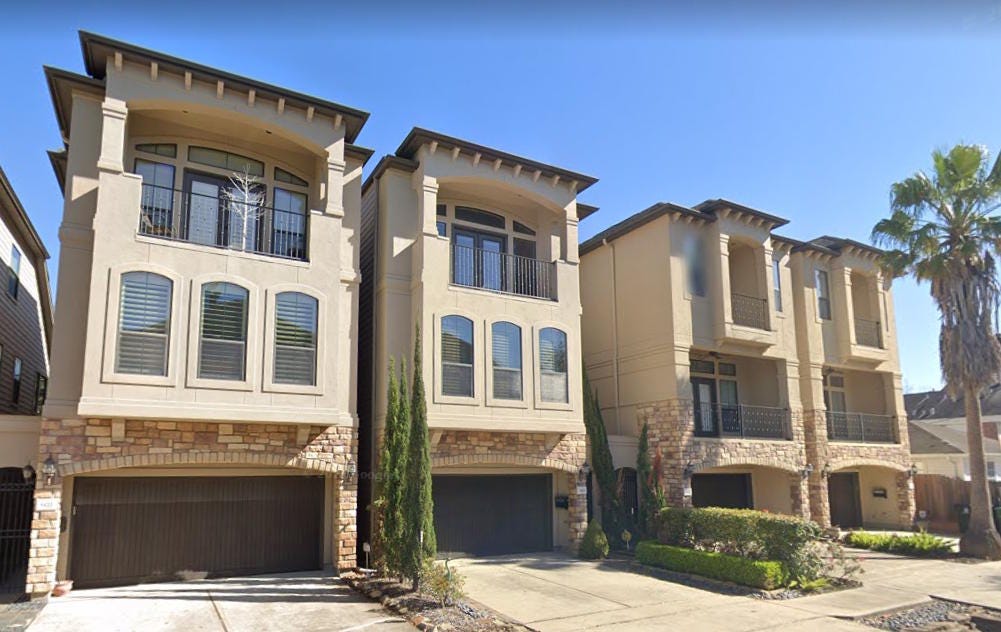
“Can I get my punk ass off the street?/ Won’t die on the vine/ Wanna knock it all down” — Third Eye Blind
Peter Thiel doesn’t seem like the most likely person to offer a trenchant critique of capitalism. But in a letter in 2020, and in a recent interview with The Free Press, that’s exactly what he did. Thiel identifies real estate as the weak link in a “generational compact” that’s failing to pass down prosperity from the old to the young:
The rupture of the generational compact isn’t limited to student debt…I think you can reduce 80 percent of culture wars to questions of economics—like a libertarian or a Marxist would—and then you can reduce maybe 80 percent of economic questions to questions of real estate.
It’s extremely difficult these days for young people to become homeowners. If you have extremely strict zoning laws and restrictions on building more housing, it’s good for the boomers, whose properties keep going up in value, and terrible for the millennials. If you proletarianize the young people, you shouldn’t be surprised if they eventually become communist…
Younger generations are told that if they do the same things as the boomers did, things will work out well for them. But society has changed very drastically, and it doesn’t work in quite the same way. Housing is way more expensive. It’s much harder to get a house in a place like New York or Silicon Valley, or anywhere the economy is actually doing well and there are a lot of decent jobs.
Now, for what it’s worth, I disagree pretty strongly about the claim that “you can reduce 80 percent of culture wars to questions of economics”. There’s pretty strong evidence that many sociocultural issues — and many of the divisions in American society over the last decade — revolve around either conflicts of values or perceived conflicts between identity groups.
The economics of immigration, for example, change little over time, but sometimes many Americans see immigrants as a threat, while at other times they take a welcoming attitude. Across countries, too, attitudes toward immigration differ radically; it’s hard to imagine that these differences are all dollars and cents. Race relations abruptly crashed around 2013-14, even though the economy was doing OK by then.
There’s also evidence that media technologies can
...This excerpt is provided for preview purposes. Full article content is available on the original publication.