America's chip export controls are working
Deep Dives
Explore related topics with these Wikipedia articles, rewritten for enjoyable reading:
-
Galápagos syndrome
13 min read
Linked in the article (13 min read)
-
Export control
14 min read
The article centers on semiconductor export controls as a strategic tool, but most readers likely don't understand the legal frameworks, international regimes (like Wassenaar Arrangement), and historical precedents for how nations restrict technology transfers for national security
-
Semiconductor fabrication plant
11 min read
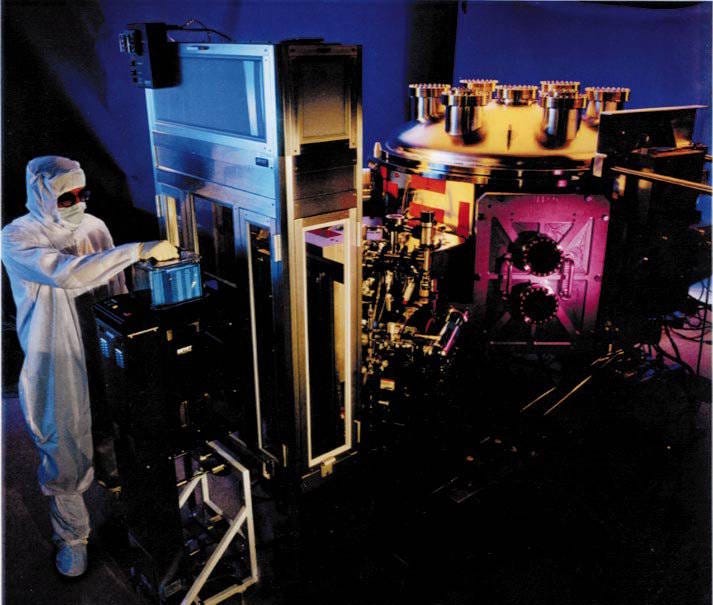
The article discusses chip manufacturing bottlenecks and why China cannot match US production capabilities. Understanding the extreme complexity, cost, and technical requirements of fabs explains why export controls on chipmaking equipment are so effective

“The capitalists will sell us the rope with which we will hang them.”
In December of 2024, before Trump took office, I wrote about the disturbing possibility that the man once known as a consummate China hawk would sell America out to its great rival. I wrote that the key tell would be whether Trump dropped the export controls on chips and chipmaking equipment implemented during Biden’s presidency:
[T]here’s one big important thing Trump could do to sabotage America’s effort to stand up to Chinese power. He could cancel the export controls that the Biden administration placed on the Chinese semiconductor industry. Removing export controls wouldn’t require legislative action — Trump could just do it whenever he wanted. And because the policy is not really in the limelight, there probably wouldn’t be a popular backlash to its cancellation. So export controls are pretty much a pure test of Trump’s China policy — if he keeps them, it’s because he wants to stand up to China, and if he cancels them, it means he doesn’t…
[E]xport controls are doing what they’re designed to do. They’re not killing China’s chip industry, but they’re slowing it down in important ways, and letting the U.S. retain its technological edge…These export controls [are] absolutely crucial if the U.S. is going to maintain any kind of a military-technological edge over China. Chips are the foundation of all modern weaponry, from missiles to drones to satellites to advanced fighter jets. And AI itself, which depends on advanced chips for training and inference, is rapidly becoming an essential weapon of war. When autonomous drone swarms hit the battlefield, AI will become even more crucial to the military balance.
The U.S. probably cannot out-manufacture China, even with all the tariffs and industrial policies in the world. America needs to retain a technological edge to balance out its productive weakness — an advantage in quality to balance out its deficiency in quantity. Semiconductors are that edge. If Trump cancels the export controls, it will mean he’s destroying America’s best chance to keep its weapons ahead of China’s weapons.
In mid-2025 there was a rumor that Trump was going to allow sales of an Nvidia chip called the h20 to China. Ultimately the administration backed off amid a torrent of criticism from hawkish elites. But in December, Trump announced that he
...This excerpt is provided for preview purposes. Full article content is available on the original publication.