Ma Ying-jeou remembers historic meeting with Xi Jinping a decade ago
Deep Dives
Explore related topics with these Wikipedia articles, rewritten for enjoyable reading:
-
1992 Consensus
13 min read
The article repeatedly references the '1992 Consensus' as the political foundation for cross-strait relations and institutionalized exchanges. Understanding this diplomatic framework—its origins, interpretations by both sides, and controversies—is essential for grasping why Ma considers it so important and why the DPP's rejection of it represents such a significant shift.
-
Taiwan independence movement
13 min read
The article frames the political divide between Ma's KMT and the DPP largely around the question of Taiwan independence versus engagement with China. Understanding the historical development, key figures, and various positions within the independence movement provides crucial context for why Lai's 'new two-state theory' is so controversial.
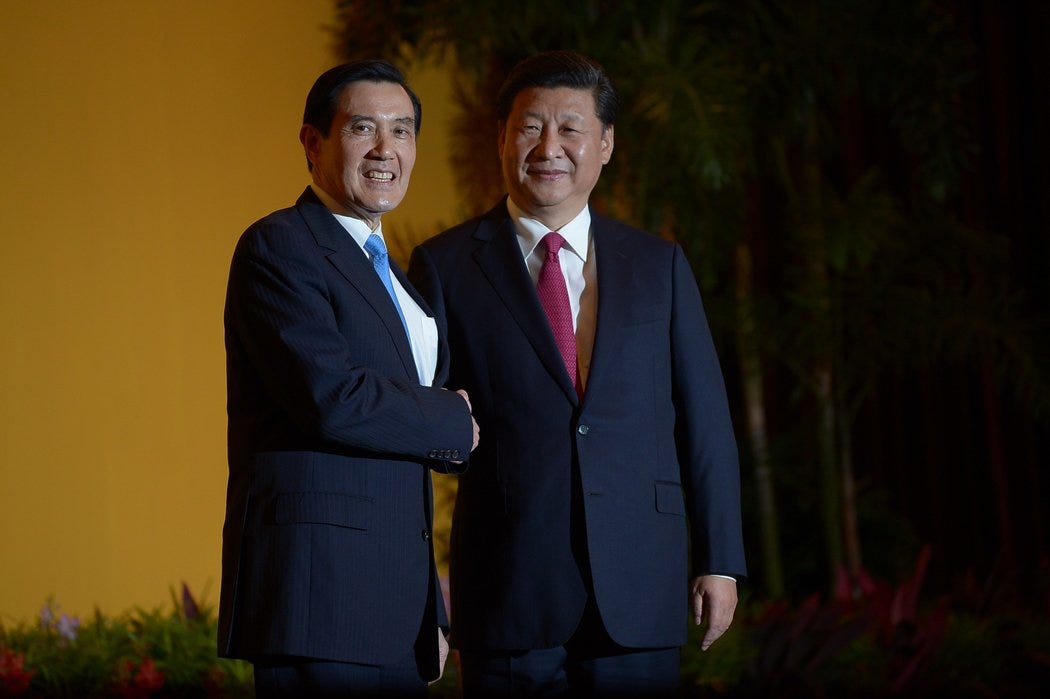
On November 7, 2015—exactly ten years ago today—Ma Ying-jeou, then Taiwan’s leader and head of the Kuomintang (now in opposition), met in Singapore and shook hands with Xi Jinping, General Secretary of the Communist Party of China
In his Chinese-language account on Meta, Ma wrote today
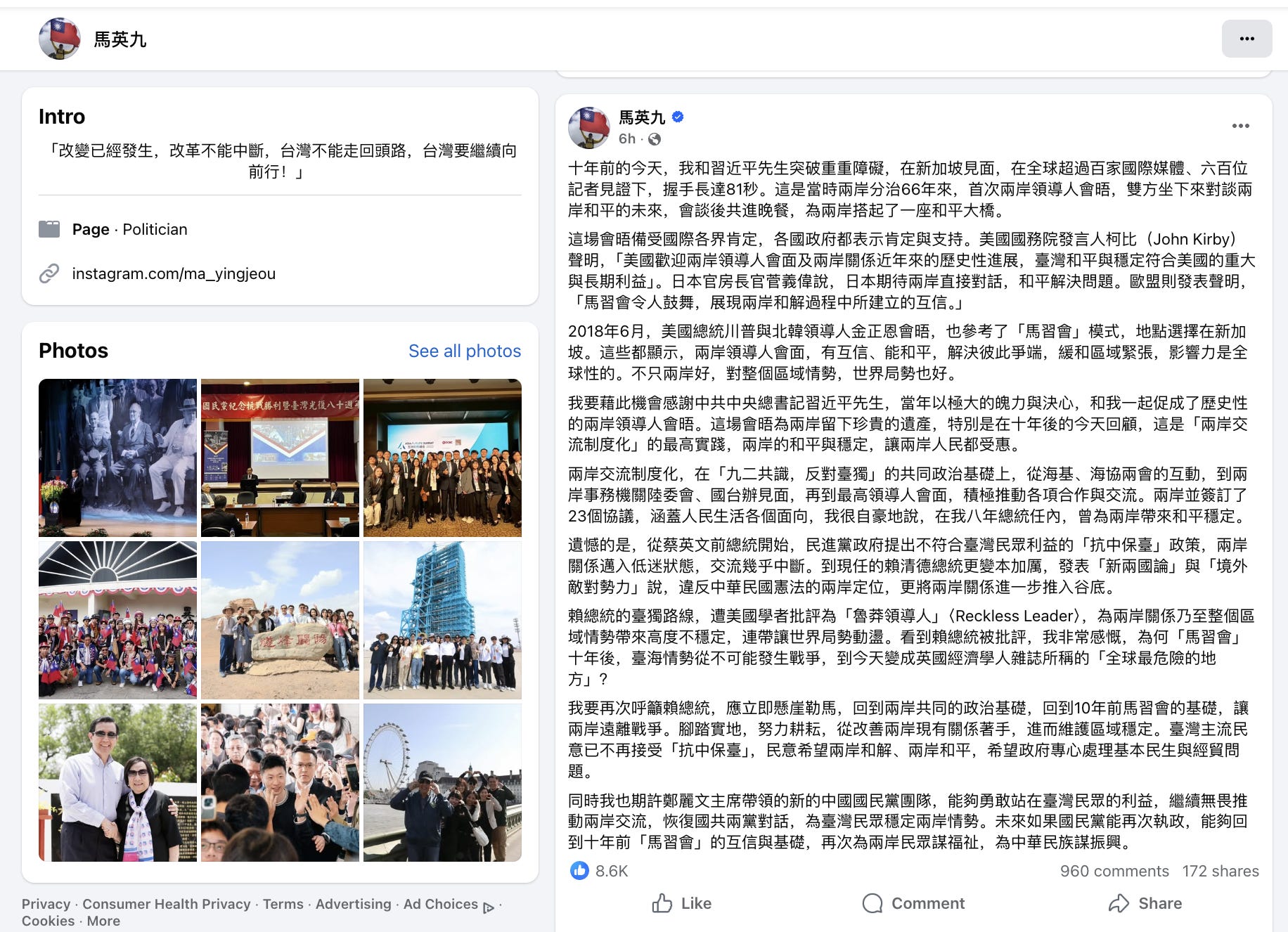
Ten years ago today, Mr. Xi Jinping and I overcame numerous obstacles to meet in Singapore. In front of more than one hundred international media outlets and six hundred journalists worldwide, we shook hands for 81 seconds. It was the first meeting between leaders of the two sides across the Taiwan Strait in the 66 years since the division of governance. We sat down to discuss the future of cross-Strait peace, and after the talks we shared a dinner, building a bridge of peace across the Strait.
The meeting was met with strong recognition from the international community. Governments around the world expressed approval and support. U.S. Department of State spokesperson John Kirby said, “The US welcomes the meeting between leaders on both sides of the Taiwan Strait and the historic improvement in cross-Strait relations in recent years. The US has a deep and abiding interest in peace and stability in the Taiwan Strait.” Japan’s Chief Cabinet Secretary Yoshihide Suga said “Japan hopes that the issues concerning Taiwan are solved peacefully through direct dialogue between the parties.” The European Union issued a statement saying the Ma-Xi meeting “is an encouraging step, demonstrating the level of trust that has been built through the ongoing process of rapprochement.”
In June 2018, the summit between U.S. President Donald Trump and North Korean leader Kim Jong-un drew on the “Ma-Xi meeting” model, including choosing Singapore as the venue. All of this shows that when leaders on both sides of the Strait meet with mutual trust and a willingness for peace, disputes can be resolved, tensions in the region can be eased, and the impact is global. It benefits not only both sides, but also the regional and even world situation.
I want to take this opportunity to thank Mr. Xi Jinping, General Secretary of the Communist Party of China (CPC) Central Committee, who, with great determination and resolve, worked with me to realize this historic meeting between cross-Strait leaders. The meeting left a precious legacy for both sides. Especially looking back ten years
...This excerpt is provided for preview purposes. Full article content is available on the original publication.