Taking Stock
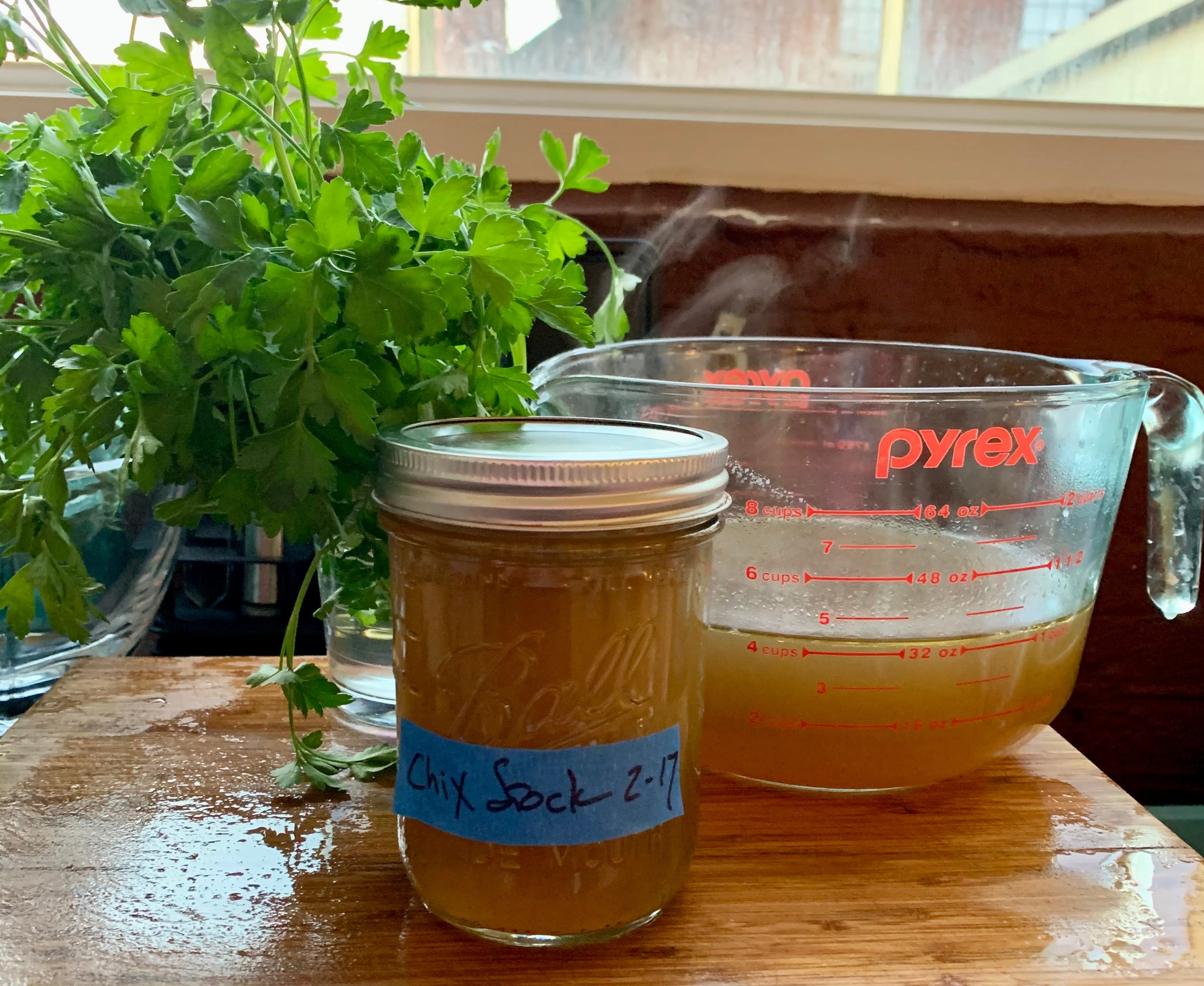
I’ve long lamented the fact that most people think that making stock is an elaborate project. I suppose it can be—if you set out to make a gallon of brown veal stock (maybe one of the great miracles of the kitchen). But not for four cups of chicken stock from the carcass of roasted (or rotisserie) chicken.
As we dig out from under two feet of snow, I thought I’d put stock-making on the agenda, especially as a friend we were traveling with recently didn’t know of my genius, yes genius, method for easy overnight stock. The Promiscuous Reader will back me up on this one.
If you’re a longtime reader of my work, you’re well aware of the method, but for those who aren’t, those who don’t know how easy great chicken stock is, what better season to give it a whirl?
Here’s the easiest way to do it …
Tear the chicken parts apart at the joints so they fit compactly in the pot. Include any meat you’re not planning to eat. (The more meat, the more flavor.) Quarter an onion (no need to peel it unless it’s dirty; I usually take the root off and the sticker) and add it to the pot with a carrot or two and a bay leaf. Cover it with water. Put it uncovered in a 200˚F oven before you go to bed. Wake to the smell of glorious chicken stock. Strain. (If you’re nervous about leaving the oven on while you sleep, do it the next morning!)
Here’s the way I do it …
It adds an extra step, but I think it’s worth it. I cover just the bones with water and put the pot in the oven. The next day I discard the bones, add the carrot, onion, and bay leaf and simmer gently for 45-60 mins.
Here’s the way Ann does it …
Ann adds a leek to hers. She’s right. It makes a difference. If you remember to pick up a leek.
Stock tips …
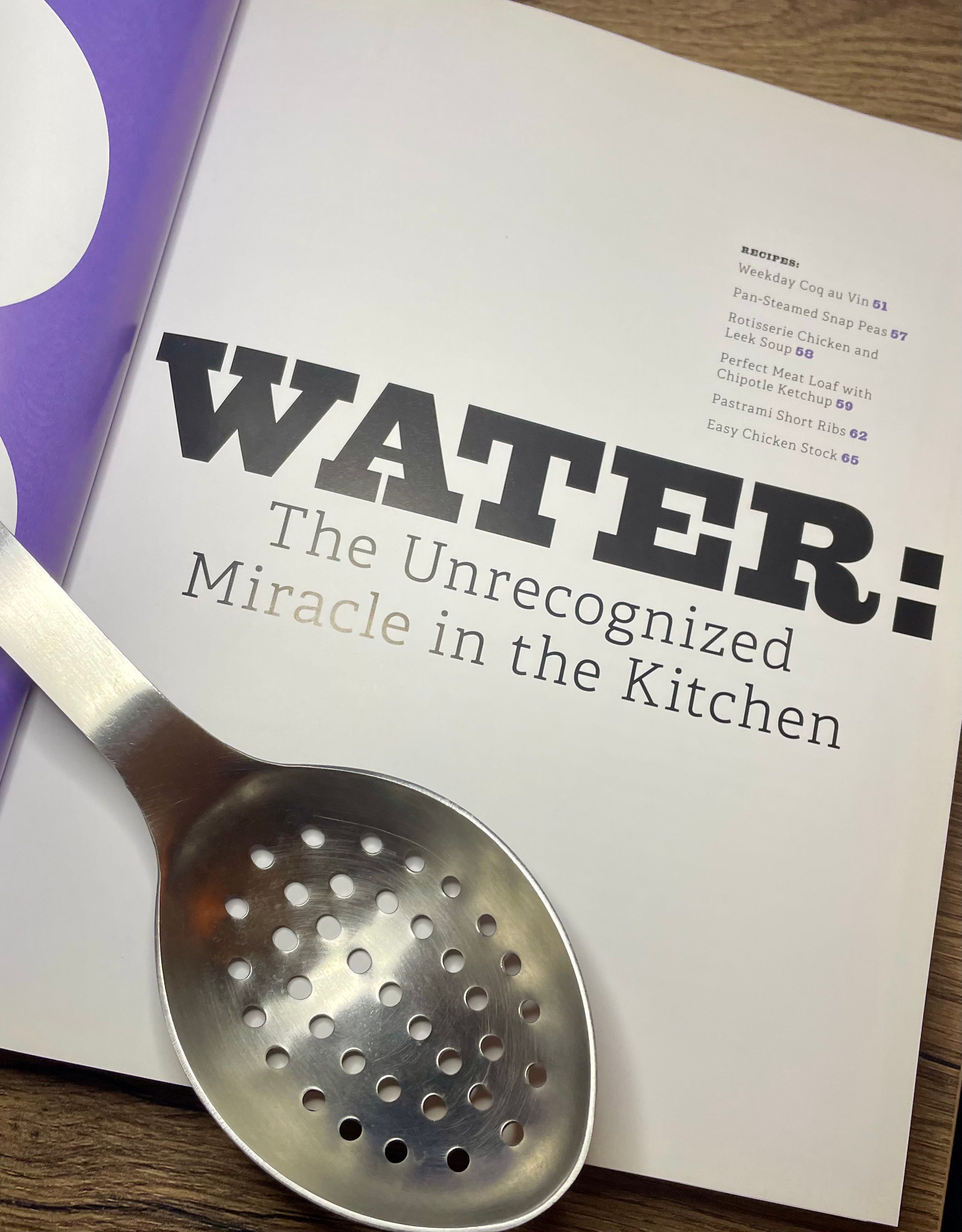
As I wrote in my James-Beard-Award-Winning, now-out-of-print book, Ruhlman’s Twenty, water is one of the most overlooked powerhouse ingredients in the kitchen. We use it in five different ways: We cook food in it (eggs, pasta, beans), we use it to mediate heat in the form of a water bath (custards), we use it to stop the cooking (ice bath), we
...This excerpt is provided for preview purposes. Full article content is available on the original publication.