The Exilic Style
Deep Dives
Explore related topics with these Wikipedia articles, rewritten for enjoyable reading:
-
Norman Conquest
20 min read
The article devotes substantial analysis to how the Norman Invasion created lasting linguistic class divisions in English—Germanic words for labor, Latinate/French for refined consumption. This historical event is central to understanding Meng's deliberate wordplay with 'pail' and her subversion of these distinctions.
-
Andrei Platonov
15 min read
Platonov's Foundation Pit is positioned as a direct literary ancestor to Meng's novel—both depicting brutal totalitarian regimes. Understanding Platonov's own troubled relationship with Soviet censorship and his unique prose style provides essential context for appreciating the lineage of exilic Soviet/Chinese dissident literature.
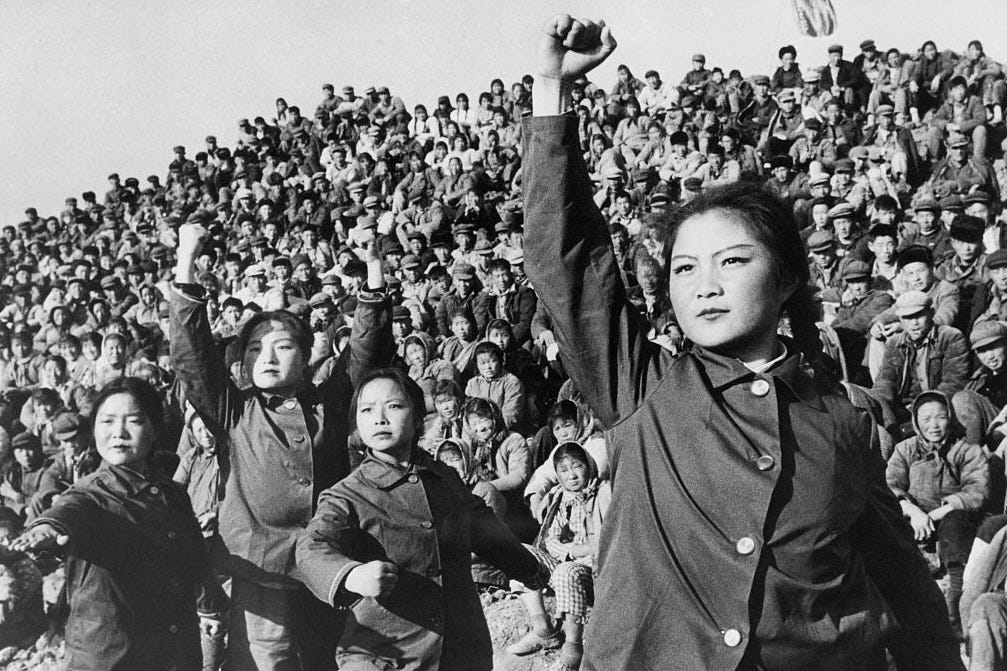
Ruyan Meng’s second novel, The Morgue Keeper, follows the exhausted, ultraresilient Qing Yuan, a morgue attendant in Mao’s China who runs afoul of the vengeful state while investigating the mysterious death of an unidentified woman known only as “number 19.” The book is harrowing in the strict etymological sense, not in the cloudy uprooted sense with which the word is often deployed: it left me feeling like I’d been scraped over by a plough’s tines. Cut into, yes, and a bit sore, yes, but also more open, more fertile of mind. Last thing I read that left me so earnestly non-metaphorically nauseous (and happy for it) was Andrei Platonov’s Foundation Pit (in Robert Chandler, Elizabeth Chandler, and Olga Meerson’s fabulous 2009 translation for New York Review Books).
But my stomach is not the two novels’ only overlap.
The Stalinist brutality whose foundations Platonov digs out is, in Meng’s own conception, not just the precursor but the mentor of the regime that mobs her morgue keeper. Meng wrote, in an essay on Maoist “worker villages” for Red Hen Press’ Medium site, that
the Soviet Union was considered the “beacon of Communism” and the “big brother” of the Chinese. The regime would often send high officials on trips to Moscow to learn from the Soviets. The Communist party termed such a trip “qujing” (取经 “in search of enlightenment”—a phrase from the Ming Dynasty novel Journey to the West).
But Platonov’s novel was itself an exile, like so many other classics of Soviet dystopian fiction (Yevgeny Zamyatin’s We, Andrei Sinyavsky’s Pkhentz, and so on and on), in the sense that it was first published abroad and in translation as tamizdat (literally “published over there”). Meng’s Morgue Keeper, however, is a work of exile.
Having lived, like her novel’s protagonist, in a Maoist worker village through the ’60s and ’70s, Ruyan Meng fled to the U.S. after the Tiananmen Square Massacre in ’89. She set up shop(s) as a business founder then real estate investor in Dallas — Mao is not just turning, but doing wacky somersaults in his grave. She published her first novel, Only the Cat Knows (Red Hen Press, 2022), in non-translated English.
And the exilic nature of her English — the studious obsessiveness, the aggressive curiosity required of one who would write in a language
...This excerpt is provided for preview purposes. Full article content is available on the original publication.