SeedTable #46: Free speech and unintended consequences
. SEEDTABLE
October 11th | #46
This week in Europe: Free speech and unintended consequences
Robert Moses was an American public official who spent over 50 years shaping New York City as we know it.
Other than the amassing power, one of his main goals was alleviating traffic on an extremely congested, post-war New York City. And to do that, he put his power to build an impressive network of highways, connecting all five boroughs, at a ridiculously fast pace.
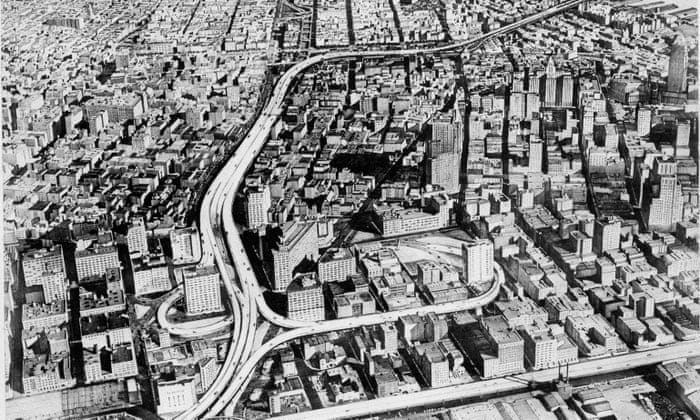
Maintain such a pace, Robert Moses had no option but to concentrate the majority of federal and state funds available to New York City.
Up until this point, it’s all good. But the problem is that these highways were often built parallel to mass transit lines. This lured passengers away from these mass transit lines that, due to lack of funding (remember Moses had it all), were already falling apart.
Pouring money over and over again to highway but to public transport meant that it could only be one outcome, reinforced by a negative loop: lines lost more and more passengers, those losses made it more difficult for their owners to sustain service and maintenance, service and maintenance declined, the decline cost the lines more passenger, and the loss in passengers would further accelerate the demise
In the end, the passenger would have to do their traveling instead by car, further increasing (instead of relieving) highway congestion.
Whether by design or out of ignorance of the effect of his policies, Robert Moses ended up making the problem he wanted to solve, significantly worse. And the kick to it all? Robert Moses never drove a car in his life.
That, my friend, is the story of second-order consequences. Every change you make to a system will have unforeseen effects, which may affect the system's functionality.
We’ll come back to it in a second but for now, bare with me.
Eva Glawischnig v. Facebook
In 2017, Eva Glawischnig, chair of Austria’s Green party and former member of the Nationalrat , filed suit against Facebook after the company refused to take down posts she claimed were defamatory against her.
That same year, an Austrian court ruled Facebook should take the said posts down and do so worldwide.
However Glawischnig, not content with the result, also wanted it to remove similar posts, not just identical copies of the illegal speech, which she argued were
This excerpt is provided for preview purposes. Full article content is available on the original publication.