This Week In Climate News
How Decades of Racist Housing Policy Left Neighborhoods Sweltering
In the previous newsletter, we talked about the idea of shade inequality, where low-income communities have more paved areas and fewer green spaces, while high-income communities have the opposite. The consequence is a significant difference in temperature, resulting in the creation of urban heat islands.
This week in NYT, Brad Plumer and Nadja Popovich have a scrolling graphic article on how neighborhoods in Richmond, Virginia that were redlined in the 1930s because the majority of residents were Black are now “some of the hottest parts of town in the summer, with few trees and an abundance of heat-trapping pavement.” Meanwhile, “White neighborhoods that weren’t redlined tend to be much cooler today — a pattern that repeats nationwide.” This is an example of how decades of systemic racism is causing the climate crisis to disproportionately impact Black Americans.
Plumer and Popovich’s work is consistently excellent, so I highly recommend checking it out. Some highlights:
Across more than 100 cities, a recent study found, formerly redlined neighborhoods are today 5 degrees [F] hotter in summer, on average, than areas once favored for housing loans, with some cities seeing differences as large as 12 degrees [F]. Redlined neighborhoods, which remain lower-income and more likely to have Black or Hispanic residents, consistently have far fewer trees and parks that help cool the air. They also have more paved surfaces, such as asphalt lots or nearby highways, that absorb and radiate heat.
Even small differences in heat can be dangerous, scientists have found. During a heat wave, every one degree [F] increase in temperature can increase the risk of dying by 2.5 percent. Higher temperatures can strain the heart and make breathing more difficult, increasing hospitalization rates for cardiac arrest and respiratory diseases like asthma. Richmond’s four hottest ZIP codes all have the city’s highest rates of heat-related emergency-room visits.
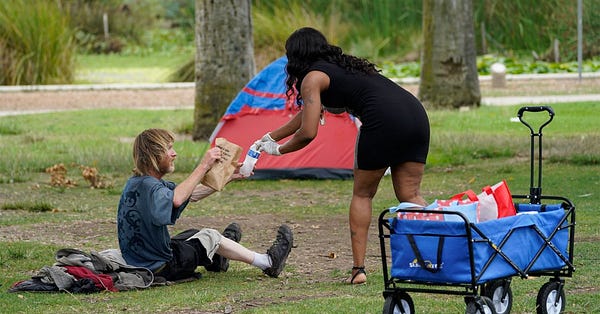
The Impact of Heatwaves on LA’s Homeless Community

By Alexandria Herr in Grist:
Heat
...
This excerpt is provided for preview purposes. Full article content is available on the original publication.