Commedia
Deep Dives
Explore related topics with these Wikipedia articles, rewritten for enjoyable reading:
-
Commedia dell'arte
14 min read
The main subject of the article - Wikipedia provides comprehensive historical context, the full roster of stock characters, and the theatrical traditions that shaped this art form across centuries
-
Atellan Farce
13 min read
The ancient Roman theatrical tradition that preceded and influenced commedia dell'arte - the article mentions 'old raunchy Roman pantomime tradition' as a loose origin, and Atellan farce featured similar stock characters and improvisation
-
Punch and Judy
17 min read
The article specifically mentions Punchinello's survival in English puppet form - this Wikipedia article traces the fascinating journey from Italian commedia stock character to British puppet show tradition
So much interesting history surrounding clowning arts, readers. There’s a lot. And if you think you hate all of it, methinks you’ll change your mind after learning about today’s Clown Flavor of the Week. Because, I’ll bet you actually enjoy this type of clowning on a regular basis, even if you don’t know it yet. What am I talking about? Buckle up, buttercups, and travel with me all the way down to 17th century Italy…
Commedia dell’arte
This theatrical art form was wildly popular across Europe in the time periods basically from around 1600 through the 1700s (though, as you’ll see, it kind of never stopped). It sort of originated in Italy, loosely based in the old raunchy Roman pantomime tradition, but it evolved and spread and blossomed into a total Western theatre phenomenon, that I argue we’re all still actively practicing today, particularly since 2000 and the advent of Reality TV as a popular genre. But I’ll get into that later. Suffice to say that commedia dell’arte was a type of comedic theatre, was a thing, and was an explosion of popular culture. There’s a whole thing about it really having a clandestine boom during Cromwell’s crackdown on all things theatre, and its bursting out of that again after, but ehhhh just go read a history book about that. But. Point is. It was big. Big.
There are a few things that distinguish commedia dell’arte (from now on I’m just gonna call it commedia, without the italics, ‘K?) from other forms of comedic theatre. First, these plays weren’t plays at all—the shows were all improvised, non-scripted, and unplanned. Second, commedia stories included slapstick* clown conflicts, funny farcical situations, and physical comedy that was extreme to the point of actual acrobatics. Most characters wore half or full masks, and their outfits were exaggerated, colorful, and stylized specifically to each character. Storylines would usually revolve around the wacky shenanigans surrounding two young lovers who are trying to get together but are thwarted by stingy dads, cowardly rivals, scheming servants, dumbass messengers, and the like. Which brings me to the next distinguishing characteristic of commedia:
Stock Characters
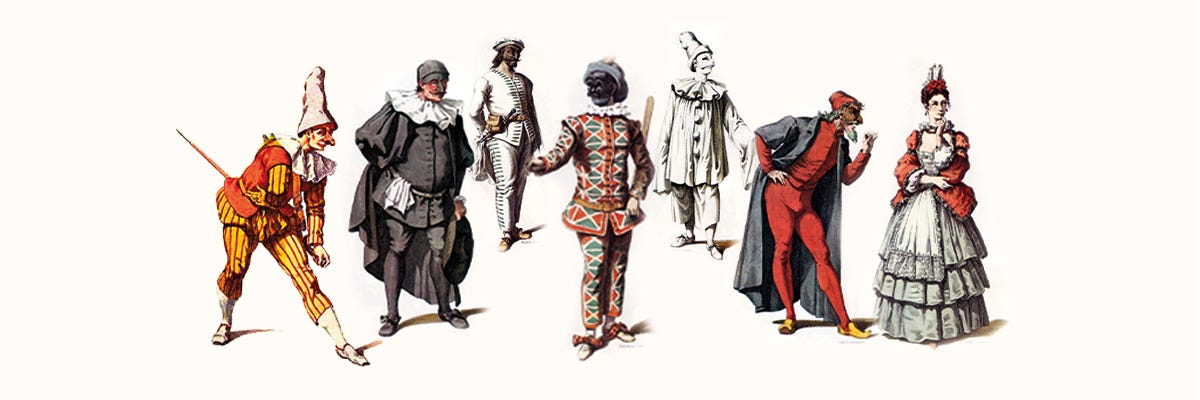
This is the main detail that sets commedia apart from other forms of theatre of
...This excerpt is provided for preview purposes. Full article content is available on the original publication.