Anatomy of a General Strike
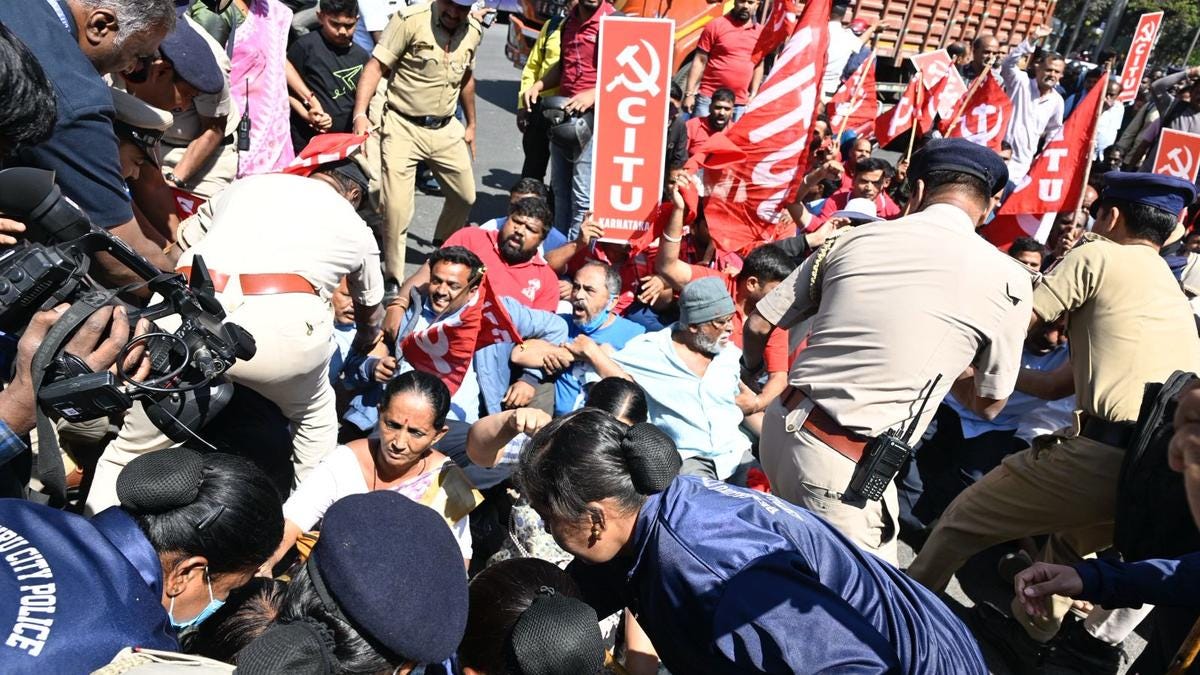
Mass detentions, motorcycle rallies, protest marches and demonstrations, pickets in industrial areas forcing factories to shut down, and the ubiquitous red flags fluttering over these actions marked the All-India General Strike on 12 February in South India’s largest state, Karnataka.
Over 600,000 workers downed tools. Almost 100,000 workers, farmers, and activists participated in street actions across its 31 districts. Production had largely come to a halt in most major industrial areas of the state capital, Bangalore, and the neighboring Ramanagar districts.
”Despite our strike notice, some factories were still running in Nelamangala”, an industrial area in the west of Bangalore along National Highway 48, said Anjum, secretary of the Bangalore rural district committee of the Centre of Indian Trade Unions (CITU).
Local workers confront global capital
Among them was the Smart Power factory of the Switzerland-based ABB group. A manufacturing unit of German Frenzeli, which produces expansion joints, high-temperature sealing, and other parts used in industrial machinery, was also functioning.
The US-based Pepsi was quietly operating in partial capacity, trying to avoid the attention of the thousand-odd, red T-shirt-clad workers and union leaders rallying on motorcycles through the industrial areas to enforce the strike. However, workers have their own local intelligence network. It is difficult to evade their notice on a day such as this.
”We halted our motorcycles before each one of those factories,” swarmed their gates, blocked their entrances and exits, and forced the management to turn off the power, shut down, and relieve all workers.
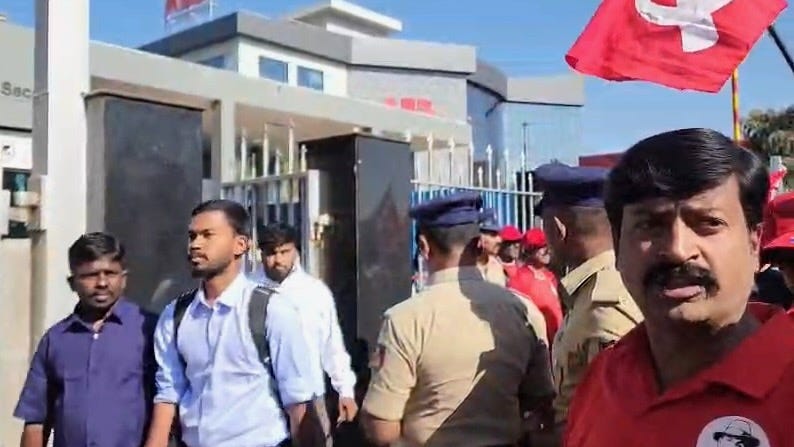
However, most factories in these industrial areas had voluntarily shuttered for the day, including his own employer, DENSO Kirloskar, a joint venture between Japanese DENSO Corporation and Indian Kirloskar Group, which manufactures air-conditioning and engine cooling system components for automotives.
The industrial area unit of the Joint Committee of Trade Unions (JCTU), a coalition of ten major trade union federations in the country, had served strike notices to the factories in Nelamangala in advance.
”Some small workshops in the interior may still have operated, escaping our attention, but most of the production was brought to a halt in this industrial area,” said Anjum.
Triumphantly marching to revolutionary slogans
...This excerpt is provided for preview purposes. Full article content is available on the original publication.