Greenland Fantasia
Introduction
I am grateful to the Hinternet for allowing me to return, after the “gross betrayal” for which the Editorial Board collectively denounced me in an otherwise forgettable piece last September. When the full story of that incident finally comes out, I am certain I will be vindicated.
But today my concern is different, if not any more modest. I have been asked to speak on behalf of the dissenting minority of editors, assuredly including myself, who do not at all accept the most familiar origin story for this publication — that, namely, its mission and spirit were fixed for all time in a dark secret grimoire, delivered on the back of a devil-dog dispatched to Bretagne half a millennium past by my own dastardly countryman, the notorious necromancer Heinrich Cornelius von Agrippa.
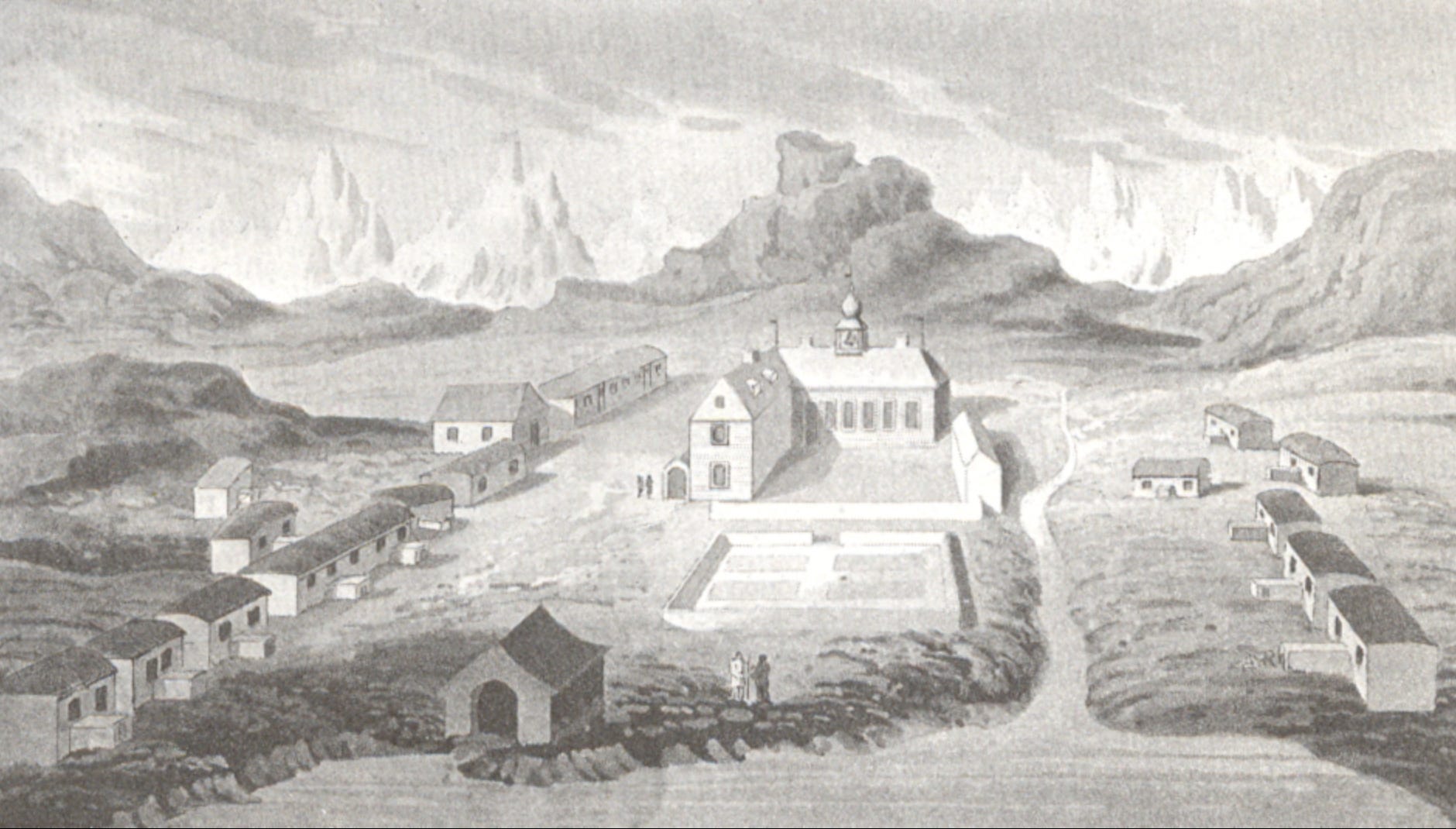
Our true origins are rather less obscure than that, and to learn them is to learn, again or for the first time, the great message of hope that came into the world by grace long ago. Our beginnings, some of you will already know, may be traced to one Johann Laurentius Köhler (c. 1709-1754), an early Moravian missionary in Greenland, and to the so-called “Qeqertarsuak Birchbarks” on which this peculiar young man took to writing —while waiting out the long winter of 1736-37 in an iced-in harbor— the luminous text at the basis of all our true editorial operations.
I am aware that there are no birch trees in Greenland; there are no trees at all in fact. This is in fact only one of many elements that make Köhler’s story appear implausible, yet all of these elements taken together show his work to be only more luminous, not less. For if there is mystery here it is not the kind to hide in shadow, but rather to beckon us closer with its glow.
Nor, though I’m really not at liberty to say much in this regard, should I have to point out, given the recent flurry of media attention, that the disputed existence of these birchbarks is of direct relevance to understanding the recent geopolitical crisis —now slightly abating, but for how long?— surrounding our planet’s largest island.
Historical Background
A scholarly article published in the Danish-language journal Meddelelser om Grønland in the summer of 1937 by the largely forgotten ethnographer Rasmus
...This excerpt is provided for preview purposes. Full article content is available on the original publication.