Jane Austen Was Born on December 16, 1775
Deep Dives
Explore related topics with these Wikipedia articles, rewritten for enjoyable reading:
-
French Revolution
23 min read
The article explicitly contrasts England's stability during Austen's era with France's revolutionary upheaval, referencing 'August 4, 1789' when feudal rights were abolished. Understanding the Great Fear and why France burned while England didn't is central to the article's thesis about the peculiar peace that enabled Austen's world.
-
Free indirect speech
16 min read
The article emphasizes Austen's revolutionary narrative technique of moving 'subtly between impartial narrative and the character's perspective.' This is the technical literary term for Austen's innovation that the article credits with creating modern novelistic expectations.
-
Fee tail
15 min read
The article discusses the marriage market as 'portfolio optimization under legal and informational frictions' and mentions 'primogeniture, entail, and limited labor-market access.' Entail is the specific legal mechanism that drives the plot of Pride and Prejudice (the Bennet estate cannot pass to daughters), making it essential context.
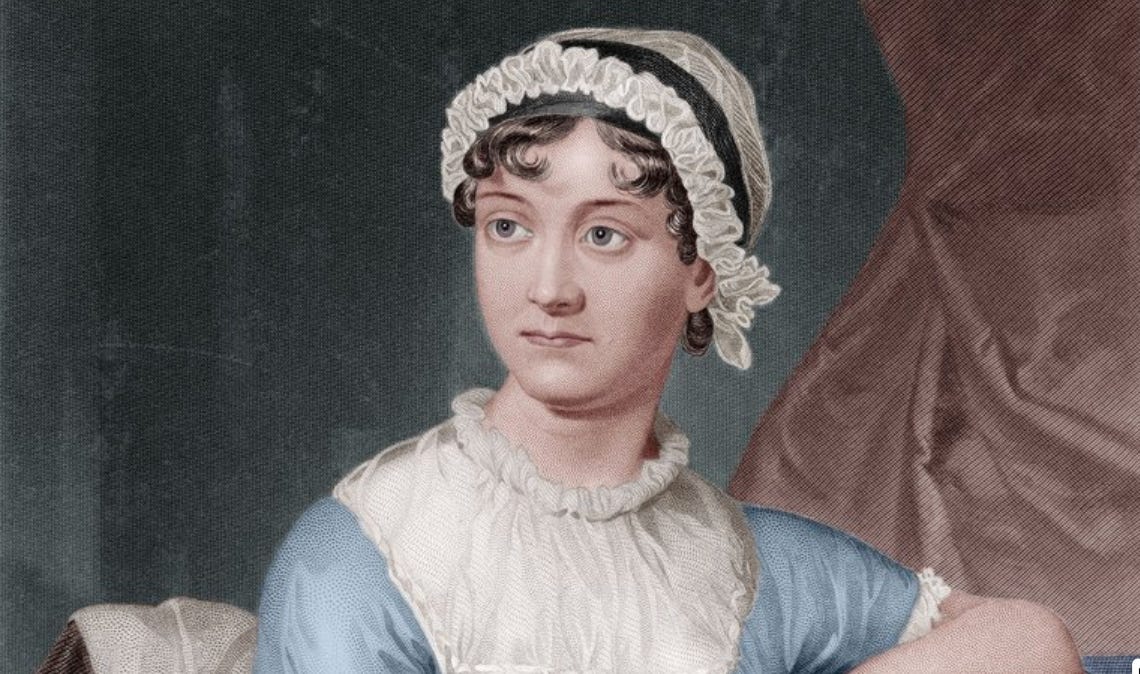
Jane Austen wrote amid a peculiar peace: rents flowed, muskets hung idle, and reputations ruled, and in that context crafted Great Novels with each sentence a step in the moral education of the leisured upper class…
And Henry Oliver has thoughts:
Henry Oliver: Why we love Jane Austen more than ever after 250 years <https://www.commonreader.co.uk/p/why-we-love-jane-austen-more-than>: ‘She wrote about what really matters…. [But] it is still easy to be dismissive…. Giles Coren th[inking]… it… funny to describe her as “an average chick-lit writer of her day”…. Giles Coren had his little joke, but Pride and Prejudice has sold over twenty million copies…. Her novels are about questions that are still central to our lives. How to live a good life in a commercial society? What is a moral education in the modern world? Who should we marry? Jane reigns supreme because no other novelist else invented such important narrative techniques or had so much to say to readers about their lives and what it means to live in modernity. To some, Austen looks like a romance novelist. A clever, ironic, wry romance novelist, it’s true…. This is only part of the truth.
Austen did unprecedented things with narrative. There are very few books that move so subtly between impartial narrative and the character’s perspective…. Defoe made real characters…. ichardson gave us direct access to the wild and exciting thoughts and feelings…. Fielding gave us rollicking, rolling, ever diverging tales within tales. But it was Austen who gave us the perfect art of… people having to overcome their inner problems—rather than having to overcome problems imposed upon them by the world. Austen did no less than create what we now expect from a novel…. Austen’s novels are all about what it means to see things from someone else’s point of view. That is the moral lesson Lizzie Bennet learns about Mr. Darcey, it is what Marianne learns about Elinor, and it is what Emma Woodhouse learns about all her meddling…. Her innovations are still relevant to our lives today.… Long may she be read…
Plus there is:
Hugh Hou: Explore Jane Austen’s Bath, UK in 16K Immersive Video | 250 Years Celebration from Royal Crescent to Roman Bath <https://www.patreon.com/cw/HughHouFilm/> <https://public.hey.com/p/L6toez2am6UX6nQaSZ8aFfVz>
I seem to have written a fair amount about Jane Austen here on this SubStack:
And there was still more over at Þe Olde
...This excerpt is provided for preview purposes. Full article content is available on the original publication.