The Method in Hegel’s Self-Censorship
Deep Dives
Explore related topics with these Wikipedia articles, rewritten for enjoyable reading:
-
Georg Wilhelm Friedrich Hegel
14 min read
The article centers on interpreting Hegel's philosophy and political thought, particularly the tension between his method and system. Understanding Hegel's biography, intellectual development, and historical context would provide essential background for grasping the self-censorship argument.
-
The Phenomenology of Spirit
11 min read
The article references Lukács's reading of this work as an 'implicit rebuttal to the aristocratic direction of Schelling.' Understanding this foundational text's structure and arguments illuminates Hegel's dialectical method that the article argues contains latent radical potential.
-
György Lukács
15 min read
Lukács is cited multiple times for his interpretation in 'The Young Hegel' regarding Hegel's method, his implicit theory of the proletariat, and his reading of the Phenomenology. Understanding Lukács's Marxist-Hegelian approach provides crucial interpretive context for the article's argument.
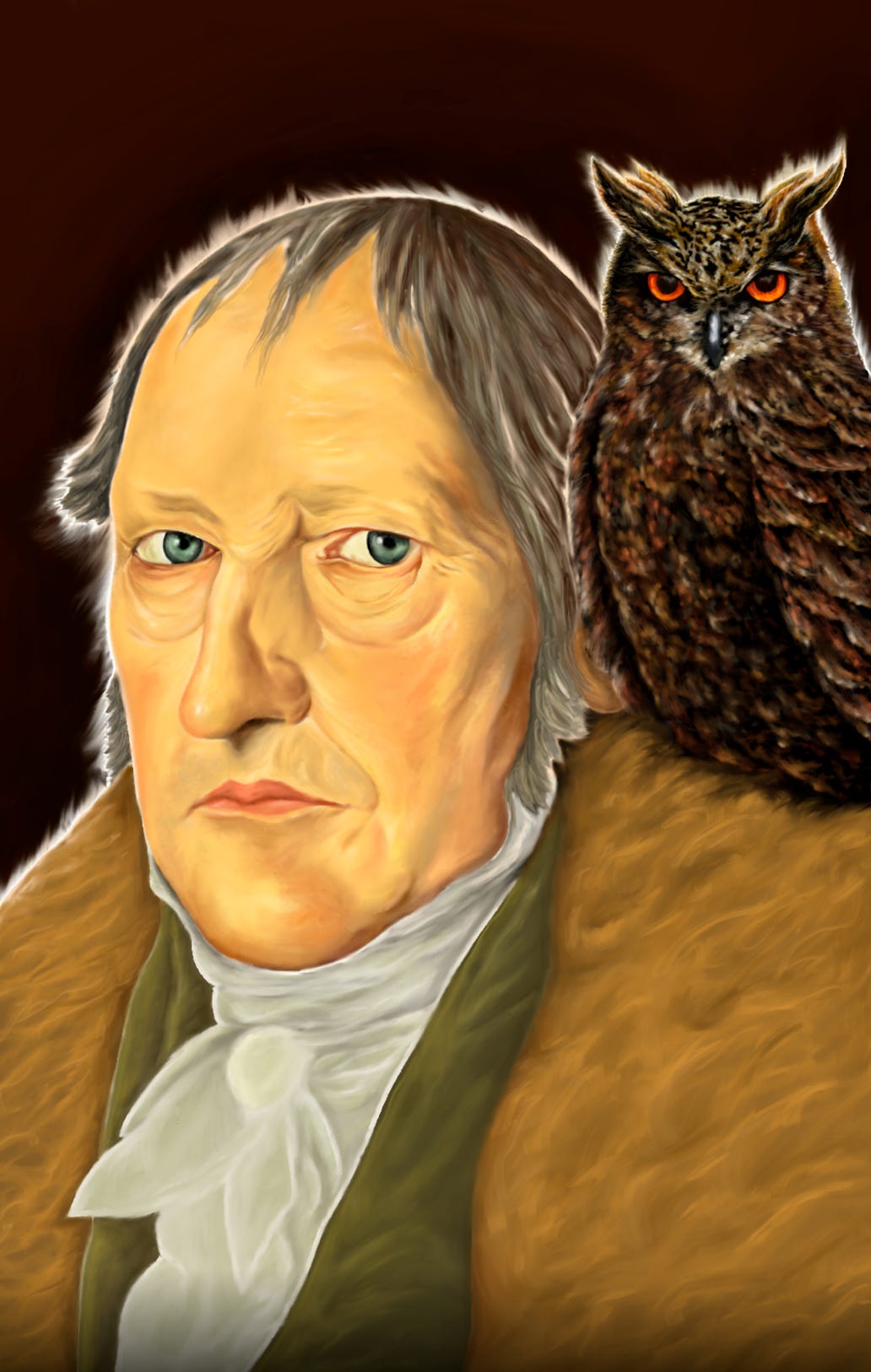
The Hegelian formula, 'what is rational is actual; and what is actual is rational' is something of an enigma. Does this formula represent an unqualified blessing on the political status quo, and should it be understood as a reflection of the implicit conservatism of Hegel’s Philosophy of Right where he embraces constitutional monarchy? Or does such a reading miss the subtlety of Hegel’s dialectical thinking. This phrase would certainly be a reactionary position if Hegel were to be read as embracing an anthropological conception of the subject of history or a subjectivism in which actuality is construed as the empirical subject of history embodied in the king or monarch.
But Hegel’s subject of history is not the king and nor is it found in any appeal to a more bland anthropological humanism. Marx argued that Hegel is incoherent within his own philosophy, that he is a “double dealer.” For Marx, Hegel is split between a latent political core that pushes his thought towards an egalitarian direction and a more reactionary core in line with the status quo. Engels pinpoints a similar dynamic in Hegel when he claims that there is a split between Hegel’s method and system: the system is the more explicit and latent political adherence to the status quo, i.e., in The Philosophy of Right Hegel infamously defends “constitutional monarchy” against the restoration and against the divine right of kings. That the absolute idea must be realized in a representative monarchy is clearly something that Engels rejected, but at the same time, one of Hegel’s strengths was to reject unrealizable ideals. Here is how Engels argues that we must read Hegel beyond the limits of his system:
...With all philosophers it is precisely the “system” which is perishable; and for the simple reason that it springs from an imperishable desire of the human mind — the desire to overcome all contradictions. But if all contradictions are once and for all disposed of, we shall have arrived at so-called absolute truth — world history will be at an end. And yet it has to continue, although there is nothing left for it to do — hence, a new, insoluble contradiction. As soon as we have
This excerpt is provided for preview purposes. Full article content is available on the original publication.