How the Little Guy Moved

Welcome! Thanks for checking in. It’s another Sunday issue of the Animation Obsessive newsletter, and this is the slate:
1. Animating in the early days of the personal computer.
2. Newsbits.
With that, let’s go!
1. Computer animation
There was a question in the days when video games were young.
People figured out how to move graphics on a screen — see Pong from the early ‘70s, for example. This alone was a feat. Fast forward a decade, and the growth was visible. You had Donkey Kong beating his chest in the arcades; personal computers like the Apple II were running games where helicopters flew around with energy and bounce.
Games and animation went together — that much was clear. Like animated films, these things often (if not always) brought artwork to life. How deep was the link, though? How many techniques from the animation world could really, effectively cross over?1
A twenty-something coder from New York explored that question during the ‘80s. His name: Jordan Mechner. He self-described, among other things, as an “amateur animator.”
Mechner got his first Apple II as a teenager and fell in love. “I wanted to produce animations,” he said. “I knew from making those animations that the computer was powerful, and that it was capable as a games machine.”2
After years of writing games, Mechner released the one that made him a star: Prince of Persia (1989). It drew from the “great old Hollywood swashbuckling movies,” he said — like those starring Douglas Fairbanks. And animation was at the center. “Prince of Persia is the culmination of a lifelong fascination with animation,” noted the game’s manual.3
Famously, Mechner’s project rested on an experiment in digital rotoscoping.
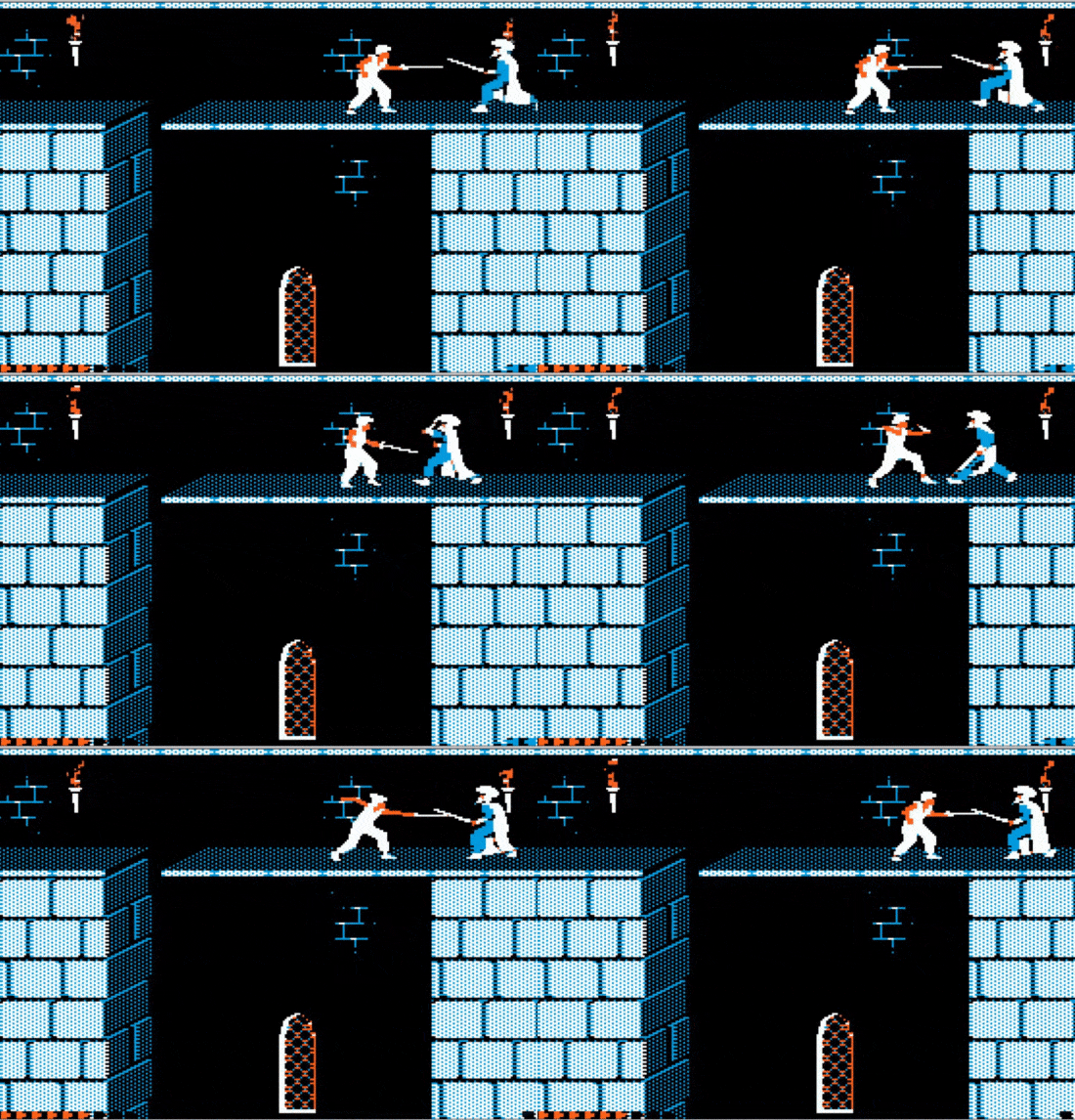
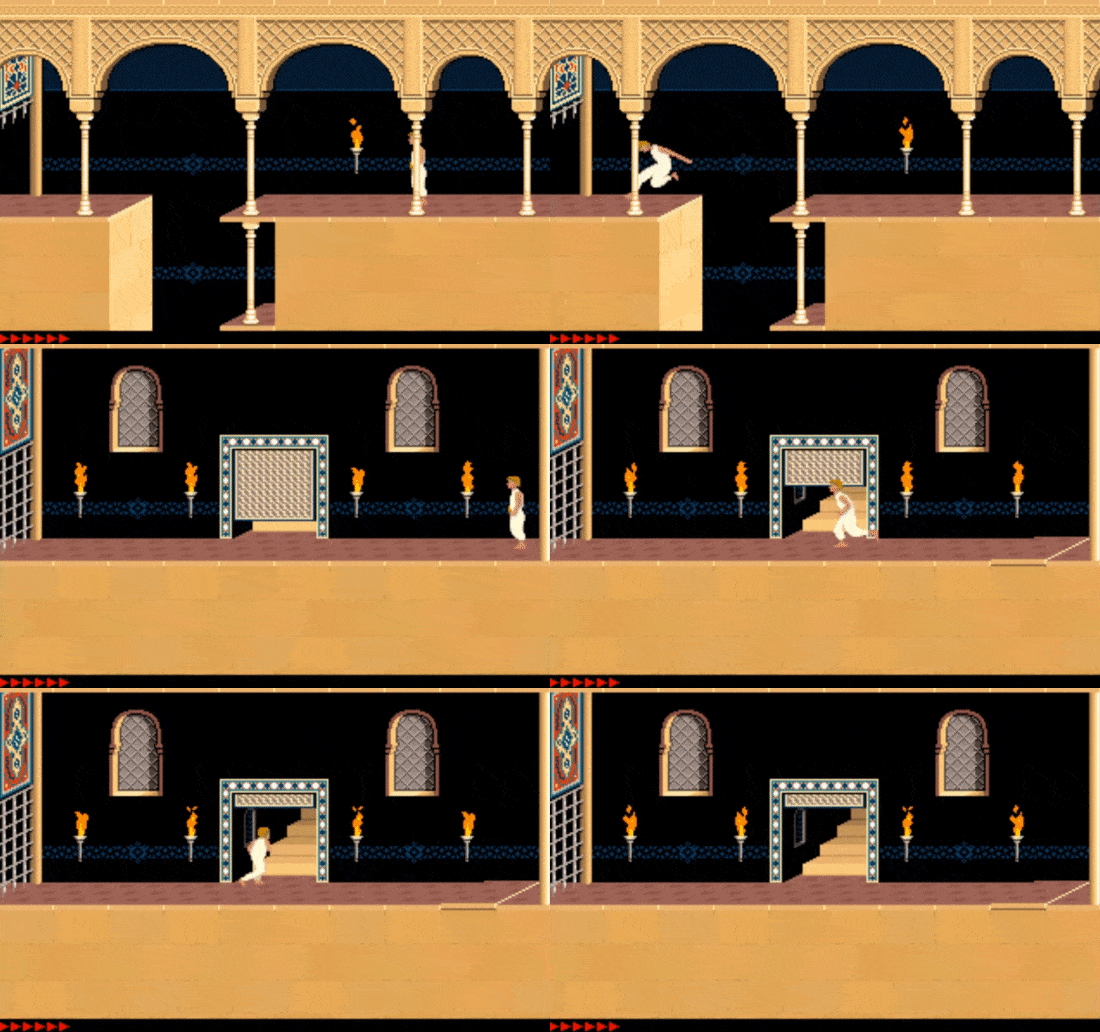
Prince of Persia comes from an era when high-end PCs did way, way less than today’s low-end smartphones. And the game wasn’t made for the best computers of its time. Mechner’s target system, the Apple II, was already a fossil by 1989.
“[T]he Apple II’s memory was 48K,” Mechner said a few years back. “That’s less than a normal text email.”4
The original Prince of Persia displays big, blocky shapes in
...This excerpt is provided for preview purposes. Full article content is available on the original publication.