Audio scifi, the Chesapeake Bay, and real revolutions!
This weekend was depressing as hell! We’re surrounded by media normalizing genocide, Gestapo-style raids targeting immigrants, and the brutal effects of ecocide.
The worst thing and the easiest thing we can do is to fall into despair, passivity, and isolation. But guess what? We don’t have to!
We can’t be watching horrible news all the time without dying inside. We need to support our storytellers and embrace storytelling not as a form of distraction or escapism, but as a fugitive strategy, a way to avoid getting trapped in a reality that is built by the institutions that thrive on misery. Speculative fiction in particular helps develop a radical imaginary — our collective ability to imagine other worlds. And I truly believe we can’t fully perceive our own world or cultivate a healthier one without strong imaginations.
And I have exciting news on that front: the marvelous Margaret Killjoy is reading my debut novella, Hermetica, over at the Cool Zone Media book club. Two episodes are out already, and they’re dropping every Sunday!
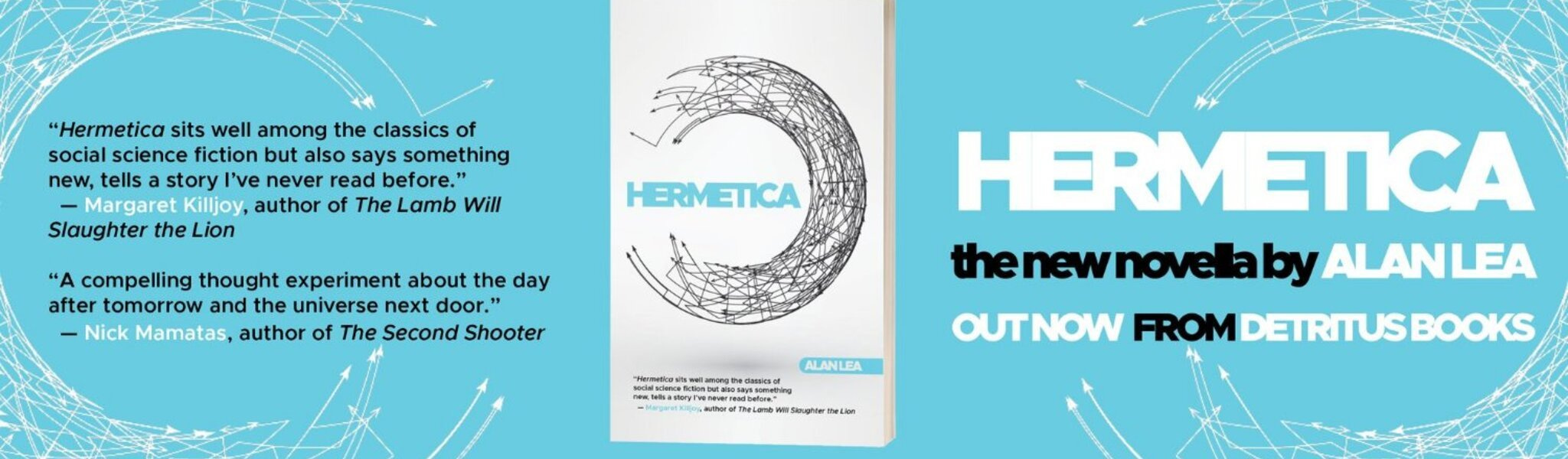
Here’s episode I:
(Pretty sure it’s also on Apple and other podcast sites, if anyone wants to post links in the comments.)
Guess what? Fiction publishing is even more monopolized than nonfiction publishing. I’ve been writing speculative fiction for longer than I’ve been writing nonfiction, but I’ve only been able to get one novella published. Thanks to our prolific, proactive, skillful movements, we have a lot of independent publishers for radical analysis and history, but they aren’t able to publish much fiction. There are a couple of independent speculative fiction publishers left, but the vast majority of fiction is published by 5 huge corporations, literally called The Big 5.
The Big 5 publish by algorithm, meaning they decide in the most inhuman way possible what kinds of stories get published, not based on quality but on market predictions. They actually publish a large number of books, but already based on pre-order sales, they put their immense resources behind a couple titles at a time, artificially creating bestsellers. They bury everything else in their Intellectual Property vault for its potential value in case any Hollywood producers want to buy the rights to interesting storylines.
So… just in case you want to help out a struggling writer, you could drop a friendly note to, say, PM Press, and tell them you’d love to read more fiction by your
...This excerpt is provided for preview purposes. Full article content is available on the original publication.