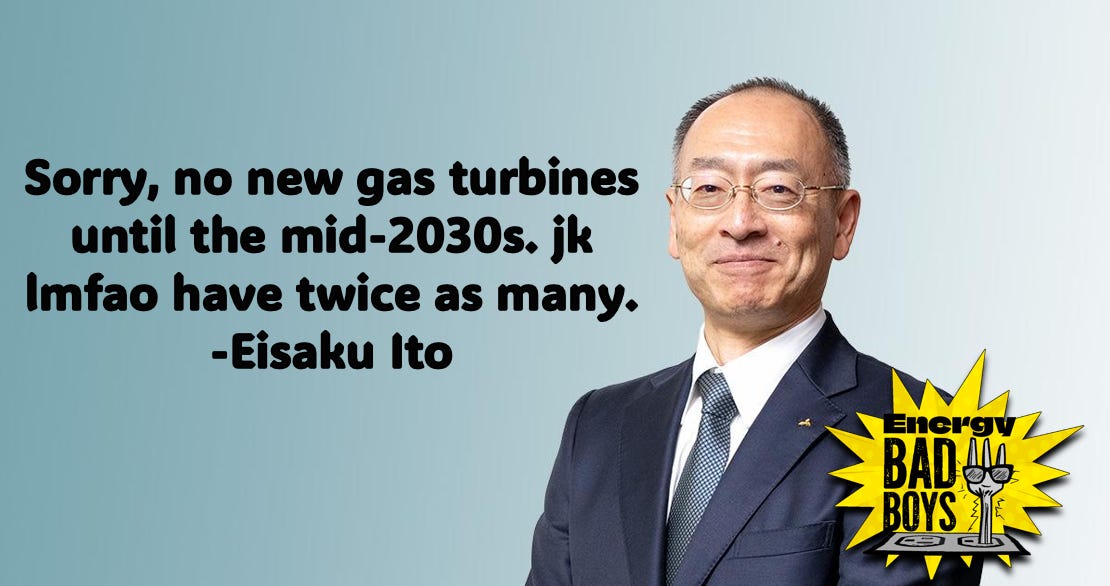
Mitsubishi Heavy Industries to Double Gas Turbine Capacity
You have to give wind and solar advocates some credit; they are an opportunist bunch of scallywags.
Having abandoned their calls for more wind and solar to avert the impending climate crisis, for the last several months wind and solar advocates have claimed that a backlog of orders for natural gas turbines and the long lead time to build new nuclear power plants meant the only way to quickly meet the growing electricity demand was to double down on wind, solar, and battery storage deployment.
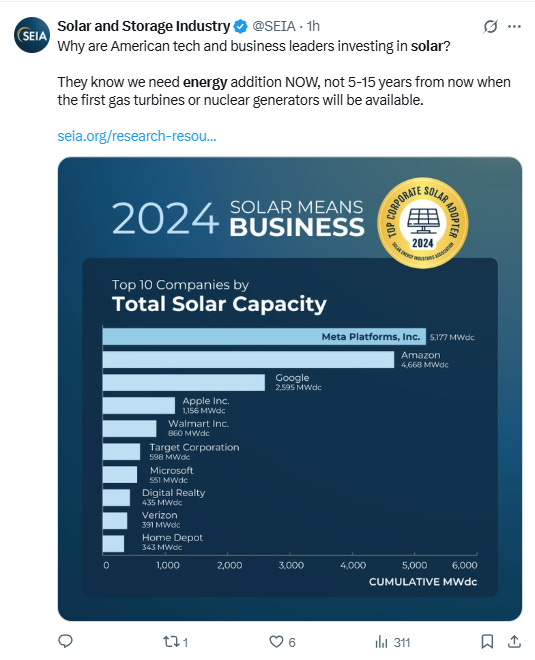
They’ve even argued that President Trump’s actions to initiate an earlier phase-out of the Inflation Reduction Act subsidies and impose Foreign Entities of Concern (FOEC) stipulations on subsidy eligibility would cause electricity prices to rise and strangle artificial intelligence (AI) in its crib due to a lack of power.

Welp, that turned out to be a load of malarkey. Sorry, .
Mitsubishi Doubles Up On Gas Turbines
On Tuesday, September 2nd, Mitsubishi Heavy Industries, one of the largest gas turbine producers in the world, announced it will double its production capacity for gas turbines within the next two years as demand for the technology continues to increase.
According to Power Magazine, Mitsubishi was initially working towards boosting production capacity by 30 percent, but the company realized it would not be enough to meet the surging demand for gas turbines.
This highlights the realization that many energy-realists acknowledge: you can’t cost-effectively power electricity demand growth using inefficient and unreliable wind, solar, and battery storage facilities. What we need is dispatchable power.
Bloomberg reports the capacity expansion could help run down the $35.6 billion order backlog at MHI’s energy unit, and provide room to take in more orders.
More Gas to Meet Data Center Demand
An analysis released this week by Wood Mackenzie estimates that U.S. utilities have committed to 116 gigawatts (GW) of large load capacity additions —read, data centers— in the coming years, which is the equivalent of 15.5 percent of the current peak demand in the United States.
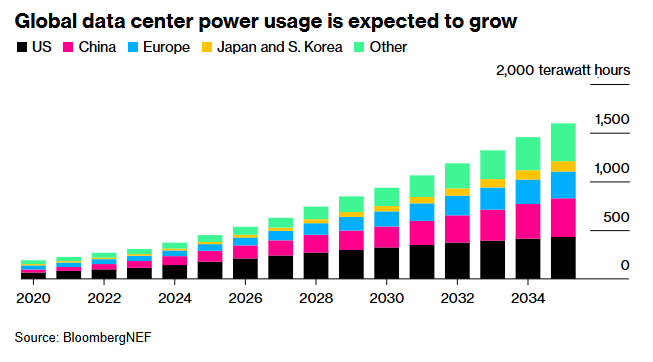
WoodMac expects 60 GW of new capacity to come online by 2030, and 93 GW to be operational by 2035. Bloomberg estimates U.S. data centers could consume 2.4 times more power in 2035 than they are projected to consume in 2025, meaning they may consume about 10 percent of total U.S. consumption in 2024 by the middle of the next decade.
Powering these data centers
...This excerpt is provided for preview purposes. Full article content is available on the original publication.