Handle With Care: Debunking China’s Case Against NATO Nuclear Sharing
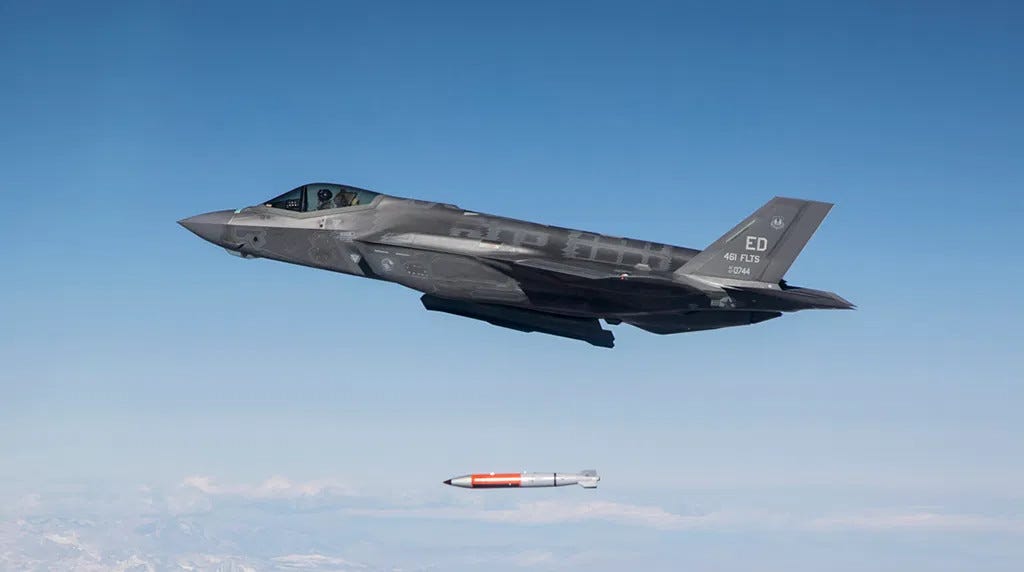
Picture: U.S. Department of Defense
By Jóna Ákadóttir
In July, 2024, China made a surprising move at a Nuclear Non-Proliferation Treaty (NPT) preparatory meeting in Geneva. It dropped a 32-page report accusing the U.S. of violating the NPT through its long-standing nuclear sharing arrangements.
Though framed as a legal analysis, the report was political in nature: an attempt to weaken confidence in the U.S. extended deterrence in Europe and, by extension, to cast doubt on current and future U.S. nuclear guarantees in Asia. The problem is that the report gets the law wrong, the history wrong, and even the footnotes wrong.
What’s the Chinese Argument?
The Chinese report accuses the U.S of violating Articles I and II of the NPT through NATO nuclear sharing. These are the parts of the Treaty that prohibit transfer of nuclear weapons or control over them, to non-nuclear weapon states. The report also claims the practice undermines the Treaty’s credibility, is outdated, and raises risks. The accusations target the stationing of U.S. nuclear bombs in a handful of allied countries like Germany, Italy, and the Netherlands.
China’s core arguments:
Parking U.S. nukes in NATO countries is a special form of proliferation.
Treaty rules still apply, even to old arrangements.
Some countries didn’t know about nuclear sharing when the NPT was drafted.
The NPT remains binding in wartime, so any future transfer of control would be a violation.
NATO nuclear sharing is outdated and damages the credibility of the NPT.
Debunking the arguments
Nuclear sharing isn’t nuclear transfer
China argues that the stationing of U.S. nuclear weapons in allied countries is the same as handing them over.
Despite the name, NATO nuclear sharing doesn't involve transferring ownership of nuclear weapons. Instead, it refers to the strategic placement of these weapons across allied countries in Europe for their possible use in nuclear war. It’s about cohesion in the alliance, not control. Under NATO nuclear sharing, U.S. nuclear bombs stored in Europe are always under American lock and key. Allies may train on delivery systems but cannot launch nuclear weapons without direct U.S. authorization.
Proliferation is like handing someone the keys to someone else's car. It means giving another country nuclear weapons or the power to use them. NATO’s arrangements do neither. The U.S. is merely parking some of its weapons in Europe to fulfil U.S. security guarantees. It is not proliferation under any possible reading of the
...This excerpt is provided for preview purposes. Full article content is available on the original publication.