This Black Soldier Went to Europe to Fight Nazis. He Was Killed by White Americans Before He Got the Chance.
Deep Dives
Explore related topics with these Wikipedia articles, rewritten for enjoyable reading:
-
Battle of Bamber Bridge
10 min read
This is the exact historical event the article describes - the 1943 mutiny and firefight between Black American soldiers and white MPs in England. Wikipedia has a dedicated article covering the incident in detail.
-
Executive Order 9981
13 min read
The article mentions Truman's 1948 desegregation of the armed forces as a pivotal moment. This executive order was the specific mechanism that ended racial segregation in the U.S. military, providing crucial context for understanding the post-war changes.
-
Double V campaign
12 min read
The article's central tension - Black soldiers fighting fascism abroad while facing racism from fellow Americans - was the essence of the Double V campaign, the WWII-era African American movement demanding victory against fascism overseas and racism at home.
Defense Secretary Pete Hegseth has been busy. In the past year, he’s stripped diversity training from military academies, removed videos honoring the Tuskegee Airmen and Women Airforce Service Pilots from basic training, and celebrated a recent court victory allowing the Pentagon to ban transgender service members. “No more pronouns. No more climate change obsession. No more dudes in dresses,” he declared in September. “We’re done with that s**t.”
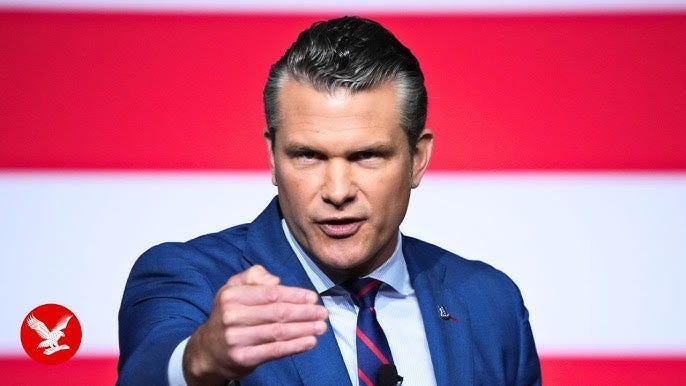
Hegseth frames this as restoring “military lethality” after decades of “woke” decay. But here’s what he won’t tell you: the U.S. military has historically been ahead of American society on integration, not behind it. President Truman desegregated the armed forces in 1948, six years before Brown v. Board of Education. The military opened combat roles to women, ended “Don’t Ask, Don’t Tell,” and built one of the most diverse institutions in the country, not because generals were bleeding-heart liberals, but because they understood a simple truth: you can’t have a unified fighting force if your troops are fighting each other.
Hegseth’s revisionism erases that history. It also erases what happens when the military allows prejudice to fester unchecked. For that lesson, we need to go back to a small English village in 1943, where a Black soldier named William Crossland went to fight Nazis and was killed by white Americans instead.
I’m working to document stories like Crossland’s before they’re dismissed as “woke history” or erased entirely, and I need your help.
With no corporate backing or wealthy sponsors, this work depends entirely on readers like you.
If everyone reading this became a paid subscriber, I could investigate these buried histories full-time, but right now less than 3% of my followers are paid subscribers.
If you believe in journalism that recovers what others want forgotten, please consider a paid subscription today.
Jim Crow Crosses the Atlantic
In 1943, nearly two million American servicemen were stationed in or passed through Britain. About 150,000 of them were Black, serving in segregated units led by white officers. Most were relegated to non-combat roles: driving trucks, loading supplies, building infrastructure. The dangerous work with none of the glory.
The U.S. Army didn’t just bring its soldiers to England. It brought its racial hierarchy too. Military authorities pressured British pubs and restaurants to separate the races, to extend Jim Crow beyond American borders. They issued guidance suggesting that white and Black troops
...This excerpt is provided for preview purposes. Full article content is available on the original publication.