The Beginning of the End of the Ukraine-Russia War
Deep Dives
Explore related topics with these Wikipedia articles, rewritten for enjoyable reading:
-
Paris Peace Conference (1919–1920)
12 min read
Ferguson explicitly cites the duration between Wilson's 1916 peace note and WWI's end as historical precedent for how long peace negotiations take. The Paris Peace Conference shaped the post-WWI order and offers lessons about the complexities of multilateral peacemaking that directly inform the Ukraine situation.
-
Korean Armistice Agreement
14 min read
Ferguson specifically mentions the Korean armistice negotiations lasting over two years as a parallel to current Ukraine talks. This agreement created a ceasefire without a peace treaty—a model that may be relevant to Ukraine—and the Korean DMZ offers a concrete example of 'frozen conflict' buffer zones.
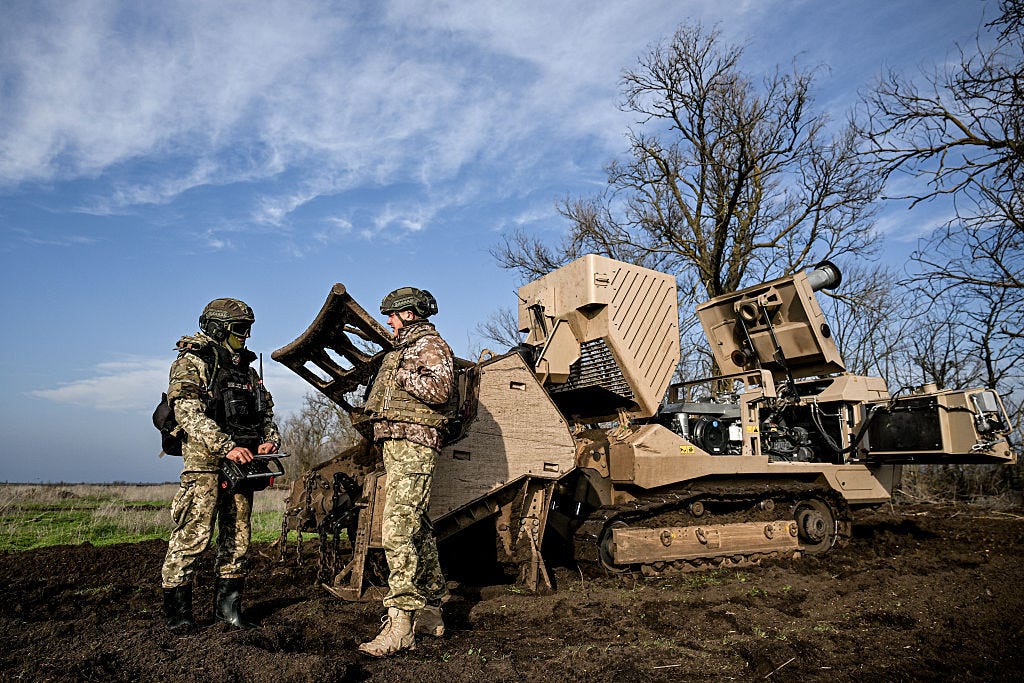
Servicemen of the 808th Dniester Separate Support Brigade of the Ukrainian Armed Forces work beside an explosive hazard-clearance machine during demining operations on a liberated territory in Kherson region, Ukraine, on November 22, 2025. (Dmytro Smolienko/Ukrinform/NurPhoto via Getty Images)
And so the familiar rituals of peacemaking resume. The president of the United States seeks to broker a ceasefire between two warring countries. A document, intended to be used as a starting point, is partially leaked by one side, then wholly leaked by the other side. There is controversy in the press about its provenance and significance.
The negotiators gather in a neutral location. Although there are only two combatant countries, there turn out to be many others with skin in the game. While the diplomacy continues, so does the war, each side seeking to gain leverage from military pressure.
And on it goes. And on. President Donald Trump originally set a Thanksgiving deadline (tomorrow) for Ukraine to accept a new 28-point plan for peace with Russia. A high-level U.S. delegation met with Ukrainian representatives in Geneva over the weekend to delete some of the 28 points and revise some of the others, before meeting with Russian spokesmen early this week in Abu Dhabi. However, as Trump admitted last week, the Thanksgiving deadline was never a hard one: “I’ve had a lot of deadlines, but if things are working well, you tend to extend the deadlines.” You also tend to extend them when things are not working well.
Wars are quick to start, and—unless one side achieves decisive victory on the battlefield—slow to end. The time between President Woodrow Wilson’s December 1916 peace note to the combatant powers and the end of World War I was one year, 10 months, and 25 days. The duration of the Korean armistice negotiations was two years and 17 days. Henry Kissinger’s negotiations to end the Vietnam War took three years, five months, and 24 days—and failed to secure a lasting peace between North and South Vietnam. A ceasefire was reached in the Yom Kippur War on October 25, 1973. But the Egyptian-Israeli peace treaty took until March 26, 1979—five years, five months, and one day later.
This history explains why I have always treated President Trump’s promises of instant pacification in Eastern Europe with skepticism.
My position on this war has been consistent. In January 2022, I warned that war was coming. When it
...This excerpt is provided for preview purposes. Full article content is available on the original publication.