Why AI Nerds Praise Ugly AI-Generated Art
Deep Dives
Explore related topics with these Wikipedia articles, rewritten for enjoyable reading:
-
Timothy Morton
1 min read
The article explicitly uses 'hyperobject' to describe AI as a concept too vast for direct perception. Timothy Morton's philosophical concept would help readers understand this framing of AI as something that transcends human scale and comprehension.
-
Aesthetics
20 min read
The article's central argument distinguishes between object-level and meta-level beauty, discussing how AI nerds find beauty in mechanisms rather than outputs. Understanding philosophical aesthetics provides essential context for this distinction between types of beauty appreciation.
-
Sublime (philosophy)
15 min read
The article describes AI nerds finding beauty in infinite production and vast mechanisms beyond normal perception. The philosophical concept of the sublime—finding awe in overwhelming magnitude and power—directly parallels this meta-level aesthetic appreciation.
This is the fifth and final part (paid) of a five-part essay on the psychology of AI nerds. They are intended to be read in order (introduction included in part 1). Here are the previous parts:
AI Nerds Are People Who Like Everything — I. Overexistence (free)
AI Nerds Want Out And They’re Taking Us With Them — II. Escapism (paid)
How AI Nerds Became the Perfect Political Puppets — III. Apoliticality (paid)
AI Nerds Can’t Stand What They Can’t Understand — IV. Legibility (paid)
V. Meta-beauty
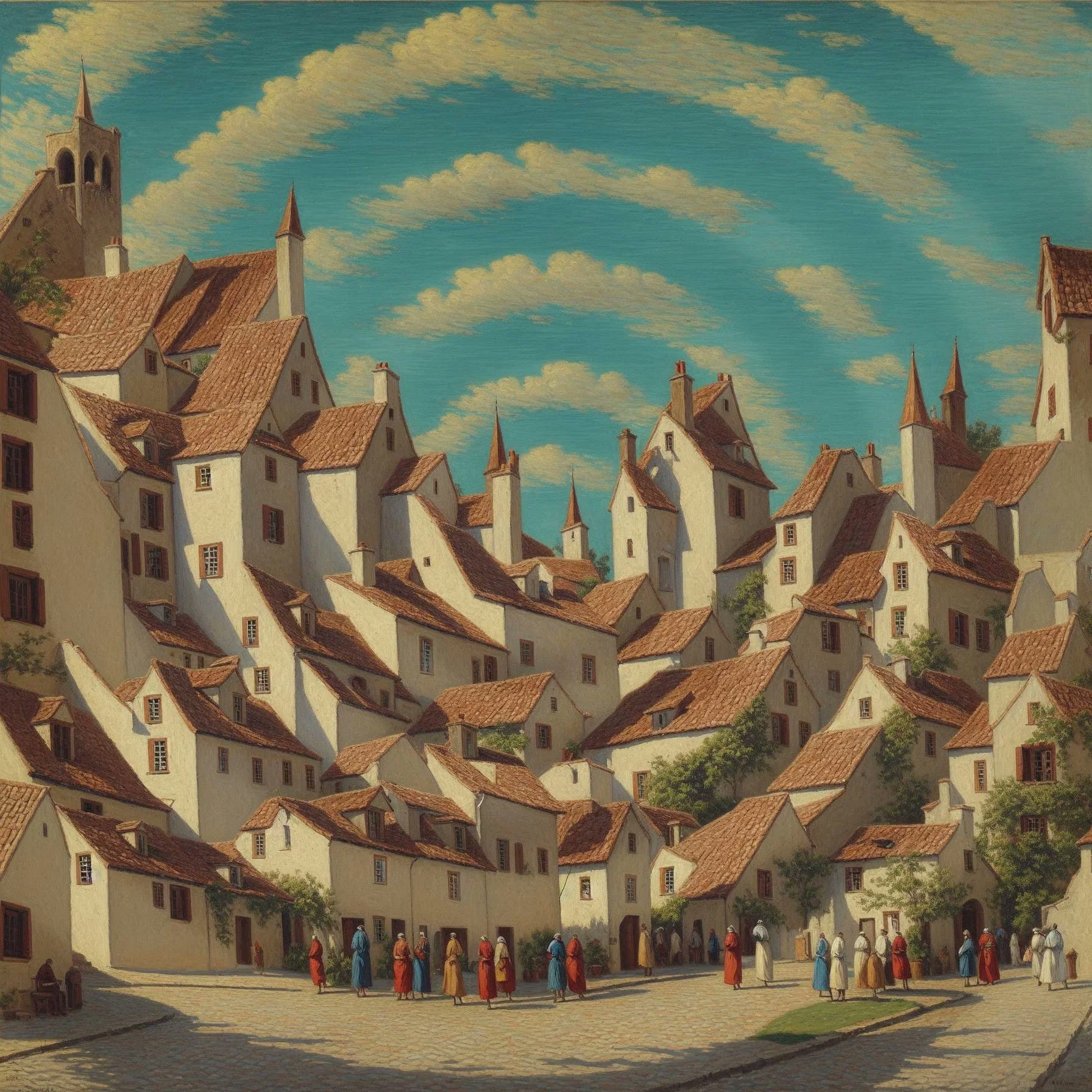
I will end this essay on a lighter note by circling back to the beginning. As Sam Kriss says and I defended in the first part, nerds—and this is common to the pre- and post-AI types—don’t have “taste” at the object level; they don’t discern beauty between things (that is, in part, why they’d praise the above AI-generated spiral-based painting as much as they’d praise a Picasso, Dali, or Goya). It’s also why, as we saw in the third part, they like making swords and plowshares equally (metaphorically speaking).
It is, in another sense, why they like things in hyper-abundance, because they’re insensitive to scarcity playing a role in the aesthetic value people ascribe to things; it’s not that scarcity itself literally makes things more beautiful (that only makes sense in economic terms), but it makes the beauty of the thing that’s scarce stand out when it’s revealed. Rarity emphasizes the perception of beauty in the eye of the beholder.
However, Kriss misses an important aspect of AI nerdiness: they have a distinctive aesthetic sense at the meta-level; they find beauty in the mechanisms that enable abundance. A hammer is more beautiful than the flint or the mallet, and, in turn, the lathe and the assembly line far surpass the hammer. Their conception of beauty is not missing, merely cross-dimensional, distinct from what normies understand as beauty.
To them, AI—particularly the generative kind, which is what most normies understand as AI these days—is the most beautiful hyperobject of all, but not so much for what it produces—or even its orderly nature as we saw in the fourth part—but as a symbol of infinite production. That’s what this fifth and final part is about.
3 DAYS LEFT: I’m running a Halloween sale for free subscribers at a 33%
...This excerpt is provided for preview purposes. Full article content is available on the original publication.