How the UK Lost Its Shipbuilding Industry
Deep Dives
Explore related topics with these Wikipedia articles, rewritten for enjoyable reading:
-
HMHS Britannic
17 min read
Linked in the article (30 min read)
-
Liberty ship
14 min read
The article mentions 'novel methods of shipbuilding developed by the US during WWII' that competitors used to overtake UK shipbuilding. Liberty ships were the iconic example of American mass-production shipbuilding techniques during WWII, using prefabrication and welding instead of riveting - the exact innovations that disrupted British labor-intensive methods.
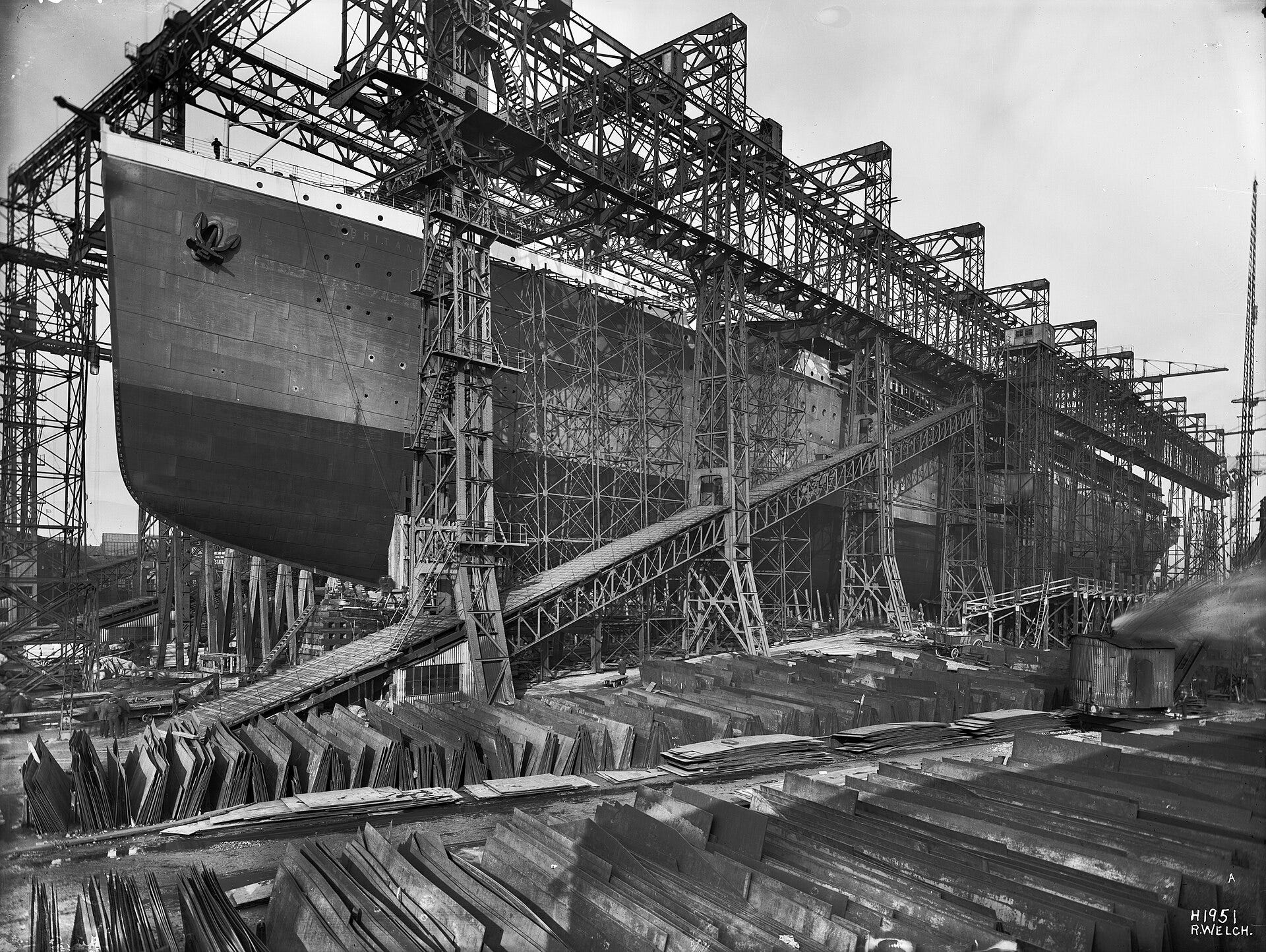
From roughly the end of the US Civil War until the late 1950s, the United Kingdom was one of the biggest shipbuilders in the world. By the 1890s, UK shipbuilders were delivering 80% of worldwide shipping tonnage, and though the country only briefly maintained this market-dominating level of output— on the eve of World War I, its share of the market had fallen to 60% — it nonetheless remained one of the world’s largest shipbuilders for the next several decades.
Following the end of WWII, UK shipbuilding appeared ascendant. The shipbuilding industries of most other countries had been devastated by the war (or were, like Japan, prevented from building new ships), and in the immediate years after the war the UK built more ship tonnage than the rest of the world combined.
But this success was short-lived. The UK ultimately proved unable to respond to competitors who entered the market with new, large shipyards which employed novel methods of shipbuilding developed by the US during WWII. The UK fell from producing 57% of world tonnage in 1947 to just 17% a decade later. By the 1970s their output was below 5% of world total, and by the 1990s it was less than 1%. In 2023, the UK produced no commercial ships at all.
Ultimately, UK shipbuilding was undone by the very thing that had made it successful: it developed a production system that heavily leveraged skilled labor, and minimized the need for expensive infrastructure or management overheads. For a time, this system had allowed UK shipbuilders to produce ships more cheaply and efficiently than almost anywhere else. But as the nature of the shipping market, and of ships themselves, changed, the UK proved unable to change its industry in response, and it steadily lost ground to international competitors.
The rise of UK shipbuilding
For much of recent history, the Netherlands boasted the largest and most successful shipbuilding industry. Between 1500 and 1670, Dutch shipping had grown by a factor of 10, and by the end of the 17th century the Dutch merchant fleet, made up of mostly Dutch-made ships, was larger than the commercial fleets of England, France, Spain, Portugal, and what is now Germany combined. Dutch shipbuilding was “technologically the most advanced in Europe,” and Dutch shipbuilders could build ships 40-50% cheaper than English ones.
Over
...This excerpt is provided for preview purposes. Full article content is available on the original publication.