What It's Like To Be A Worm

By Ralph Stefan Weir
On 1 November 1837, Charles Darwin delivered a talk to the Geological Society of London on the role of earthworms in soil formation. The Society is said to have expected something grander from the celebrated scientist, but Darwin was already deeply fascinated by worms. Indeed, his interest intensified throughout his life and served as the subject of his final book, The Formation of Vegetable Mould Through the Action of Worms, published in 1881.
Darwin’s book is noteworthy not just as the first major text on bioturbation (the reworking of soils by organisms) but also for how he approaches the inner lives of earthworms:
Judging by their eagerness for certain kinds of food, they must enjoy the pleasure of eating. Their sexual passion is strong enough to overcome for a time their dread of light … Although worms are so remarkably deficient in the several sense-organs, this does not necessarily preclude intelligence … and we have seen that when their attention is engaged, they neglect impressions to which they would otherwise have attended; and attention indicates the presence of a mind of some kind.
Darwin was not the first scientist to reflect on animal sentience, that is, their capacity for pain and pleasure. Aristotle wrote extensively on the topic, observing, for instance, that “bees seem to take pleasure in listening to a rattling noise” and that “the tunny delights more than any other fish in the heat and sun.”
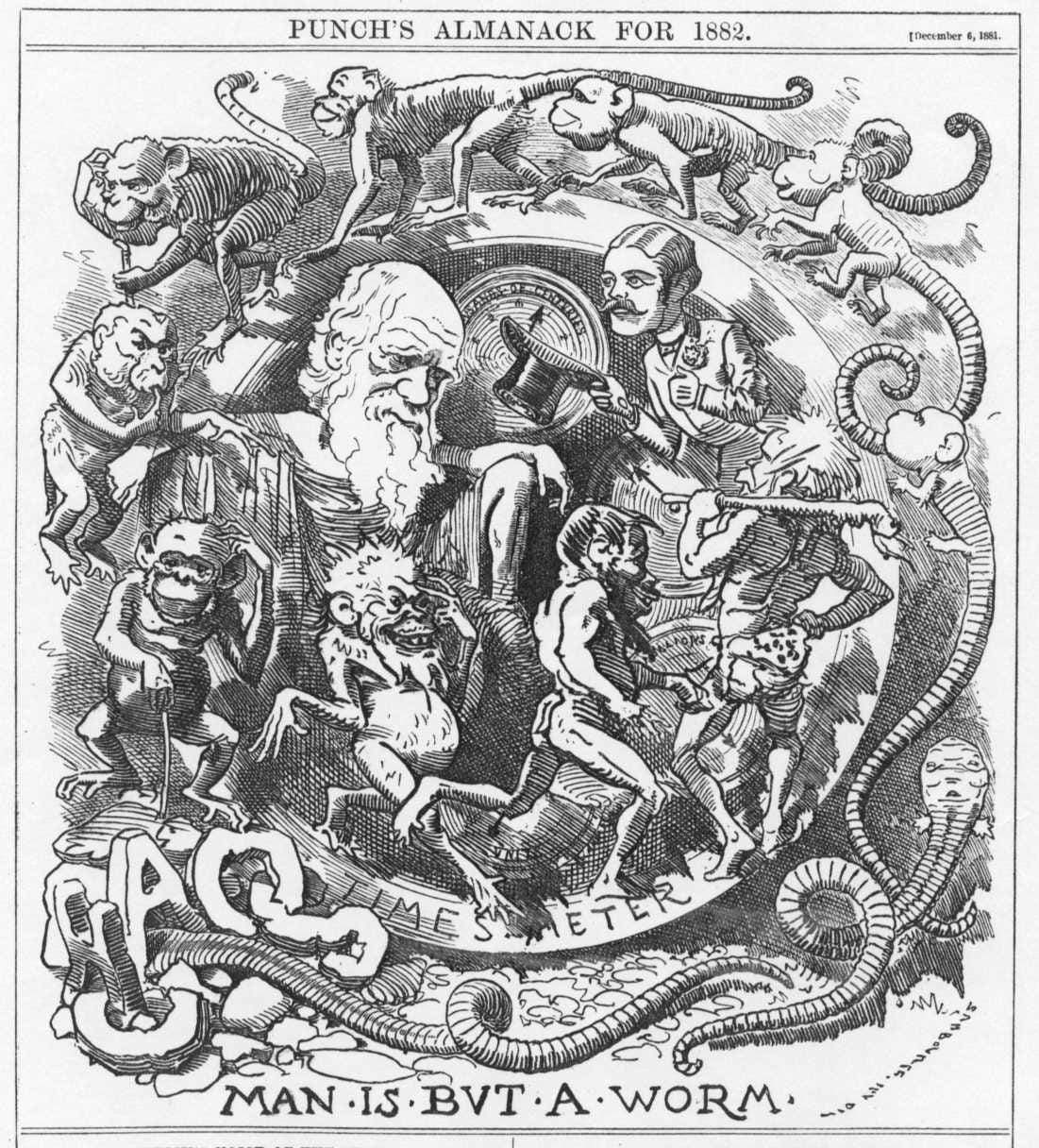
Until the nineteenth century, such observations remained anecdotal. Darwin was among the first to ground judgements about animal sentience on careful experiments, such as suspending pieces of raw and roasted meat over the worms’ habitat overnight to see which they preferred.1
Even more striking than Darwin’s methodological approach to studying sentience was his choice of earthworms for his subject. Such a selection in place of a human subject made Darwin a forerunner of a research program that has recently gained incredible momentum: the science of borderline sentience. That is, the investigation of sentience in creatures that dwell near the boundary between sentience and non-sentience.
Whereas Darwin’s interest in the inner workings of the worm mind was driven by pure curiosity,
...This excerpt is provided for preview purposes. Full article content is available on the original publication.