RFK Jr. forgot what makes us healthy
If a nation’s diet requires ecological destruction to sustain it, can it really be called healthy?
There was a time when Robert F. Kennedy Jr. would have said no. Before he became the nation’s top health official, Kennedy built his career arguing that human health and environmental health were inseparable—that pollution in rivers became pollution in bodies, and that climate change itself was a public health emergency driven by industrial systems. His premise was simple: when the ecosystems that sustain life become unstable, human health becomes unstable too.
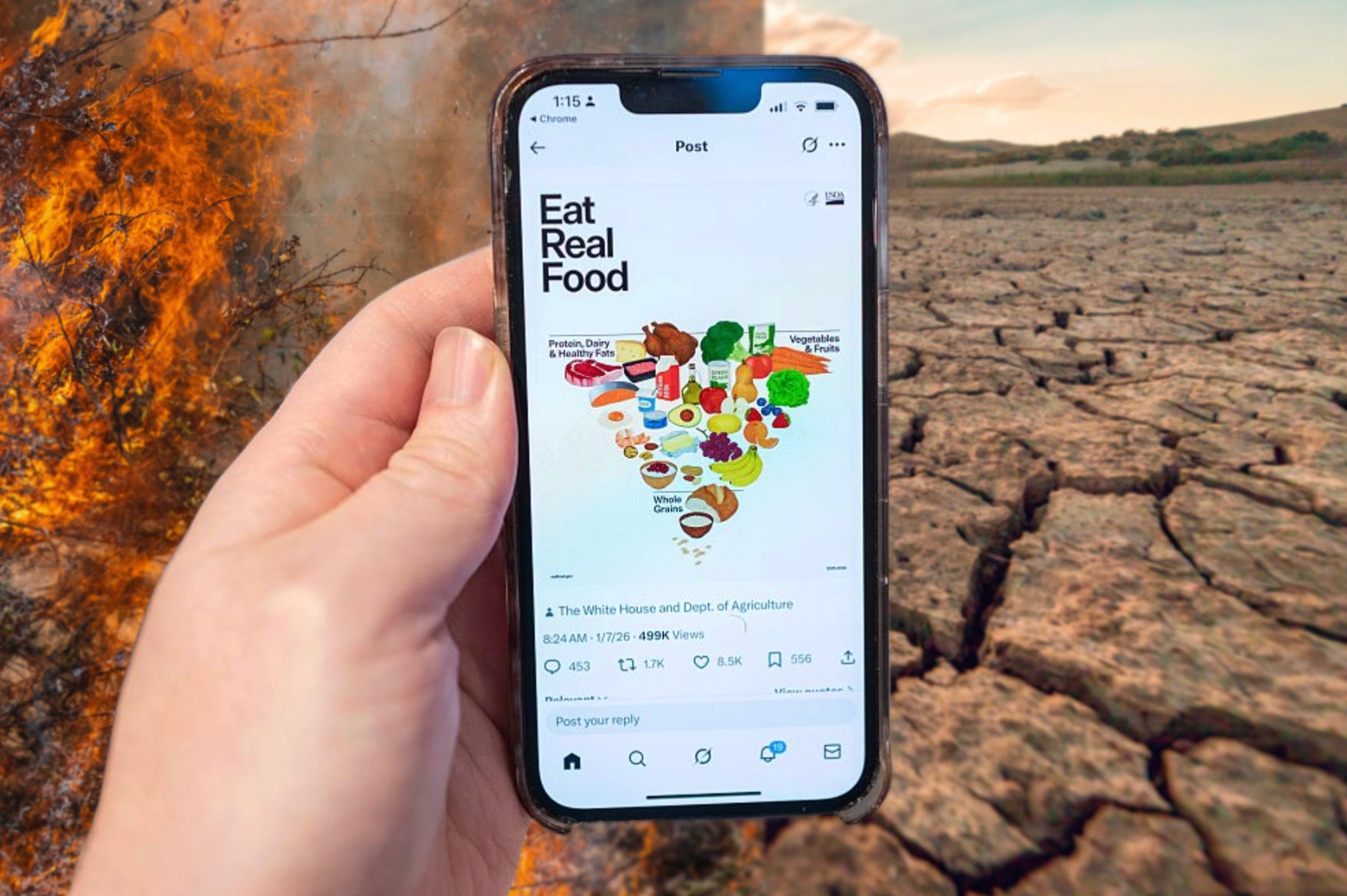
But in office, Kennedy has begun governing as if health begins and ends inside the human body. Nowhere is that clearer than in the new federal food pyramid his department unveiled this week—an inverted version of the original triangle that encourages beef and dairy consumption on nutritional grounds while ignoring the deeply harmful environmental systems required to produce those foods on an industrial scale.
The new inverted food pyramid isn’t merely a poster meant to guide individual choices. It is a set of policy guidelines that directs billions of public dollars toward specific foods, and the agricultural system that supplies them. It determines what food gets bought for school meals, child-care centers, senior-meal programs, and WIC food packages. It guides what foods the government buys for the military and federal cafeterias. It determines how SNAP educates low-income families about “healthy choices.”
In other words, when federal nutrition guidelines shift, the food system shifts with them. And with this new food pyramid, the food system will shift toward producing a lot more beef and dairy—the most resource-intensive and climate-polluting foods we produce at scale.

Americans already eat far more beef and dairy than most of the world. The average American consumes roughly 57 pounds of beef a year—nearly three times the global average—and the United States is the largest consumer of dairy on Earth.
The current rate of meat and dairy consumption is already threatening our health—not necessarily through the act of eating it, but through the impacts of producing such massive quantities of it. Industrialized animal agriculture is one of the largest sources of water contamination in the country. It is a massive contributor to drought in the West; the number one reason for Brazilian Amazon deforestation; and responsible for up to 18 percent of global carbon pollution. Our appetite for meat
...This excerpt is provided for preview purposes. Full article content is available on the original publication.