The Week Observed: August 15, 2025
Must Read
Score this round for the Detroit freeway fighters: For years the Michigan Department of Transportation has been trying to sell the city and neighborhoods on rebuilding I-375, a roadway that devastated historically Black neighborhoods in Detroit. Now, to use the preferred highway department euphemism, they've "paused" the proposed reconstruction.
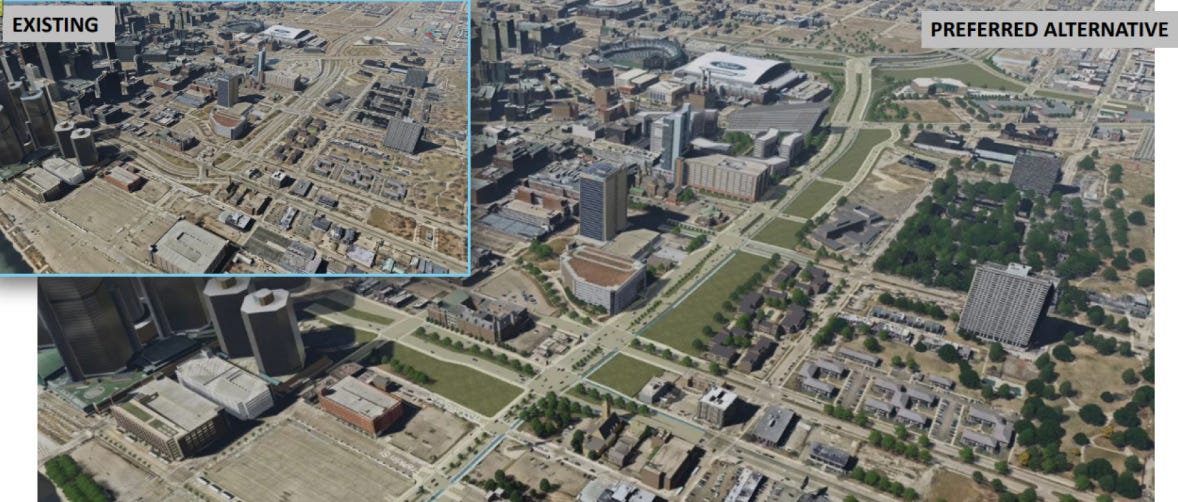
While MDOT asserted the project would somehow repair the damage done by the original freeway's construction, local advocates were having none of it. A local Rethink I-375 Community Coalition organized years of opposition to MDOT's proposed design. As Wayne County Executive Warren Evans wrote:
. . . the proposed redesign of the I-375 corridor is struggling to push the narrative that the new design will help heal the racial wounds of the past with intentional inclusivity that will provide all sorts of benefits to Black people. Please. Are you serious? Show me the evidence, and I mean specifics. Show me the clear and itemized benefits that this project will provide to the Black community, and exactly how it will repair and compensate for the unprecedented damage that was done all those years ago. Don’t paint a pretty picture, just give me the facts."
Neighborhood opposition led the highway department to downsize the project from a 10-lane boulevard to 6 lanes, but questions remained about whether this massive, car-oriented facility would do anything to restore the neighborhood. Planning has dragged on for more than a decade, and community concerns, especially about pedestrian access grew as the public became aware of the design. Meanwhile, project cost ballooned from $300 million to $500 million. Today's action signals a serious re-thinking of how to invest in Detroit's future: Hint: it won't be about big new roads.
More evidence that congestion pricing is working in New York. The data continue to stream in showing that congestion pricing in lower Manhattan is making life better. Two new data series came out recently. The first, traffic data from Tom-Tom show that cars, trucks and buses are all moving faster on city streets than before pricing was implemented in January.
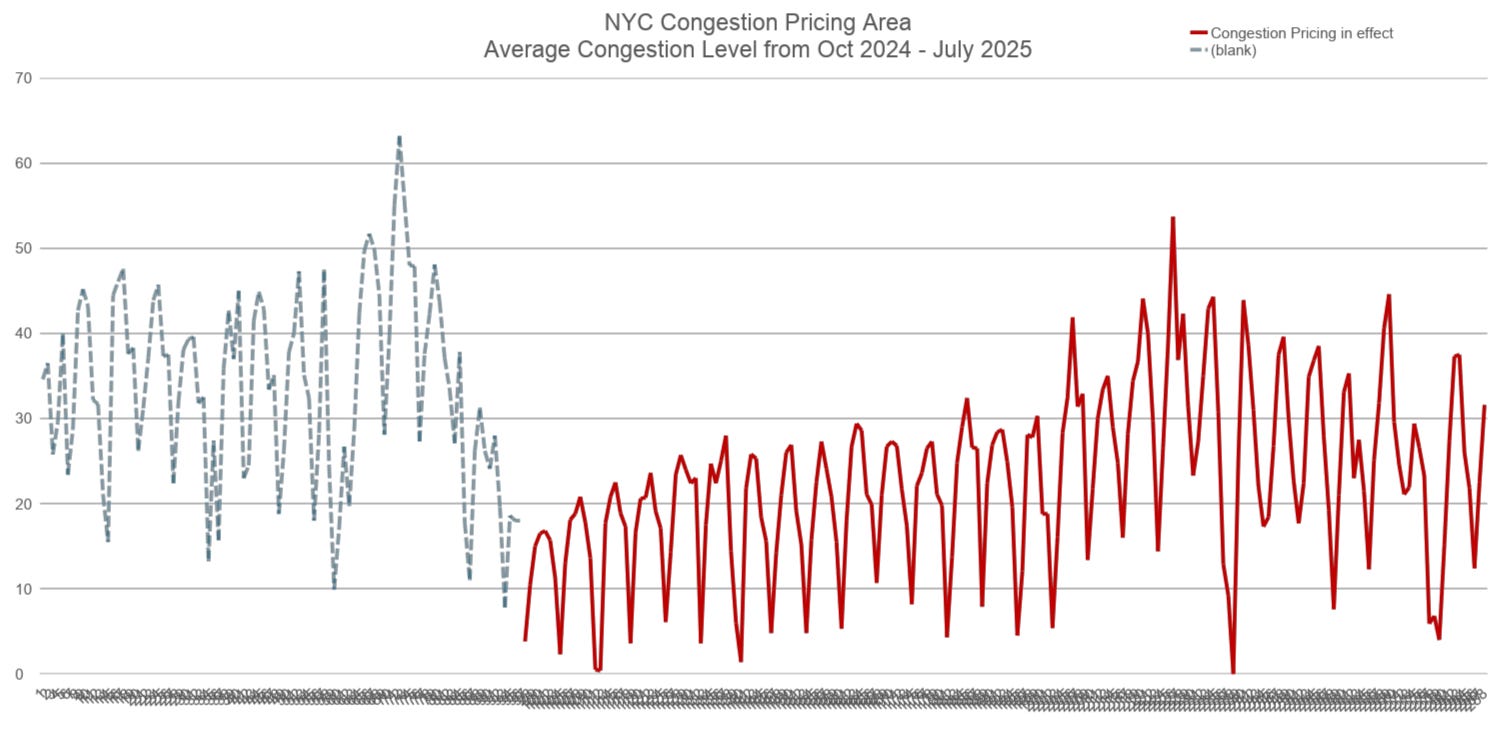
And importantly, there are even more people on the streets in Manhattan now than before pricing. Placer.ai reports that foot traffic levels in Manhattan have--years after the Covid pandemic--have reached new highs. Contrary to predictions that congestion pricing would impair economic activity, Gothamist reports
...Foot traffic in Manhattan surpassed pre-pandemic levels for the first time since the
This excerpt is provided for preview purposes. Full article content is available on the original publication.