Decolonisation II: Mexico and the Fourth Transformation
“Therefore, it is pertinent to remember history and, in doing so, affirm that: Mexico will not return to a regime of privilege and corruption. Mexico will not return to being a colony or protectorate of anyone. And Mexico will never surrender its natural resources. Therefore, with fortitude and faithful to our history, we say forcefully: Mexico does not bend, does not kneel, does not surrender, and does not sell out! Long live the Constitution of 1917! Long live the people of Mexico! Long live Mexico!”
Claudia Sheinbaum, President of Mexico, (2026) at the 109th Anniversary of the Promulgation of the 1917 Constitution, at the Teatro de la República.
Mexico occupies a special place in the history of colonisation and decolonisation.
It illustrates the paradoxes of colonisation and the incompleteness of decolonisation.
Mexico or New Spain was a principal site for the onset of “500 years of European colonialism”.
The ‘Spanish’ conquistadores, colonists and Catholics who came to the Americas and Caribbean after 1492 were the agents of a Europe-wide state led by a Flemish Habsburg prince, Charles V, King of Spain and Holy Roman Emperor. He was a foreigner to his own court in Madrid and yet inspired by Spanish zeal in the Reconquista, which may paradoxically be read as a centuries long process of ‘decolonisation’ (if I may stretch the term) of Muslim North African and West Asian expansion into Southern Europe. Columbus, Cortés and Pizzaro conquered the Americas in the name of this Spanish Crown, with the Reconquista and chivalric fantasies in their minds, but, in some ways, against the orders of their Emperor and the beliefs of their religion. Charles V and his successor Phillip II disciplined the wayward, ruthless, violent, greedy, crusading conquistadores as much as they lent an ear to the denunciations of their devastation of the peoples of the Americas by Bartolomé de Las Casas.
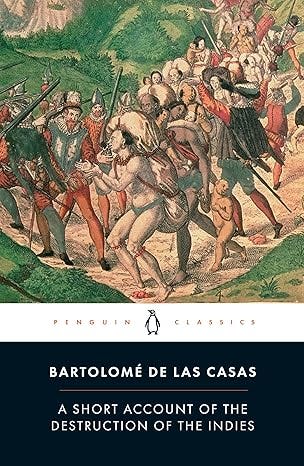
“The Spanish came like starving wolves, tigers, and lions,” wrote Las Casas in the 1550s, “and for four decades have done nothing other than commit outrages, slay, afflict, torment and destroy.” His decades of preaching did not stop the deaths by violence and disease, but his encounters with the suffering of Mexico did give birth to a first transatlantic conscience that flowed into modern day influences such as Latin American International Law (Greg Grandin, America América), modern human rights thinking, and Mexican humanism.
Colonial New Spain also
...This excerpt is provided for preview purposes. Full article content is available on the original publication.