A list of books and essays that I love
Deep Dives
Explore related topics with these Wikipedia articles, rewritten for enjoyable reading:
-
Mikhail Bakhtin
13 min read
The article extensively discusses Bakhtin's literary theory of polyphony and dialogism in relation to Dostoevsky, describing it as a 'deep revelation' that changed how the author views relationships and communication. Readers would benefit from understanding Bakhtin's broader philosophical framework.
-
Tomas Tranströmer
10 min read
The author mentions Tranströmer as one of the writers who feels like a 'high school friend' and whom they discuss intimately with their partner. This Nobel Prize-winning Swedish poet is less well-known internationally, making this educational for most readers.
-
My Struggle (Knausgård novels)
1 min read
The article describes Knausgård's six-volume autobiographical novel as 'the single literary event that has shaped me most as a writer.' Understanding the scope, controversy, and literary significance of this work provides essential context for the author's writing philosophy.
I thought it’d be fun to do a series where I answer questions, or write essays in reaction to prompts you give me. This essay is the first attempt.
If you want to submit a question or a prompt for a future essay, you can do so in the comments to this post, or in the Google Form I link at the end.
RJ: What books/authors have influenced you?
I’ll give you a list. But first some context.
When our oldest daughter, Maud, was a toddler, she used books with author portraits on them as her dolls. She had Crime and Punishment in a baby stroller, Joan Didion’s A Year of Magical Thinking in a diaper, and on the sofa, Maud herself sat, breastfeeding Thomas Bernhard.
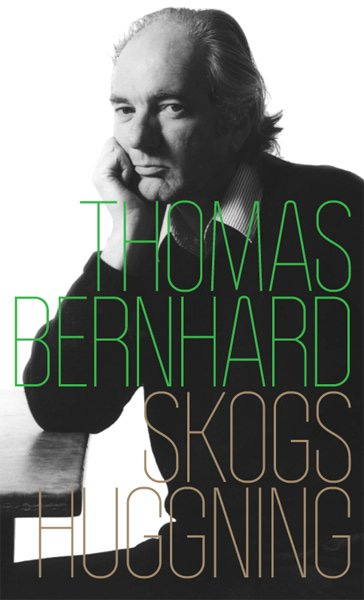
This amused me no end because I love seeing books brought down to that level: it’s where they belong. It always felt strange to me how some people put famous authors on pedestals. Authors are our friends! They are odd people who talk to us, sometimes from across the grave.
I haven’t always found it easy to relate to people in everyday life, so Tolstoy and Tranströmer and others I have read and reread since I was a teenager feel closer to me than most people I have met; they feel a bit like my high school friends. When Johanna and I talk, we’ll say Tomas and mean Tranströmer; he is one of our mutual friends, and we gossip lovingly about him. My journals are filled with thoughts I have had as I’ve read him and the rest—it feels like we’ve been talking for years, and in some ways, I know them better than my parents.
If I am to name a single literary event that has shaped me most as a writer, it is the publication of Karl Ove Knausgård’s My Struggle, 2009–2011. I was living only a few blocks away from Knausgård, in Malmö, while he wrote the books—every street and store and park in book 6, which describes his life while working on the series, were streets and stores and parks that I was walking in. If you live in Paris or New York, I guess it is quite common to read well-written books that describe your everyday life, but living in the provinces of Sweden, it was a revelation: literature is not something that happens far away, or in
...This excerpt is provided for preview purposes. Full article content is available on the original publication.