A brutal flu season, new dietary guidelines, and why cancer screenings are at risk
I (Katelyn) have temporarily escaped to the Amazon jungle, where the internet cannot even reach me. So this week, I left the YLE keys with my team and our good friend—and scientific communication rockstar—Jess Steier. You’re in good hands. Jess, take it away…
Hello YLE readers! I’m Jess Steier, public health scientist and founder of Unbiased Science, stepping in while Katelyn is on a much-deserved vacation. (During brief periods of WiFi connectivity, she’s sending pics that have me very jealous.)
What a week to guest-host: flu season is brutal, the new dietary guidelines are... interesting, the policy landscape is shifting fast, and the annual reader survey needs your feedback. Let’s get into it.
Infectious disease “weather report”
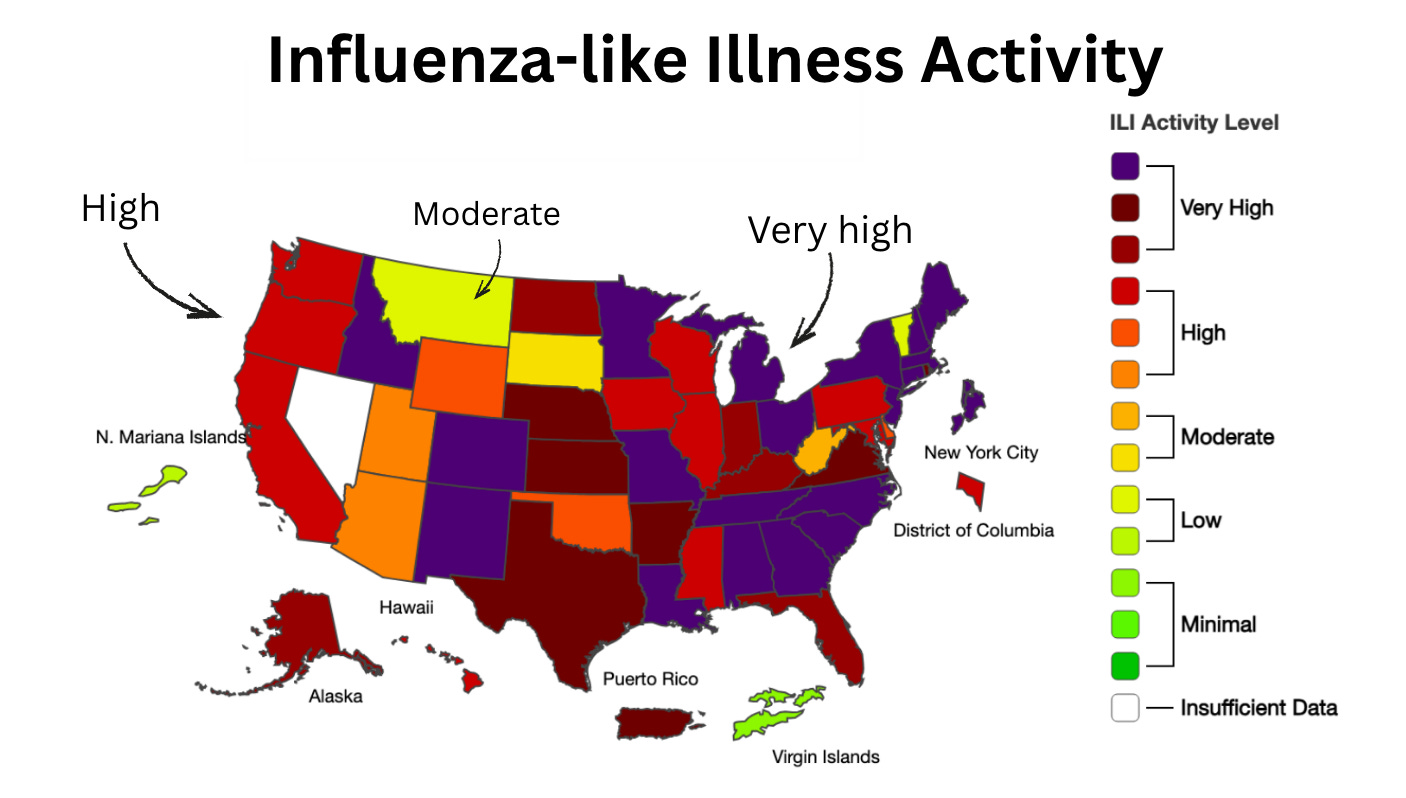
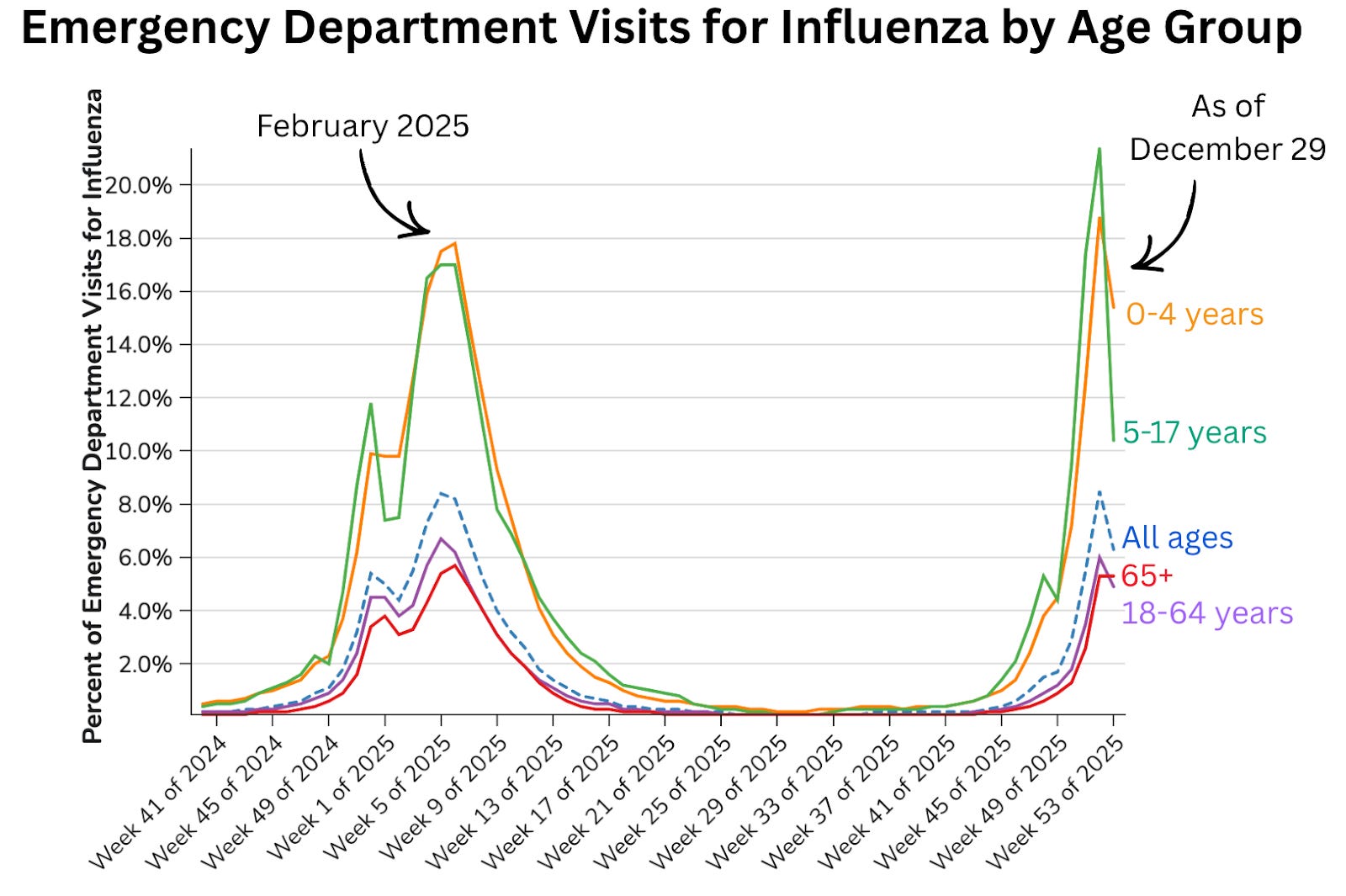
Flu. Buckle up, folks. We’re in the thick of a very rough flu season. The CDC tracks “influenza-like illness” (ILI)—doctor visits for fever, cough, and sore throat—as a proxy for respiratory virus activity. Most of those cases right now are flu. ILI is the highest it has been since 1997-98 (nearly 30 years), and the highest on record since the CDC started tracking. Last season, infections peaked at the beginning of February, and we’re already seeing similar rates a month earlier this year. And infections will continue to increase, since they haven’t peaked yet.
Emergency department visits are highest among kids ages 5-17, with children under 5 close behind. Seventeen children have died from the flu so far this season. For context, last year set the record for pediatric flu deaths (280). Looking at this horrible season, we might see similar rates this year, unless uptake of the flu shot—which greatly reduces the risk of hospitalization and death—catches up.
Subclade K, the latest offshoot of H3N2 (type A)—basically a slightly updated version of the virus we already know—emerged over the summer and is to blame here. It’s better at evading this season’s flu shot and prior immunity. It has accounted for roughly 80% of flu samples tested so far.
What this means for you: The best thing you can do is get a flu shot, and make sure everyone in your family 6 months and older has received one. It’s not too late.
The flu shot might not fully prevent an infection, but it can greatly reduce severity and reduce spread in
This excerpt is provided for preview purposes. Full article content is available on the original publication.