China’s Russia Strategy After the Xi–Putin Meeting: Depersonalize, Institutionalize, Insulate
Beijing is working to institutionalize ties with Moscow and hedge against potential shifts in Russian domestic politics. During Xi’s visit to Moscow last week, both he and authoritative state media emphasized the two sides’ “traditional friendship” (传统友谊) and - more provocatively - their “fighting friendship” 战斗友谊 in World War 2.
These formulations aren’t new. “Traditional friendship” 传统友谊” has been used in state media and MFA statements since at least the 1950s to describe ties with North Korea, Vietnam, Cuba, and various African states. “战斗友谊” (combat or fighting friendship) has been invoked in reference to countries that fought alongside China or the PLA—particularly the Soviet Union during World War II and North Korea during the Korean War. For instance, Xi mentioned “fighting friendship” during his 2015 Victory Day visit to Moscow.
The novelty lies not in the words themselves, but in their growing prominence and frequency. “Traditional friendship” (传统友谊) is increasingly used more systematically and visibly in high-level diplomacy with Russia, including joint statements, Xi’s signed articles, and People’s Daily editorials. The shifting emphasis reflects Beijing’s broader effort to depersonalize the relationship and reduce reliance on Putin by highlighting societal links.
This new emphasis on institutionalizing ties became more pronounced after the Prigozhin mutiny in June 2023. When Russian Federation Council Speaker Valentina Matviyenko visited Beijing the following month, Xi first described Sino-Russian ties as a “strategic choice made by the two countries based on the fundamental interests of their respective countries and peoples.” (发展中俄关系是两国基于各自国家和人民根本利益作出的战略选择). In context, Xi and the CCP were clearly signaling to Russia’s political elite their intent to sustain close ties with Moscow, regardless of who holds power.
Indeed, the PRC likely sees a medium-term leadership transition in Russia as increasingly plausible—though not necessarily likely. Putin’s grip remains firm for now, bolstered by elite and public support for the war and a formidable techno-surveillance apparatus. Still, a post-war reckoning could challenge his rule. With nearly one million casualties and hundreds of billions in lost economic growth, failure to achieve even his minimal objective of demilitarizing Ukraine could seriously erode his legitimacy.
While Putin is a highly skilled domestic political operator and could remain in power for years, Russia’s domestic political post-war outlook is increasingly uncertain. Beijing is institutionalizing ties with Russia’s political system to insulate the bilateral relationship from potential upheaval.
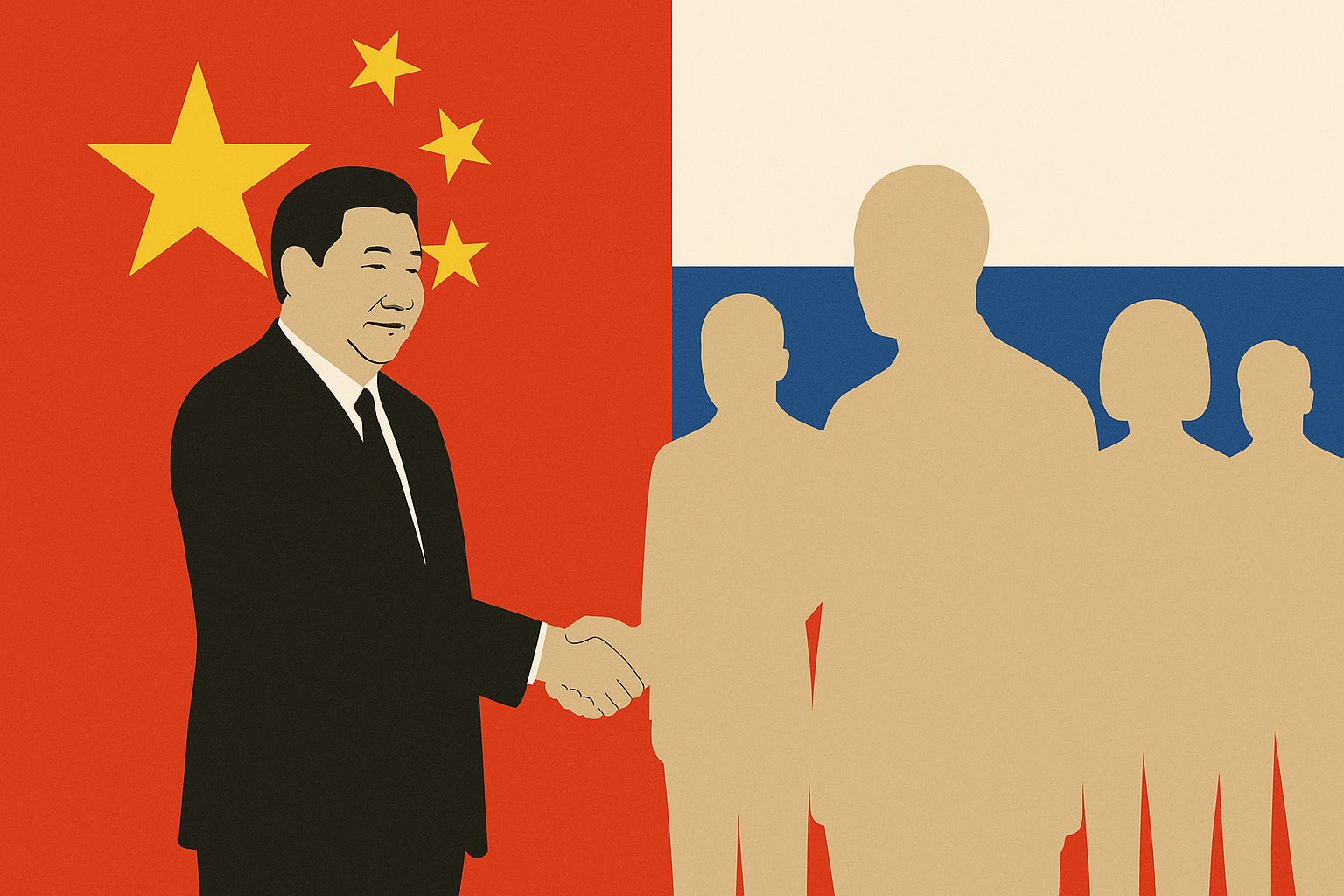
ChatGPT 4o image prompt: Please make a graphic of Xi Jinping and the CCP aiming to
...This excerpt is provided for preview purposes. Full article content is available on the original publication.