How do I get started with my research project?
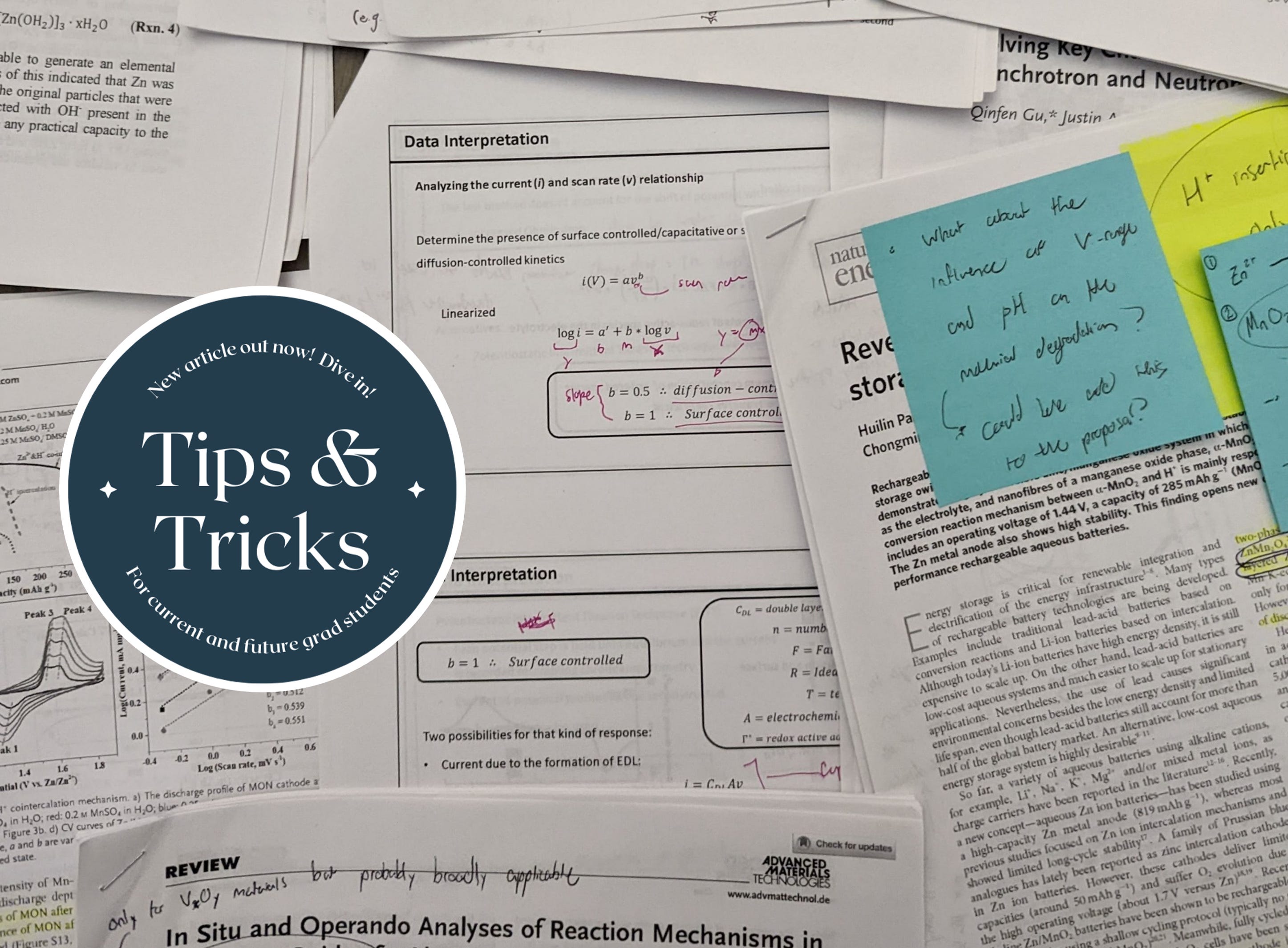
Starting a research project is one of the most daunting aspects of grad school. You likely just joined a new team, you moved to a different space - whether that’s a new office, building, university, country, or all the above – and you are expected to become an expert on a topic in just a few years. Brutal. What direction do you take? What should you learn first? How do you get off the ground running with your project? The best way to have a successful start to your project is to give yourself enough time to read. Read more than you think you need to. The learning curve for any graduate degree is steep and dedicating quality time to reading is your key to getting over it.
📘Why is reading so important?
It might seem obvious that reading is important, but at the start of your project it should arguably take precedent over any other aspect of your work. Why?
Context – A deep dive into the literature surrounding your work will give you context to how your project fits into a bigger picture. To help with this, ask yourself “what do I want my work contribute to my field of study?” and “how will my work impact future research efforts?”.
Inspiration – Seeing what others have done in the field will help you draw inspiration for the direction of your project. Learning about what is state-of-the-art in your field and reviewing how it got to that point will be an asset when you start to develop a plan of action.
Understanding – Reading will only lend itself to increasing your knowledge of the subject. At first, you may feel like the more you read the less you know, but that is why it is so important to keep going. Build your understanding of your research from the ground up by reading what others have done.
🧠Strategies to read more critically
Everyone has a different style of reading that works best for them, these are a few tips that I have found to make my reading experience the most efficient.
Don’t highlight everything - Highlighting can give you a false sense of security with your understanding of the material, and can clutter the truly important aspects of the paper. Be selective with what you choose to highlight. Ask yourself if the highlighted text
This excerpt is provided for preview purposes. Full article content is available on the original publication.