🪐 NASA and beyond: My chat with space policy analyst Casey Dreier
Deep Dives
Explore related topics with these Wikipedia articles, rewritten for enjoyable reading:
-
Artemis program
16 min read
NASA's current program to return humans to the Moon, directly referenced in the article's discussion of racing to put humans on the Moon ahead of China
-
Asteroid impact avoidance
14 min read
Explicitly mentioned as a discussion topic in the podcast and a core advocacy area for The Planetary Society; covers asteroid detection and deflection efforts
-
Jared Isaacman
14 min read
Referenced as 'Isaacman' in the episode topics; billionaire who commanded SpaceX Inspiration4 mission and was nominated as NASA Administrator
My fellow pro-growth/progress/abundance Up Wingers in America and around the world:
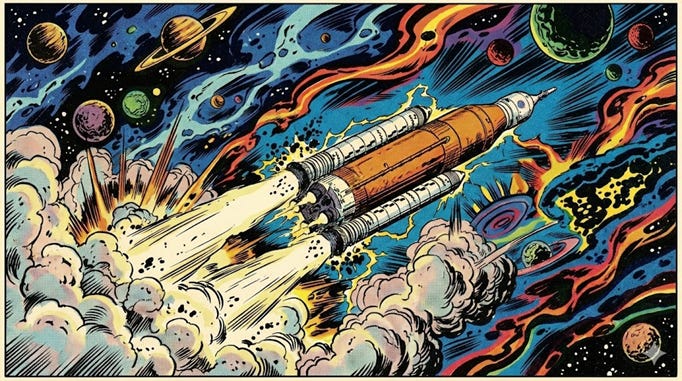
NASA is attempting the difficult task of juggling highly ambitious goals, but also possibly intense budget cuts. Despite personnel losses and unclear leadership, the administration is racing to put humans on the Moon — ideally ahead of China — and then Mars.
Today on Faster, Please! — The Podcast, I’m chatting with Casey Dreier about this complicated new era in NASA’s history. We’ll discuss whether or not we’re really in a space race, what to make of the differing visions of Elon Musk and Jeff Bezos, and the rise of planetary defense.
Dreier is chief of space policy at The Planetary Society where he advocates for planetary exploration, defense, and the search for extraterrestrial life. He has been featured in major publications from The New York Times to the Washington Post, and hosts his own podcast, Planetary Radio: Space Policy Edition.
In This Episode
The return of Isaacman (1:32)
Ditch the Space Race (7:42)
Visions of space (14:48)
Planetary defense (21:23)
Proceed with optimism (24:51)
(A lightly edited transcript of our conversation will be appear in my Week in Review issue on Saturday. Another option is using the Substack auto transcript function.)
On sale everywhere The Conservative Futurist: How To Create the Sci-Fi World We Were Promised
This excerpt is provided for preview purposes. Full article content is available on the original publication.