Qualcomm's Ventana RISC-V Acquisition
This post may be too long for your email client: please click on the title for the full post. This is not investment advice and the usual disclaimers apply.
Whilst the world was focused on Nvidia’s acquisition of most of Groq’s team and a license for Groq’s technology just before Christmas last year, another December acquisition of a startup by a chip giant generated a lot less discussion.
On 10 December Qualcomm announced they were acquiring RISC-V CPU designer Ventana Micro Systems. Like Groq, Ventana was a venture capital backed startup, this time founded in 2018, and which raised over $100m in funding. Investors included Intel CEO Lip-Bu Tan, through his investment firm Walden International. LBT quickly congratulated the Ventana team:

It’s a small world! Aside from LBT’s personal financial interest, Intel is both a Qualcomm competitor and potential future (foundry) supplier so a degree of diplomacy is probably appropriate.
Unlike Nvidia / Groq this was a true acquisition of all of Ventana. Like the other transaction though it also seems to be, in essence, a modified ‘acquihire’ where the company is bought for its engineering talent and its intellectual property rather than its products.
“We are thrilled to join the Qualcomm team and contribute our RISC-V expertise in the development of Qualcomm’s leading Oryon CPU technology,” said Balaji Baktha, CEO of Ventana Micro Systems.
It was notable that Intel’s LBT mentioned the team first in his ‘great exit for employees and investors’ comment. The sale of Ventana looks like a decent exit for employees but doesn’t seem to be a triumph for Ventana’s investors. Unlike Qualcomm’s purchase of Arm CPU designer Nuvia in 2021 for $1.4bn, this deal wasn’t big enough to require disclosure of the purchase price.
Since the Ventana deal was announced the market has largely left Qualcomm’s stock price (in blue) unchanged, whilst the news looks like it started Arm’s stock (in yellow) on a downward path and it’s now down over 20%.
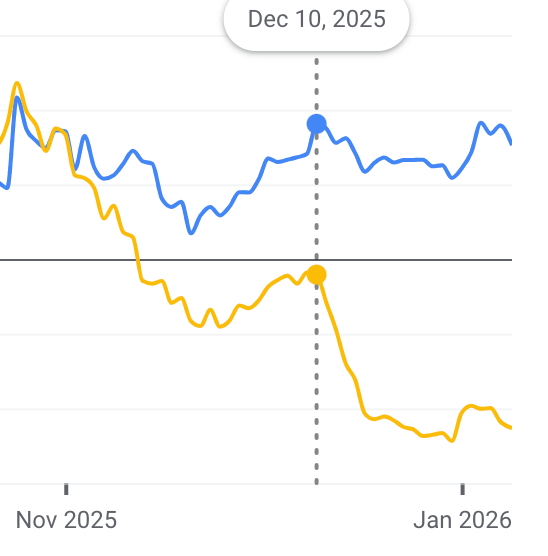
On the surface this makes sense. Arm has disclosed that Qualcomm is one of its biggest customers, accounting for 10% of Arm’s total revenue

Qualcomm moving from Arm to RISC-V with the consequent loss of its Qualcomm licensing revenues would be a big deal for Arm and a huge win for the RISC-V ecosystem. On the other hand fees paid to Arm make up a much smaller portion of Qualcomm’s expenses.
If
...This excerpt is provided for preview purposes. Full article content is available on the original publication.