A Christmas Eve Roundup
Deep Dives
Explore related topics with these Wikipedia articles, rewritten for enjoyable reading:
-
Insurrection Act of 1807
14 min read
The article discusses Trump's invocation of federal troop deployment powers and the Supreme Court ruling on Title 10. The Insurrection Act is the foundational law governing when presidents can deploy federal troops domestically, directly relevant to understanding the legal framework being debated.
-
Militia Act of 1903
11 min read
The article extensively discusses the 'Dick Act' and its provisions regarding the National Guard and 'regular forces.' This 1903 law fundamentally restructured the relationship between state militias and federal military, creating the modern National Guard system central to this legal dispute.
-
Posse Comitatus Act
12 min read
While not explicitly mentioned, this 1878 law restricting use of federal military for domestic law enforcement is essential context for understanding the legal constraints on presidential power to deploy troops domestically that the article addresses.
Hello from charming Kingston, NY! I’m up here with family for the week, and we’re all enjoying the sound of babies, the sight of dogs romping in the snow, and the sharing of generational stories among cousins, uncles and aunties.
Several big stories broke this week, including a long-awaited SCOTUS ruling on the legality of Trump’s troop deployments. As I’ll discuss below, this caught many by surprise (in a good way), given the Court’s recent pattern of finding any reason at all to back the regime and its unconstitutional and illegal actions.
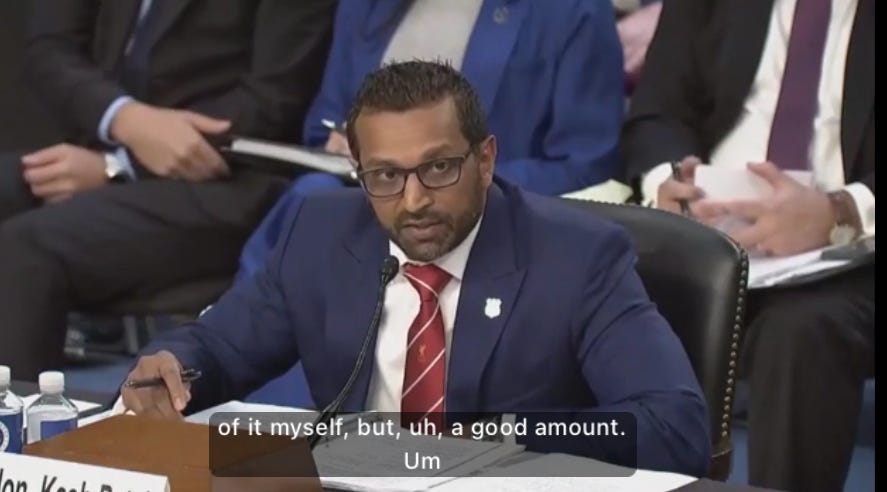
I’ll also cover some of what the Epstein files have revealed in the DOJ’s second big release. The release included documents indicating the FBI had identified 10 Epstein co-conspirators, directly undermining Kash Patel’s sworn testimony before Congress. Several other documents allege Trump committed very serious crimes.
As to the latter, I want to proceed cautiously given that the FBI receives many allegations, and allegations alone are not actionable without proof. That doesn’t mean, however, that the public perception of Trump won’t be further damaged.
SCOTUS rules against Trump on federal troops
In a 6-3 ruling, with the usual radicals dissenting (Justices Alito, Thomas and Gorsuch), the Supreme Court found that President Trump’s deployment of federal troops to Illinois was illegal under Title 10. This is a huge blow to Trump’s plans to co-opt state national guards in service of his fascist project.
The way the Court got there wasn’t by reviewing whether Trump’s declaration of a “rebellion” that had to be put down was legit. Rather, it followed the reasoning of an amicus brief by Prof. Marty Lederman of Georgetown University, who argued that the language of Title 10 foreclosed use of the National Guard if Trump had not determined that the U.S. military was unable on its own to put down the “rebellion.”
When I’d read that amicus brief at the time, I was quite persuaded by it. This is what I wrote in a social media post about Prof. Lederman’s argument at the time:
...For you law geeks out there, as Prof. Steve Vladeck wrote today in his column, there’s a possible wild twist on the national guard cases.
Per Vladeck, Professor Marty Lederman of Georgetown University “argued quite persuasively in an amicus brief filed in the Supreme Court in the Illinois case that there’s a pretty good argument that the lower courts have largely sidestepped
This excerpt is provided for preview purposes. Full article content is available on the original publication.