Venezuela
Deep Dives
Explore related topics with these Wikipedia articles, rewritten for enjoyable reading:
-
Monroe Doctrine
12 min read
The article explicitly discusses the 'Trump Corollary' and 'Donroe Doctrine' as a renewed Monroe Doctrine. Understanding the original 1823 doctrine, its historical applications, and how it has been invoked to justify US intervention in the Western Hemisphere provides essential context for evaluating current Venezuela policy.
-
1954 Guatemalan coup d'état
11 min read
The article directly references the overthrow of Jacobo Árbenz as a historical precedent for US coercive intervention when managerial control fails. This detailed case study illuminates the pattern the author argues is repeating with Venezuela.
-
Resource curse
14 min read
The article's opening observation that Venezuela's vast oil reserves 'have not translated into significant oil supply or export revenues' directly invokes this economic phenomenon. Understanding why resource-rich nations often suffer poor development outcomes contextualizes Venezuela's current crisis.
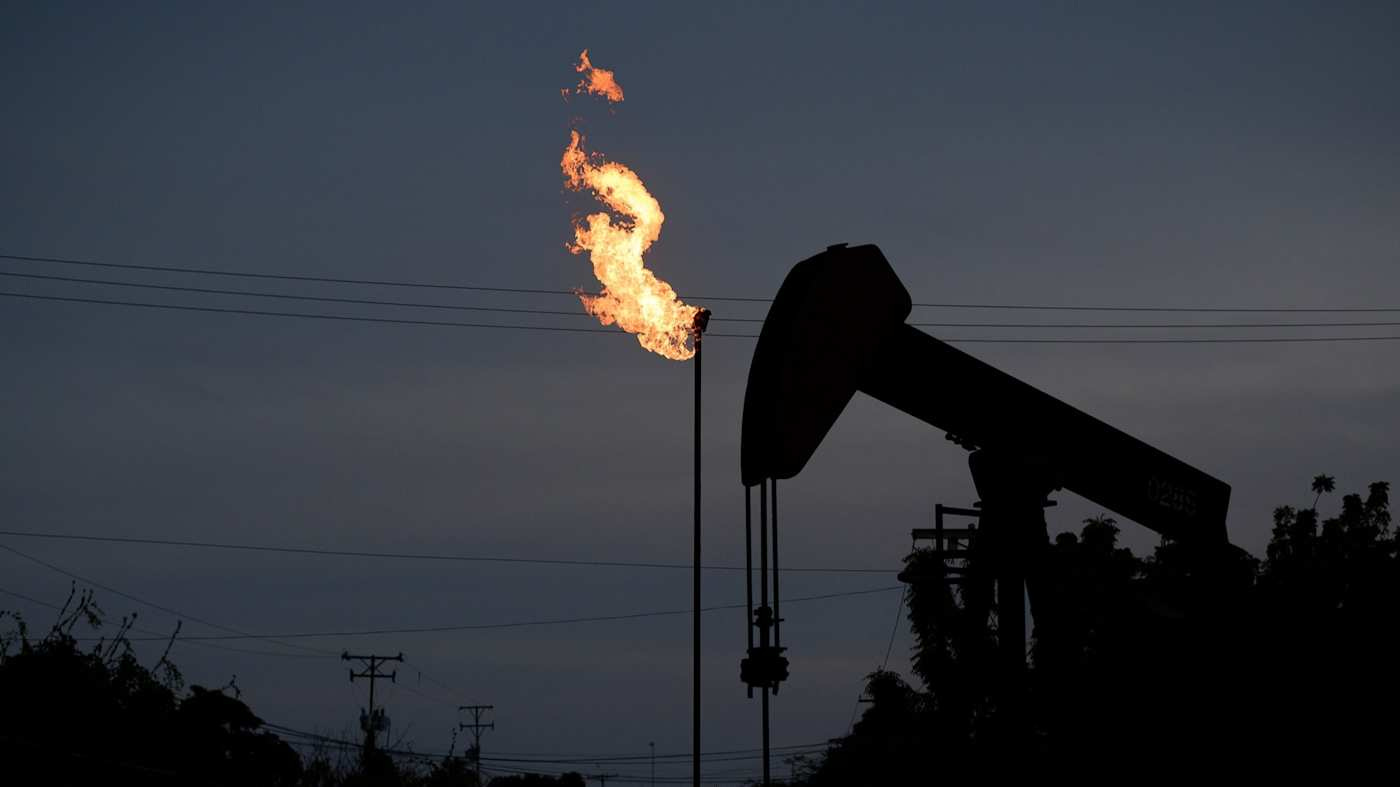
When does permissible strategic competition become illegitimate coercion, and when does state power begin to resemble organised crime? What is the Trump administration’s logic in pardoning former Honduran President Juan Orlando Hernández while indicting the sitting Venezuelan president Nicolás Maduro on similar allegations of drug trafficking? This article examines the recent US escalation from maritime interdiction in the Gulf of Mexico to the use of armed force against Venezuela as an unfolding crisis of responsible statehood.
There is a recurring instinct in American strategic culture when it comes to power, resources, and order. In some contexts it prefers management to mess, contracts to conquest, and leverage to occupation. The ideal outcome is not formal control but compliance so that oil flows, markets stabilise, rivals are excluded, and all of it happens through arrangements that appear legal and technical. Power, at its most comfortable, does not look like domination at all.
Yet Venezuela exposes the limits of that instinct. Because when consent is not forthcoming, contracts fail, when sanctions do not compel compliance, and when leverage runs out, power does not dissolve, but rather it escalates according to the dominant strategic culture of the time. What emerges is a movement from managerial control to coercive authority that is neither accidental nor aberrational. It is anticipated, structured, and in many respects brazenly and openly articulated in the 2025 US National Security Strategy (NSS). Venezuela is not a deviation from American strategic culture, but very much demonstrative of its extremities.
What makes this moment significant is not simply the possibility of intervention or resource seizure. It is what the transition from contracts to coercion reveals about the nature of contemporary state power, its relationship to legality, and the fragility of statehood as a normative project in a world increasingly crowded with alternative, often brutal, forms of governance.
The managerial model of power
For decades, in certain places and at certain times, US power has been exercised primarily through indirect means. Control has rarely required installation of puppet regimes, annexation or formal occupation. Instead, it has been embedded in contracts, finance, sanctions regimes, supply chains, insurance markets, export controls, licensing frameworks, security partnerships, and dispute resolution through multilateral bodies. Oil, in particular, is ideally suited to this model. It is capital-intensive, infrastructure-bound, globally traded, and deeply entangled with
...This excerpt is provided for preview purposes. Full article content is available on the original publication.