The world's largest database of human knockouts
Happy Friday! This week’s post is closely related to the last week’s. If complete loss of a human gene is compatible with life, it is likely that humans without that gene are living somewhere in Pakistan. Danish Saleheen, a Pakistani physician scientist at Columbia University, is on a mission to identify all such humans and build the world’s largest database of human knockouts. Pakistani Genomic Resource (PGR) was conceived nearly two decades ago. What began as a research project to study the genetics of myocardial infarction (initially called as Pakistan Risk of Myocardial Infarction Study (PROMIS)) has slowly transformed into PGR now. Some of you might be familiar with PGR’s flagship paper published in Nature in 2017 that for the first time familiarized the field with the phrase “human knockouts”. Danish Saleheen is a familiar name among many industry genetic researchers, as PGR has grown over the years through the funding of many biotech and pharma companies, including Regeneron Genetics Center. I’ve always amazed with the value of this resource for drug development. I have shared many stories of how human knockouts from South Asian populations have helped drug developers assess safety of inhibiting a gene or its product (e.g. HAO1 RNAi for the treatment of primary hyperoxaluria type 1, APOL1-inhibitors for the treatment of APOL1-mediated kidney disease in African Americans etc.). The PGR will become a major resource for drug developers in the upcoming years. Below is a Twitter thread I wrote during the American Society of Human Genetics (ASHG) conference in 2022 on a talk by Danish on the PGR.
From the Twitter archives

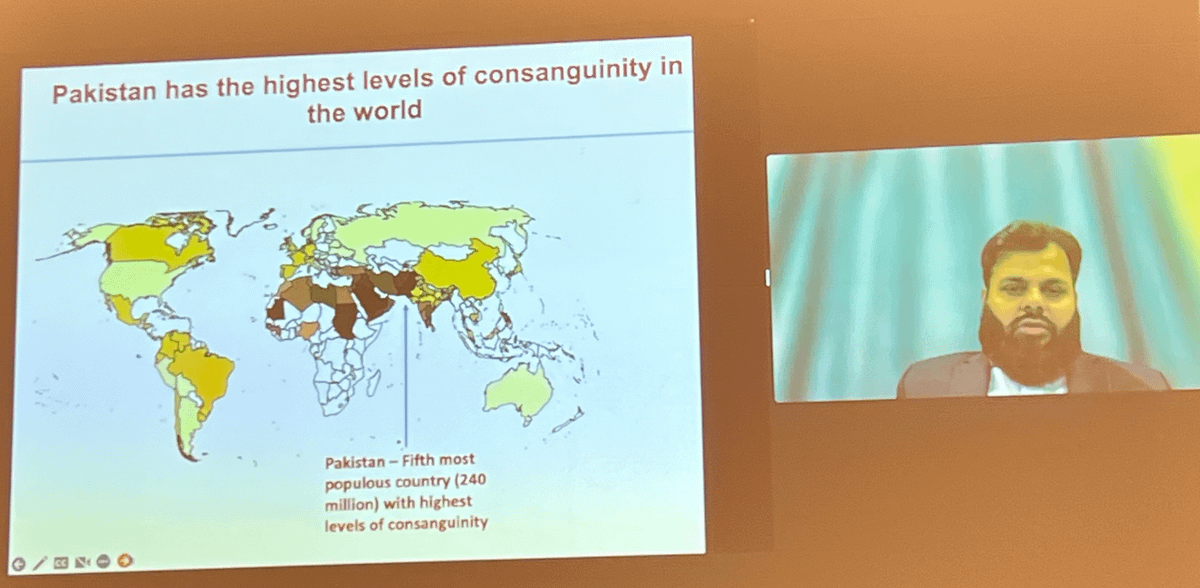
Danish Saleheen stunned the audience with his story of building the world's largest cohort of human knockouts in Pakistan, world's 5th most populous country with the highest level of consanguinity.
Starting with around 10,000 individuals sequenced in 2017, now the cohort comprise around 200,000 individuals recruited, 80,000 of whom were exome sequenced. The goal is to sequence 1 million.
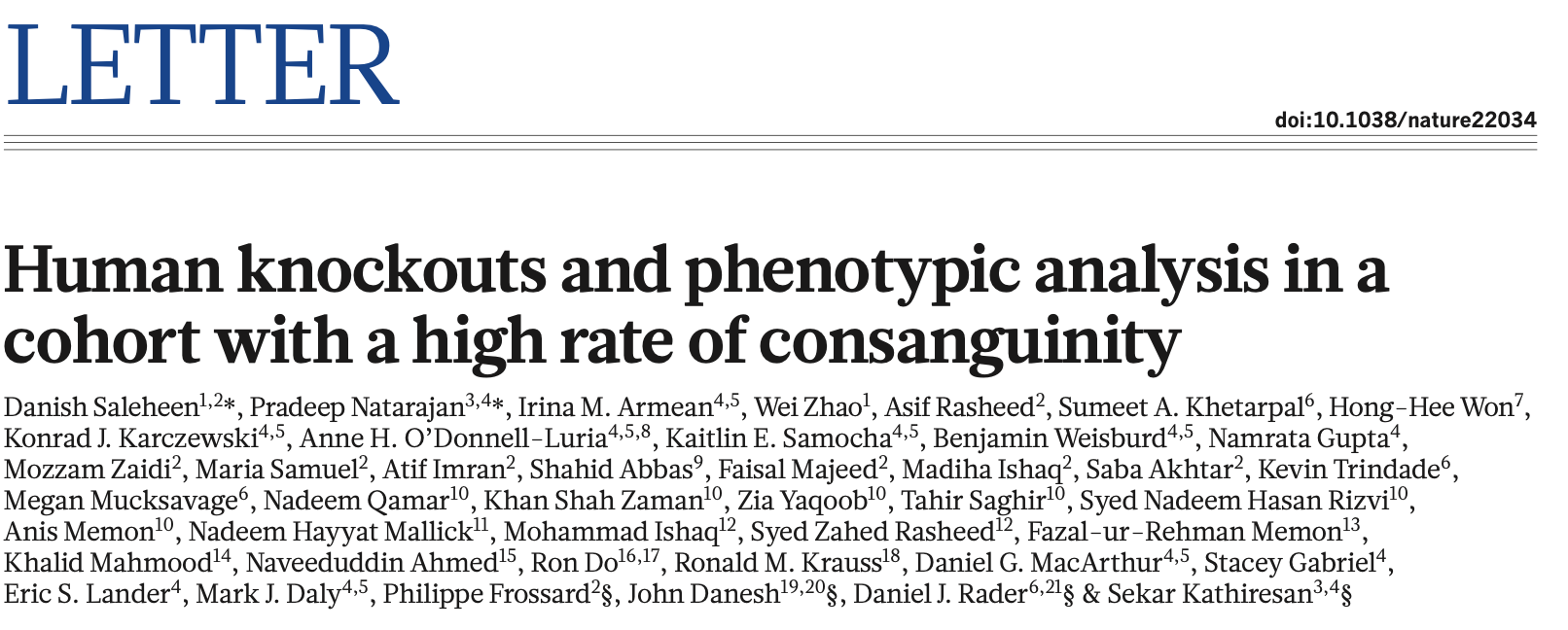
Based on these data, they have identified so far >14,000 human knockouts for >5,000 genes. To achieve the same in European populations, you'll have to sequence >11 million individuals.

Such a high prevalence of knockouts is due to the extremely high rate of consanguineous unions in the communities. In the current sample, around 40% are born to first cousin unions. Marrying outside the family circle
...This excerpt is provided for preview purposes. Full article content is available on the original publication.