The Civil War Didn't 'Settle' The Question Of State Secession
Deep Dives
Explore related topics with these Wikipedia articles, rewritten for enjoyable reading:
-
Texas v. White
15 min read
The article extensively discusses this 1869 Supreme Court case as a key legal precedent on secession. Readers would benefit from understanding the full legal reasoning, the historical context of Reconstruction-era jurisprudence, and how this case has shaped constitutional interpretation of state sovereignty.
-
Articles of Confederation
11 min read
The article references Chief Justice Chase's reliance on the Articles' 'perpetual union' language. Understanding the actual governance structure, weaknesses, and replacement of America's first constitution provides essential context for debates about federalism and state sovereignty.
-
Salmon P. Chase
1 min read
Chase authored the Texas v. White majority opinion and was a Lincoln appointee with a complex political history as an abolitionist who later served as Chief Justice. His biography illuminates the political dimensions of Reconstruction-era constitutional interpretation.
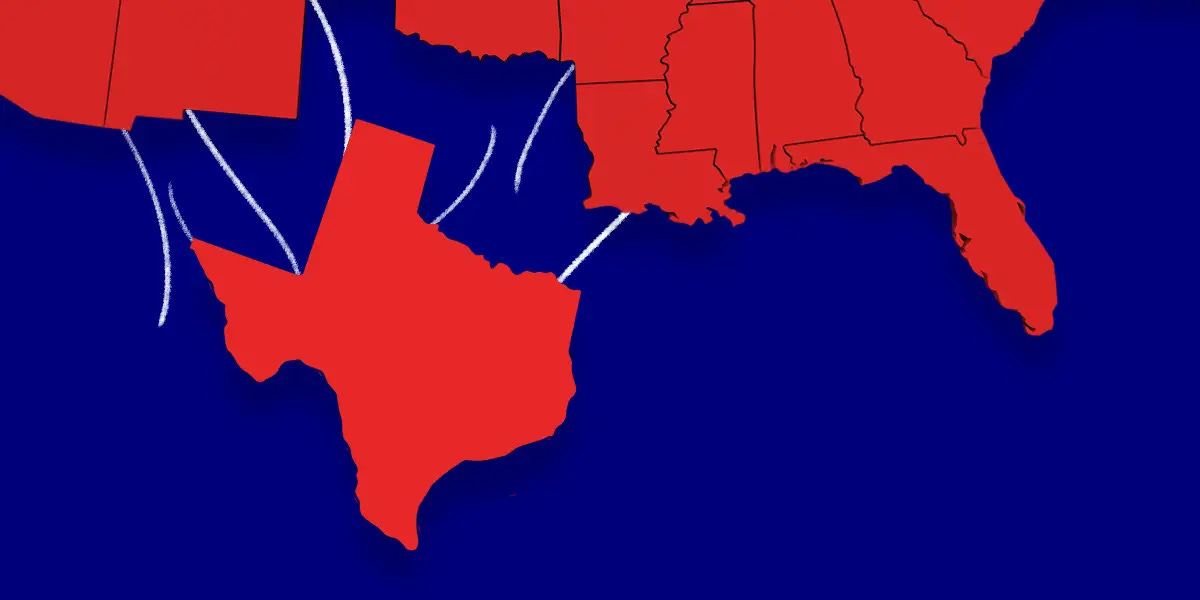
Secessionist inclinations are on the rise in the United States, and are sure to intensify after Nov. 5 regardless of which party prevails. When that happens, you can expect the accompanying discourse will be peppered with assertions that states have no right to secede, with many declaring the question was “settled” by the Civil War.
The embedded contention that legal and moral questions are rightly and permanently settled by the outcome of a mass-murder contest is absurd on its face. However, the notion is so widely and casually embraced that it invites an emphatic response. It also serves as a starting point to address other flawed forms of secession skepticism.
Written by a socialist in 1892, the Pledge of Allegiance attempts to program Americans into internalizing a falsehood: that the United States is “one nation, indivisible.” On that score at least, the deeply-flawed pledge isn’t working on a large number of citizens.
A YouGov poll taken earlier this year found substantial slices of both major parties would support their state’s departure from the union: 29% of Republicans and 21% of Democrats. Similarly, the five states in which secessionist yearning is highest represent a mixed bag of red and blue: Alaska (36%), Texas (31%), California (29%), New York (28%) and Oklahoma (28%). While 23% of all Americans want their state to secede, 28% would be content if other states did so.
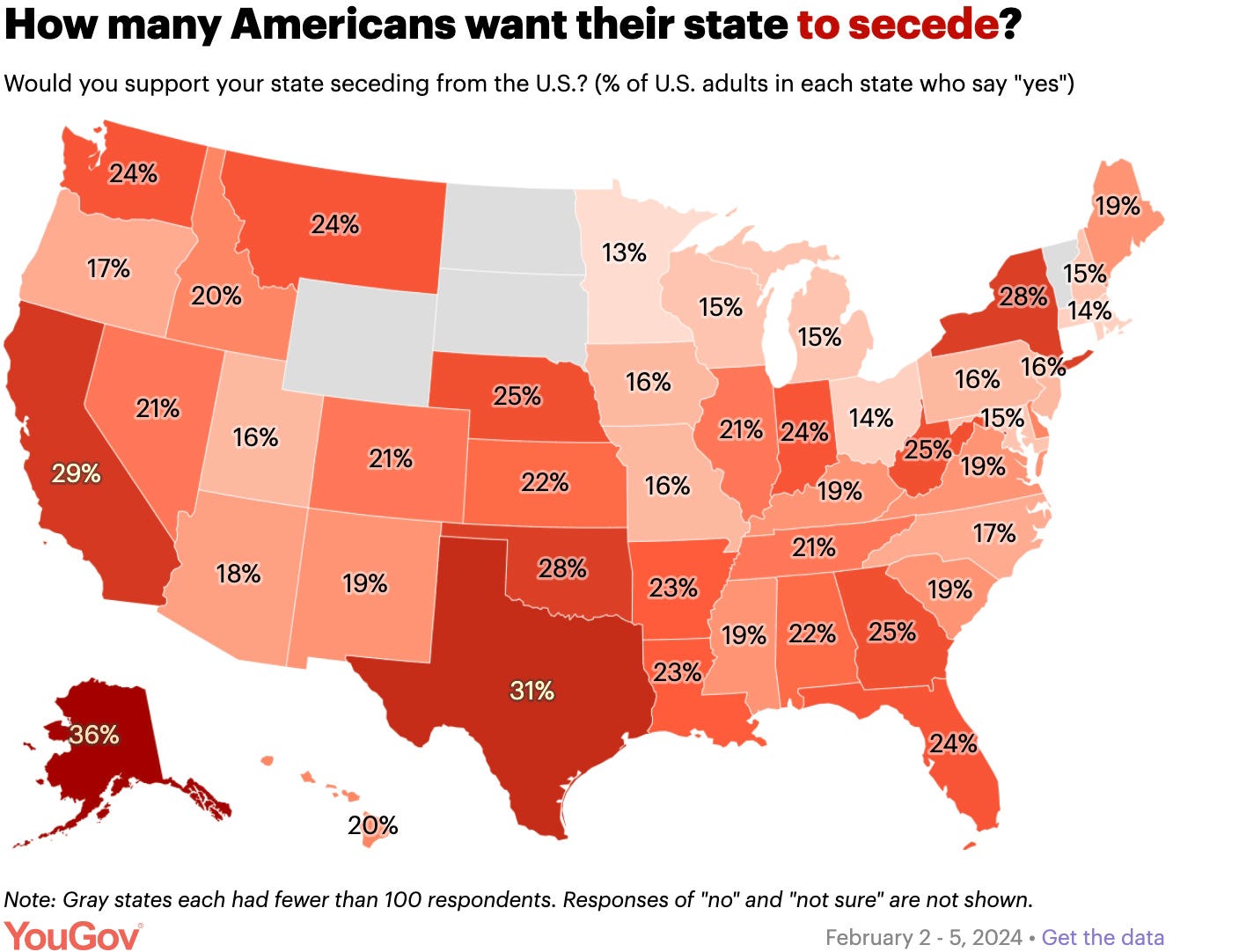
For now, the Lone Star State seemingly has the strongest separatist momentum. In a June victory for the Texas Nationalist Movement, the Republican Party of Texas adopted platform planks proclaiming the state’s right to secede, and urging the legislature to arrange a state referendum question on the issue in the next general election. Many other states have secession movements of their own, and this July alone saw the launch of Free Louisiana and NHEXIT Now, the latter representing a rebranded drive for an independent New Hampshire.
It’s only natural that secession interest would be highest in some of the reddest and bluest states, where citizens have the most to lose via the imposition of centralized federal dictates that emphatically clash with local preferences. Those anxieties over which party governs Washington, and the animosity between the two principal opposing camps, will only grow as Election Day nears and could skyrocket after the votes are counted.
It shouldn’t be that way: As I wrote in January here at Stark Realities,
...This excerpt is provided for preview purposes. Full article content is available on the original publication.