108: We need to talk about the baby sheet mask controversy
Deep Dives
Explore related topics with these Wikipedia articles, rewritten for enjoyable reading:
-
The Beauty Myth
11 min read
Naomi Wolf's 1990 book directly addresses the article's central argument about how patriarchal beauty standards and capitalism create insecurities to profit from them, framing beauty work as necessary rather than culturally constructed
-
Skin flora
13 min read
The article mentions that children's skin microbiome 'thrives best when left alone' and that unnecessary products cause harm - this scientific topic explains the biological basis for that claim
-
Physical attractiveness stereotype
10 min read
The article references research showing attractive people earn higher salaries and receive better treatment - this Wikipedia article covers the 'what is beautiful is good' phenomenon and its documented effects
Welcome to Two Truths, a bestselling newsletter exploring the many truths of motherhood from journalists & maternal health advocates Cassie Shortsleeve & Kelsey Haywood Lucas of Motherspeak. Two Truths is rooted in the healing & affirming principle that two (or more) things can be true. It’s a “best parenting Substack” per Motherly and The Skimm says you should subscribe; also seen on Vox, TODAY.com, HuffPo & more.
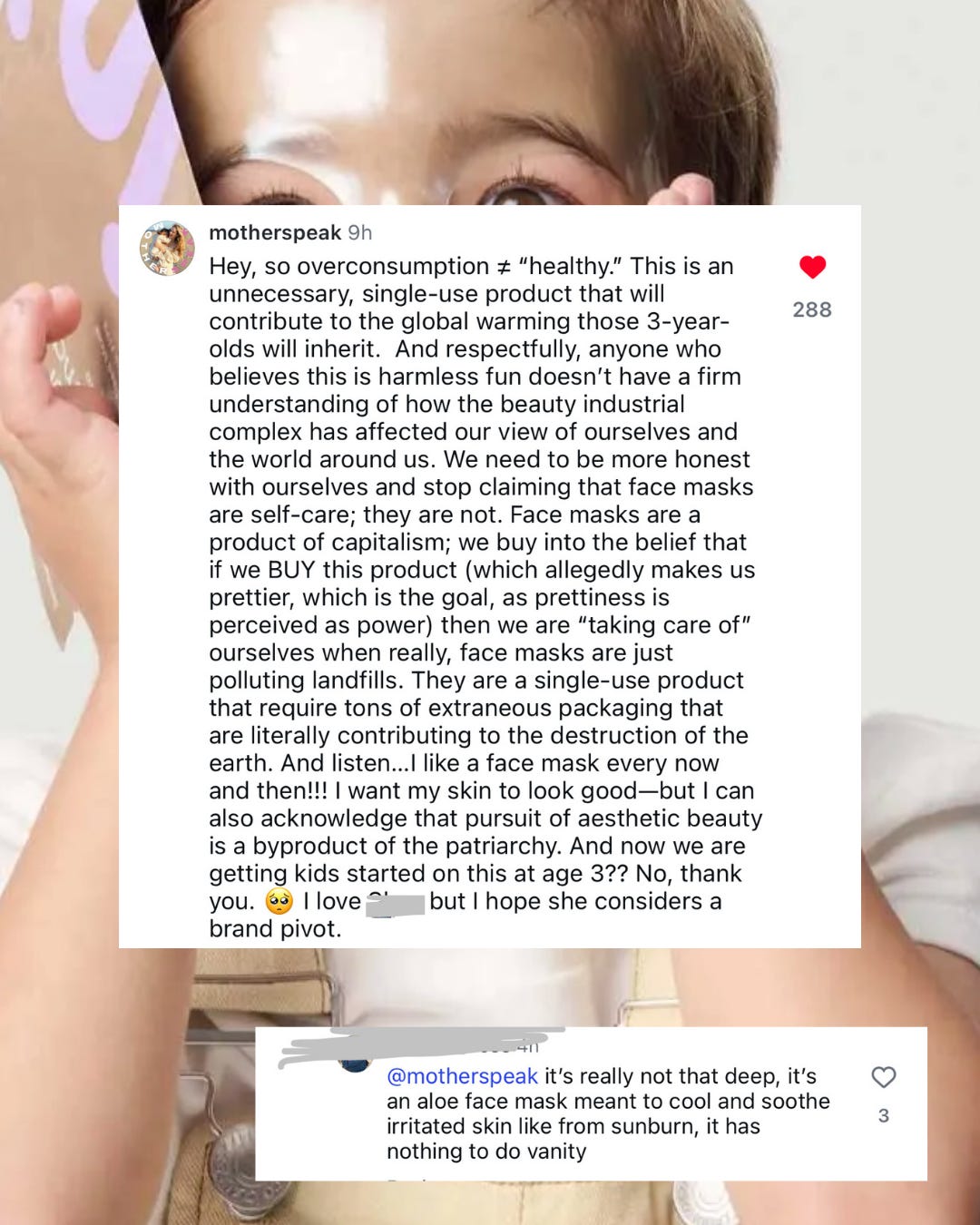
When I shared a comment on a news post covering the baby sheet mask drama yesterday, I wasn’t planning to write about this topic further—so many others have already spoken up about why this particular beauty product is problematic—but then someone replied to my comment and said, “It’s really not that deep.”
It made me so...sad. Disheartened. “It’s not that deep” is a sentiment I have seen a lot of moms sharing in the discourse around this “sheet masks for toddlers” brand launch, but it is “that deep.” Let me explain.
(But first, if you missed it: The outpouring of criticism began with the launch of Rini back on November 6; commentary picked up again when the brand’s celebrity co-founder dismissed concerns in an interview with Today on Wednesday.)
It’s hugely important that as parents raising young children, we firmly understand the impact that capitalism and patriarchal beauty standards have influenced how we feel about ourselves, how we view our own place within the beauty industrial complex, and how we define “self-care.” Because we can either perpetuate the problem, or we can be a part of changing it.
Now I’m going to be real with you before we dive in: I am what one might call a “skincare girlie.” I love a sheet mask every now and then. I want my skin to look good. I have actively participated in upholding traditional beauty standards during my years as a beauty writer and editor. I frequently offer skincare recommendations that I stand behind, for both adults and children, in this newsletter.
I have learned, and I can now acknowledge and admit—only relatively recently, to be honest—that the reason I want my skin to look good (or to “be healthy,” as the beauty industry so often frames it) isn’t because it’s empowering or because I truly enjoy rubbing my face with lotions and oils twice per day. The hard truth—the one I
...This excerpt is provided for preview purposes. Full article content is available on the original publication.