Why Deepseek Appeasing Karens is Key to CCP Stability
Deep Dives
Explore related topics with these Wikipedia articles, rewritten for enjoyable reading:
-
Sub-provincial division
12 min read
Linked in the article (10 min read)
-
Prefecture-level city
7 min read
Linked in the article (6 min read)
Anon contributor “Soon Kueh” occasionally writes about China and delights in bureaucracy. Editor Lily Ottinger provides the voiceover, and welcomes feedback on her delivery!
How do Chinese people complain to the government? Most foreigners assume that showing dissatisfaction towards the Chinese government would be very difficult, if not dangerous. In 2012, there were reports of petitioners being intercepted en route to Beijing and thrown into “black jails 黑监狱”; interceptors were also paid 200 yuan/day for every petitioner withheld back in 2012. However, this high risk only applies to complaints that threaten powerful local officials and party stability. For complaints that pose a lower threat to domestic stability, there are robust complaint mechanisms embedded within China’s authoritarian structure to maintain domestic stability.
Who is Shenzhen Ruler Guy?
I was first exposed to the possibility of thriving Chinese Karens when Shenzhen Ruler Guy 深圳“卷尺哥” appeared on my Instagram feed, tape measure in hand. Ruler Man’s charm lies in his precise critiques quantified with his trusty tape measure. In one video, he uses his bendy ruler to poke through a pothole, lamenting that it is way too deep. A classic Karen who holds incredible sway, his posts expose public infrastructure defects and prompt authorities to fix them quickly. Almost every single critique he has made so far has been heeded by the Shenzhen authorities. His virality has also sparked a national trend of Ruler Guys in cities such as Handan 邯郸 and Fuzhou 福州, although some netizens have criticized them as “Leaders of the Busybody Agency 多管局局长.”
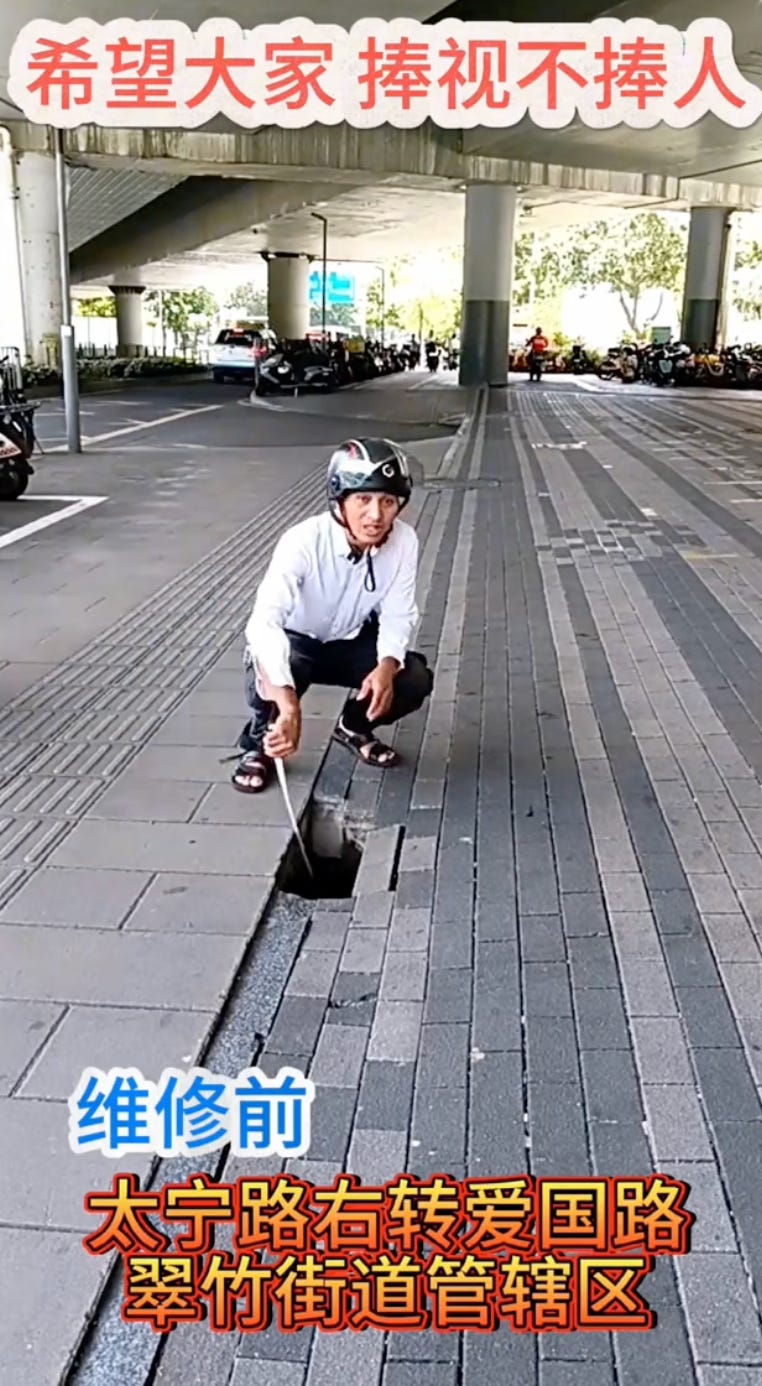

What’s interesting is not Shenzhen Ruler Guy’s Karen-ness per se, but the speedy proactiveness of Shenzhen authorities in fixing these small-potato issues. This story led me into the deep rabbit hole of the Kafkaesque ecosystem of Chinese public service feedback apps and the emerging role of AI in managing them. But before we get into that, we have to start from the beginning and understand why it’s worth fixing these minute defects in the first place.
Why fix it if it ain’t broken?
Media pressure obviously plays a huge role, but the eagerness of Shenzhen officials reveals an underlying desire
...This excerpt is provided for preview purposes. Full article content is available on the original publication.