Two Cheers for the Woke
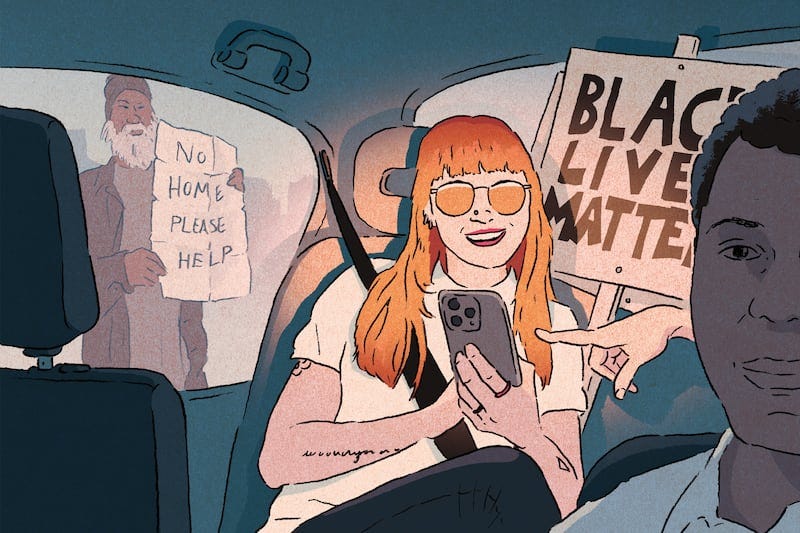
Starting in the interwar period (between World Wars I and II) and rapidly accelerating in the 1970s, there were shifts to the global economy that radically increased the influence of the “symbolic industries” – science and technology, education, media, law, consulting, administration, finance, non-profits, NGOs and advocacy organizations, and so forth. People who work in these fields traffic primarily in data, ideas, rhetoric, images instead of physical goods or services. These “symbolic capitalists” are also the Americans who are most likely to self-identify as antiracists, feminists, environmentalists, leftists or “allies” to LGBTQ people. And for good reason.
From the outset, these professionals have defined themselves and their jobs through a commitment to social justice and altruism. Journalists, for instance, are supposed to speak truth to power and be a voice for the voiceless. Academics are supposed to follow the truth wherever it leads, without regard to whether it serves others’ financial or political agendas. Symbolic capitalists successfully won higher pay, prestige and autonomy than most other workers under the auspices that providing us with these benefits serves the common good – including and especially helping the most vulnerable and disadvantaged in society.
In the years that followed, symbolic capitalists sought to enhance our influence further by arguing that if still more resources and authority were consolidated in our hands, we would usher in an age of unprecedented social cohesion, progress and prosperity. Under our rule, opportunities would be allocated according to merit. Resources would be redistributed according to need. Disputes would be adjudicated by disinterested experts, with decision making governed by reason and empirical facts. These experts would be mindful of the details and the big picture. They’d be oriented around the long term common good instead of myopic selfishness, the agendas of special interests or parochial and inflexible ideologies. And as a consequence, longstanding social problems and tensions would be ameliorated. We’d have an increasingly shared understanding of the facts of the world and the ‘correct’ course of action.
And, to a large degree, we got what we wanted: over the last half century, the global economy has been increasingly reoriented around the symbolic industries. However, to put it mildly, things have not played out as we’d predicted. Instead, the U.S. has seen slowing innovation, economic stagnation, rising inequalities, increasing affective polarization, a “crisis of expertise,” diminishing trust in one-another and social
...This excerpt is provided for preview purposes. Full article content is available on the original publication.