Chartbook 463: Polygloom - What's wrong with Germany?
Deep Dives
Explore related topics with these Wikipedia articles, rewritten for enjoyable reading:
-
German balanced budget amendment
16 min read
The article discusses the 'debt brake' constitutional amendment of 2009 and the 'black zero' fiscal policy as key constraints on German economic policy. This specific constitutional mechanism explains why Germany has struggled to respond to crises with fiscal stimulus.
-
Alternative for Germany
19 min read
The AfD is central to the article's discussion of Germany's political crisis, with the party commanding one-third of the electorate. Understanding the party's origins, ideology, and electoral trajectory illuminates the existential threat the article describes to German democracy.
The winter is coming and Germany is engulfed in a gloomy fog.
Since before COVID, economic growth has halted.
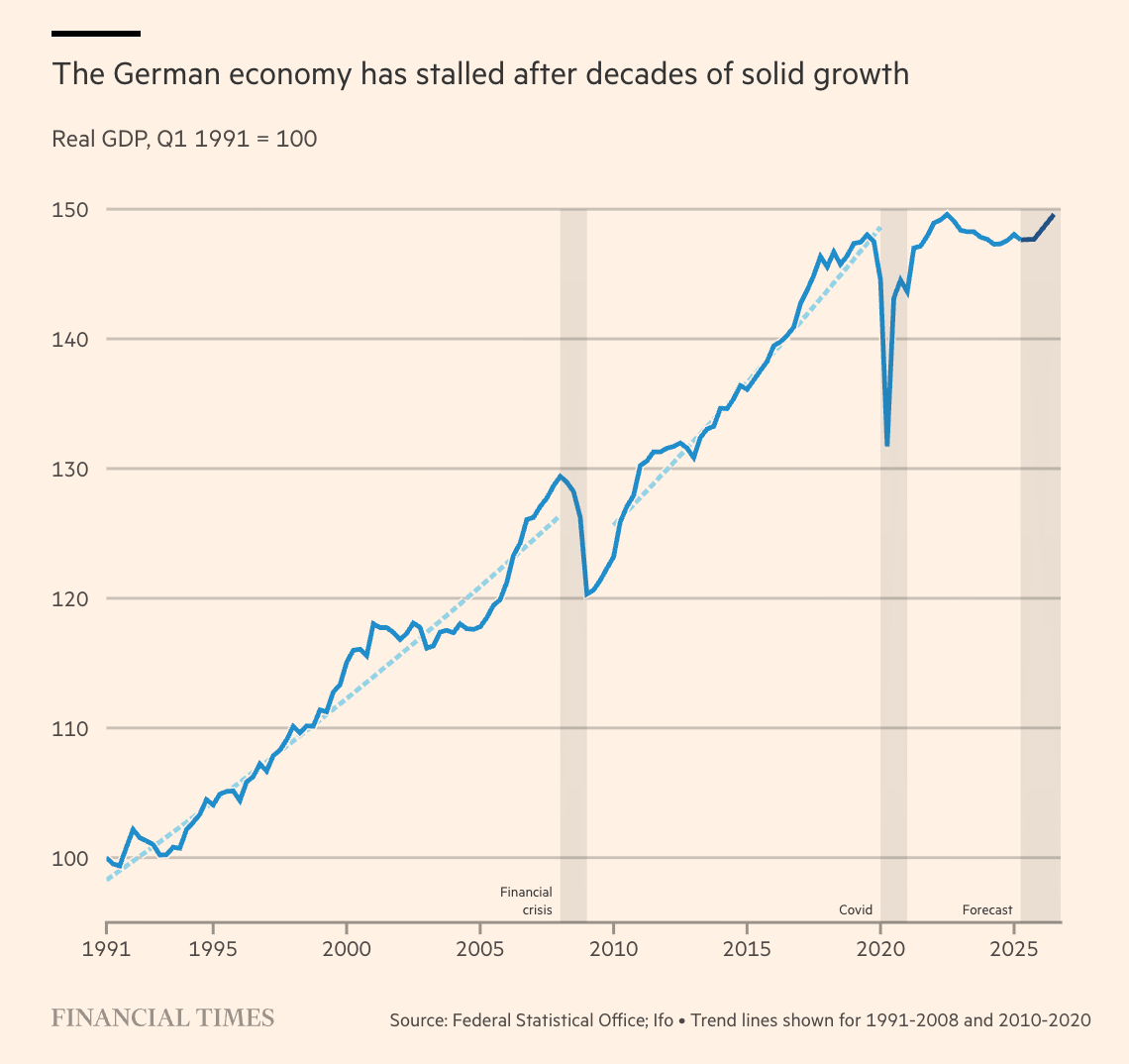
Source: FT
Stories of industrial failure and fearsome Chinese competition multiply.
We are in the kind of mood when different sorts of bad news resonate with each other, compounding and overlaying each other. The result is a sense of profound malaise, made worse by the threat of even worse things to come.
What happens if Trump really pulls out of NATO? What if, the second China shock and the decline in German industrial production, are just the beginning?
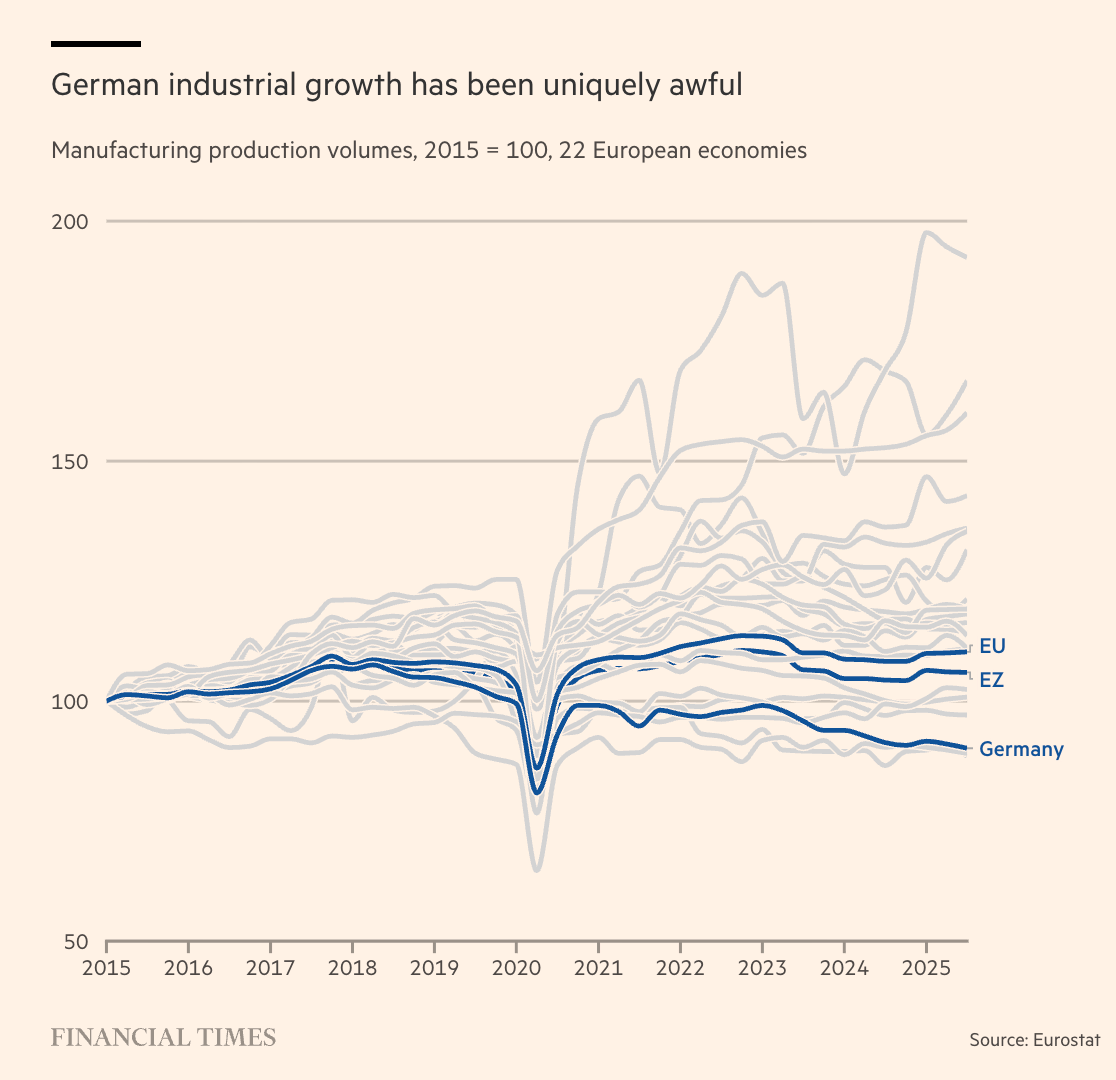
Source: FT
What if, Germany in the 2020s really is the “sick man of Europe?” And what if, on the back of that crisis, the far-right AfD continues its march towards the front of German politics? How does German democracy function, if the far-right commands one third of the electorate?
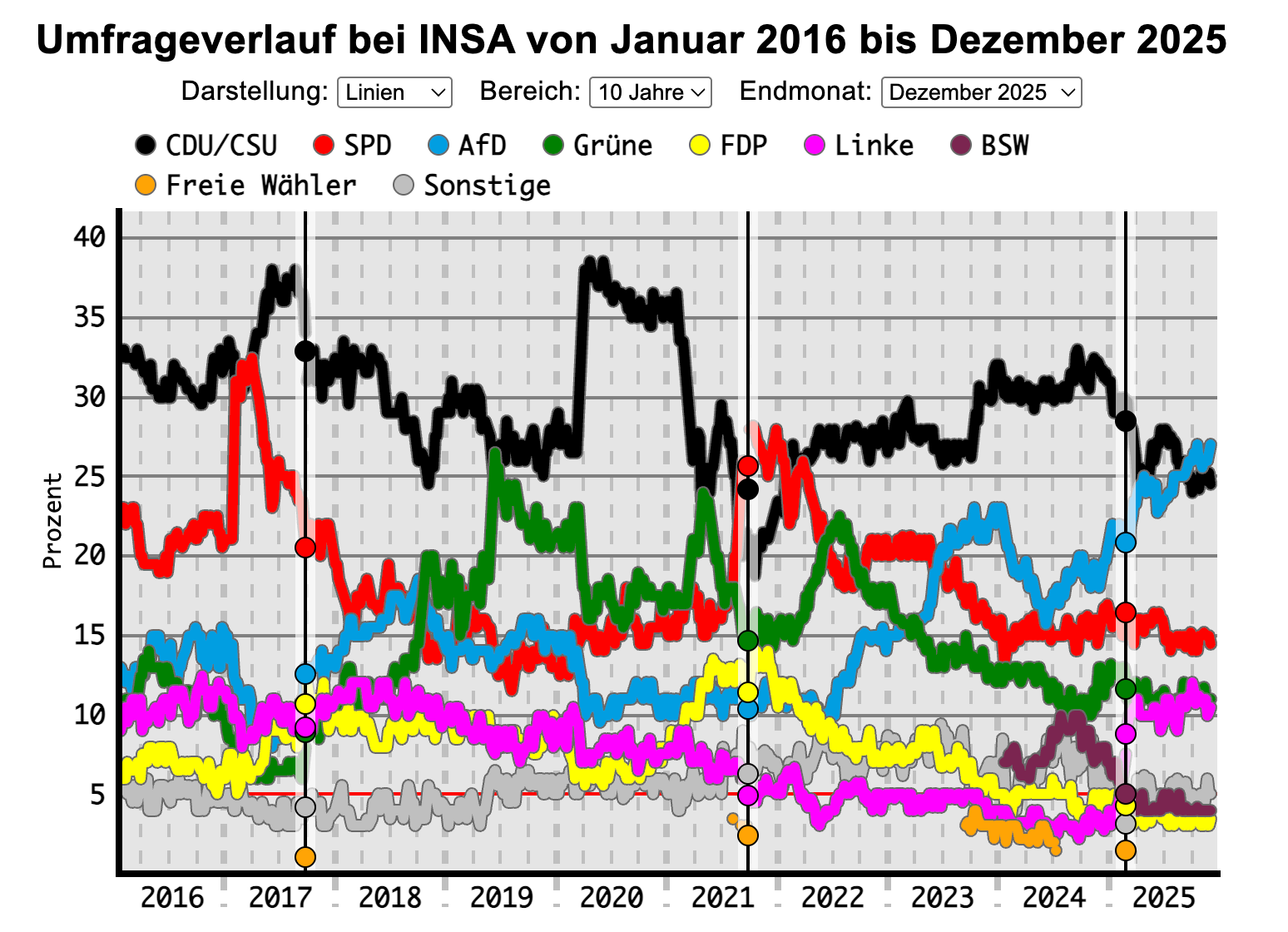
Source: Dawum
One thing that is distinctive about the AfD’s electorate is that they are profoundly pessimistic not just about their own personal circumstances, but about the outlook for German society as a whole. Back in 2023 62 percent of AfD voters said that they saw Germany headed towards a major crisis that could be resolved only through “regime change” (system change, Systemwechsel). Then, they were the polar opposite of voters for the Green party. Two years later, the apocalyptic tone of much media coverage is making the arguments of the AfD for them.
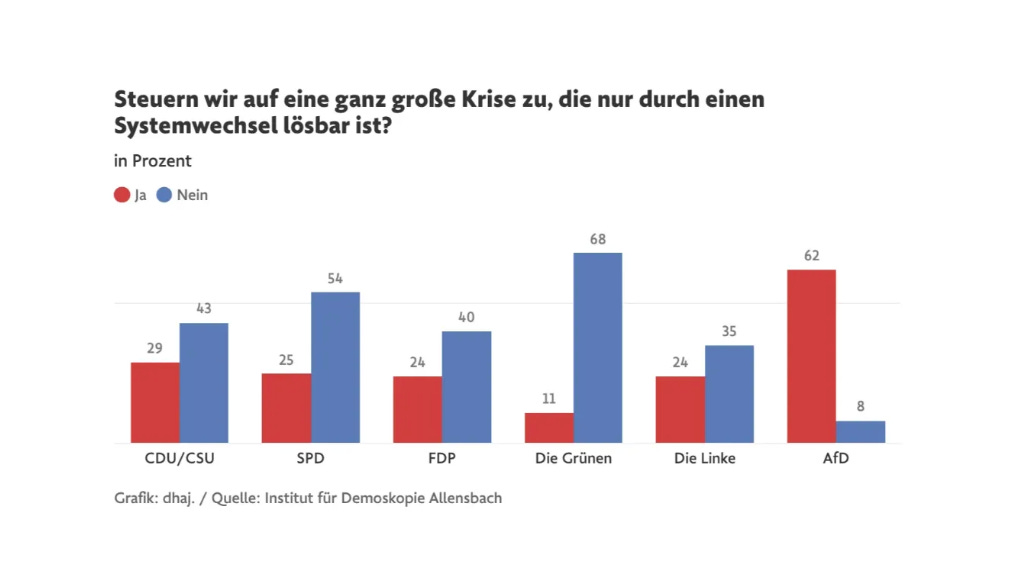
Source: Chartbook 235
In the pages of the FT, the sense of an economic downward slide is summed up with the question: “Can anything halt the decline of German industry?”
The mood is one of polygloom - a heterogeneous complex, defying summation by a single causal logic, menacing, a whole that is worse than the sum of the parts. Any bit of bad news, whether it is about trains, VW, crime, a collapsed bridge or the national soccer team compounds the general sense of malaise.
I was first struck by this agglomerative tendency a few summers ago on a TV panel about what was then called the “inflation shock”. A few years later, despite a change of government and the promise of huge public investment to come, the sense of a compounding crisis and impending doom, is, if anything, even more intense.
This isn’t the first such moment of collective gloom in Germany’s recent history. In the
...This excerpt is provided for preview purposes. Full article content is available on the original publication.