RKUL: Time Well Spent, 10/10/2025

Cerberus, pencil drawing, O. Khan, age 8.
Your time is finite. Your phone and the internet stand ready to help you squander it. Here are my latest picks for spending it well instead. Feel free to add more in the comments.
Books, what else?
In the USA, the month of October culminates in Halloween, a binge of packaged candy and costumed children trudging along sidewalks that rarely see that much foot traffic in a month. In the past, Halloween celebrated life’s macabre dimension, and children were widely welcomed to dress up as the monsters and demons that might otherwise haunt their nightmares. Indeed the holiday’s cultural origins run far deeper than its current sanitized incarnation; it was on this day that people believed the barriers between the spirit and material worlds were at their annual low. Even though American Halloween’s proximate origins lie in the pagan Celtic festival of Samhain or the Christian All Hallows’ Eve, the holiday’s genesis is more primal. In Mexico, Samhain’s equivalent is Día de Muertos, the multi-day ritual that drove the plot of the 2017 film Coco. And such celebrations are not exclusive to the broader historical lineage of the West. Think of China’s Hungry Ghost Festival, when the spirits rise from the lower realm. Almost all human societies share a widespread belief that at times and places the spirit world draws closer to our own material reality.
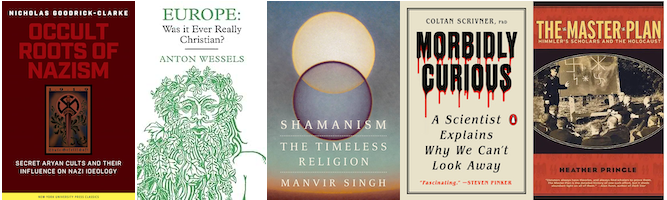
In Shamanism: The Timeless Religion, UC Davis anthropology professor Manvir Singh takes the commonalities across these cultural traditions as evidence of deep cognitive instincts fashioned by our evolutionary history. These intuitions, which reliably form the foundation of culture and folkways, reflect a preexistent universal shamanic mind. Singh argues that shamanism is present in all societies, even if we conventionally differentiate it from the “higher religions,” especially Judaism, Christianity and Islam. In fact, SIngh argues that this earlier religious sensibility suffuses the monotheistic faiths as well.
Shamans are classically associated with small tribal societies scattered across Siberia, with their origins going back to the Pleistocene. So what does an Ice-Age soothsayer have to do with the God of Abraham? Perhaps more than you think. The Hebrew Bible is not just a religious text; it is also an ethnographic record of a tribal people. In the first centuries after their arrival in the Holy Land, the Bible records that the Israelites were led and advised
...This excerpt is provided for preview purposes. Full article content is available on the original publication.