Six Mahabharatas in Search of Modernity: My end was in my beginning
Deep Dives
Explore related topics with these Wikipedia articles, rewritten for enjoyable reading:
-
Theses on the Philosophy of History
11 min read
The article references Walter Benjamin and 'the fable of the angel of history,' which comes from Benjamin's famous essay. This work fundamentally critiques progressive linear history, directly supporting the article's central argument about alternative ways of understanding time.
-
Faiz Ahmad Faiz
18 min read
The article quotes Faiz's Urdu poetry about the 'night of sorrow' and identifies him as part of the Partition Generation poets who used 'dawn' as a metaphor for freedom. Understanding this major progressive Urdu poet enriches the article's discussion of redemptive history-telling.
Since this is the last Slow Reads post of 2025, please accept it and the full voiceover as my gift to all readers.
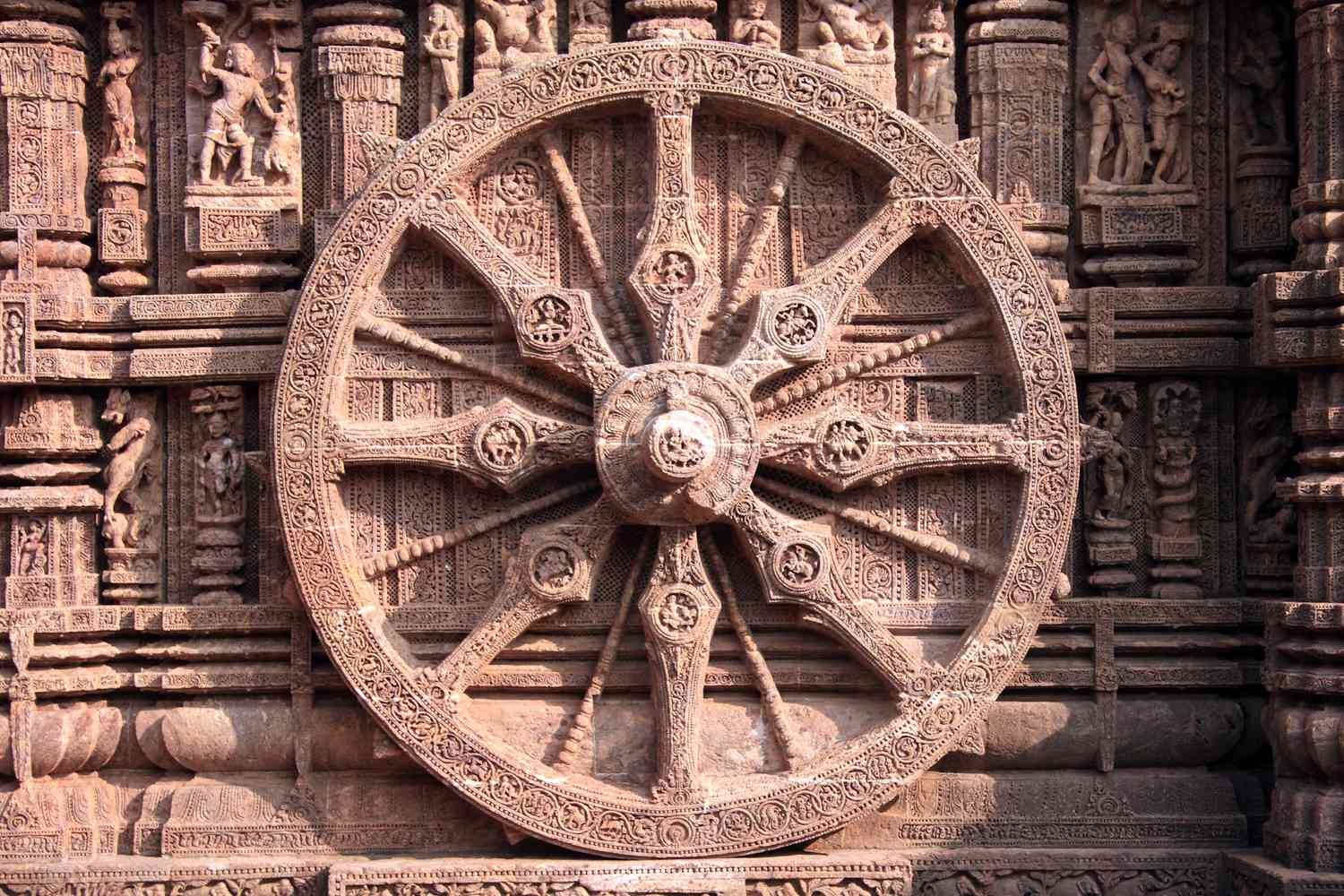
We have come to the end of our introduction to the artful complex story-telling - or is it just history? - of the Mahabharata. What does it tell us about the wheel of time?
Let us first review the fantastic journey through history, myth and ethics this epic gave us.
First, I narrated to you the whole story of this enormous epic poem in 30 minutes.
Then I highlighted the stories of six characters and six historical reinterpretations of the Mahabharata. Like Pirandello’s plays, both the characters and the history writers were in search of the modernity of the Mahabharata.
And now in this final episode of the Slow Read program, we will reflect on how this old epic story might be a resource to reimagine how we tell history in our times.
Olga Tokarczuk said in her Nobel Lecture that we all need literature - and I, and I suspect Pani Olga, see history as a form of literature, and literature as a window onto history. We need it because we are suffering an epidemic of cheap, trashy, abusive narratives in spin, fake news, celebrity culture, politics and, of course, AI. “In a word,” Tokarczuk said, “we lack new ways of telling the story of the world.”
That leaves us both a task of invention, as in the modernist tradition, and rediscovery of the past through dialogue with the neglected potent stories of other cultures and times. The stories we find in that eclectic art form known as history.
My hope for this slow read has been to introduce you to, or to deepen your connection with, one of the most potent, rich and, in the West, neglected, stories of the world of literature, the Mahabharata.
As I look at my enormous 10 volume edition sitting on my shelf, I know that I have merely dipped into this tradition. But no one is testing me or testing you. If the slow read has opened one curious eye about this ‘greatest story ever told’, then I am satisfied.
The redemptive power of old stories
The theme of this post was prefigured, long before I conceived or wrote it, in one of my first posts of
...This excerpt is provided for preview purposes. Full article content is available on the original publication.