Start Demagoguing Against the Old
Deep Dives
Explore related topics with these Wikipedia articles, rewritten for enjoyable reading:
-
Social Security (United States)
13 min read
The article centers on public opinion about Social Security and its fiscal sustainability. Understanding the program's history, funding mechanism (payroll taxes), trust fund structure, and projected insolvency dates would give readers crucial context for evaluating the author's claims about intergenerational wealth transfer.
-
Social Security debate in the United States
15 min read
The article explicitly references George W. Bush's 2005 push to reform Social Security. This historical case study of the last major attempt at entitlement reform provides concrete context for understanding the political dynamics the author describes.
A Democratic organization called Deciding to Win just put out a report on the popularity of dozens of policy positions. Their charts look like this.
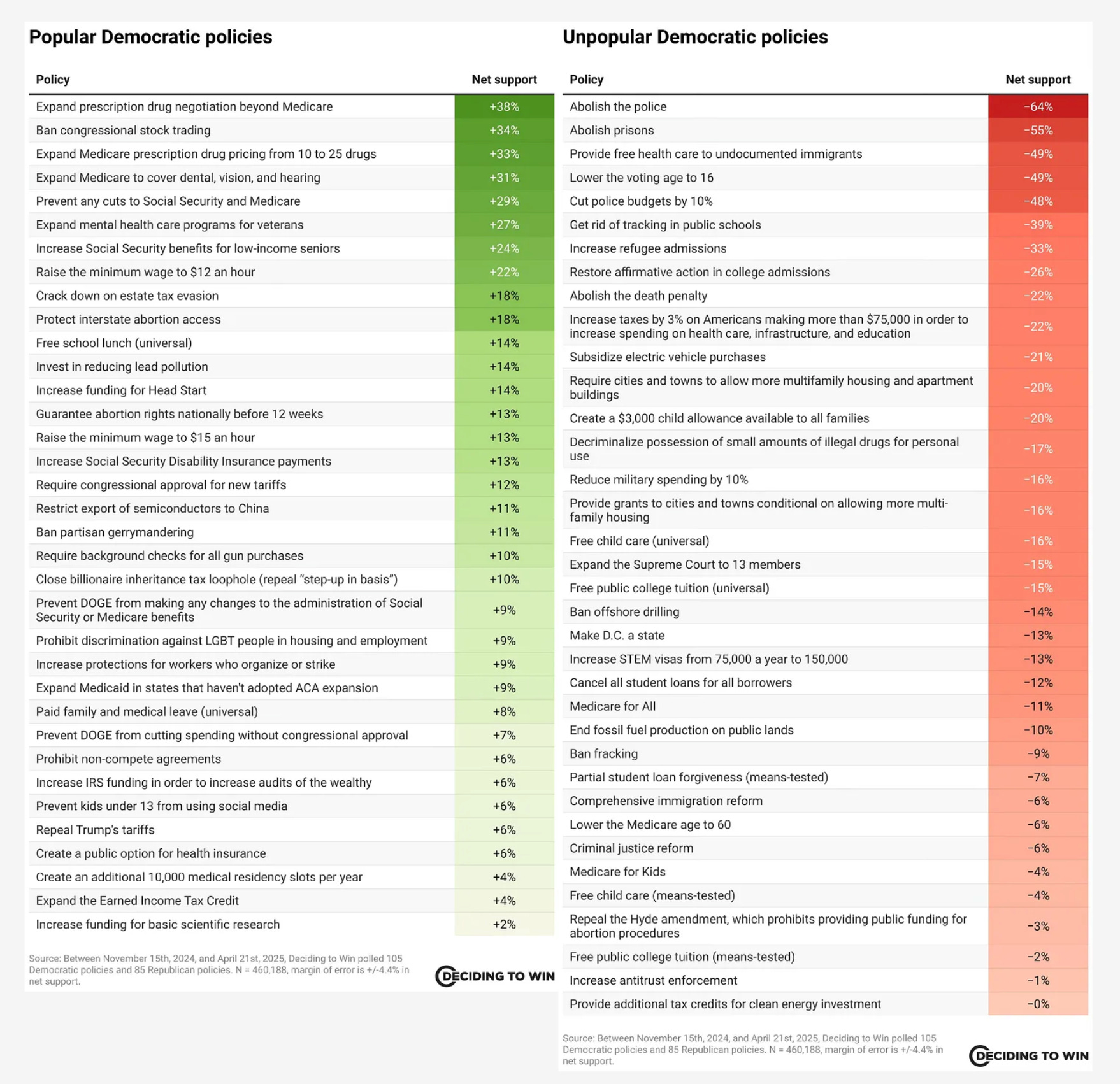
There’s not much surprising here for anyone who has looked at polling data before. People love Social Security and Medicare, dislike immigration, and want tough on crime policies. They are skeptical of government creating new programs (free universal childcare, free public college), but like ideas that raise costs and burdens on employers in favor of workers (increase minimum wage, protect the right to strike).
One thing the chart captures is just how much people support giveaways to old people over other forms of welfare. Below is a figure that simply extracts policies that are aimed either at helping the old or helping families with young children.
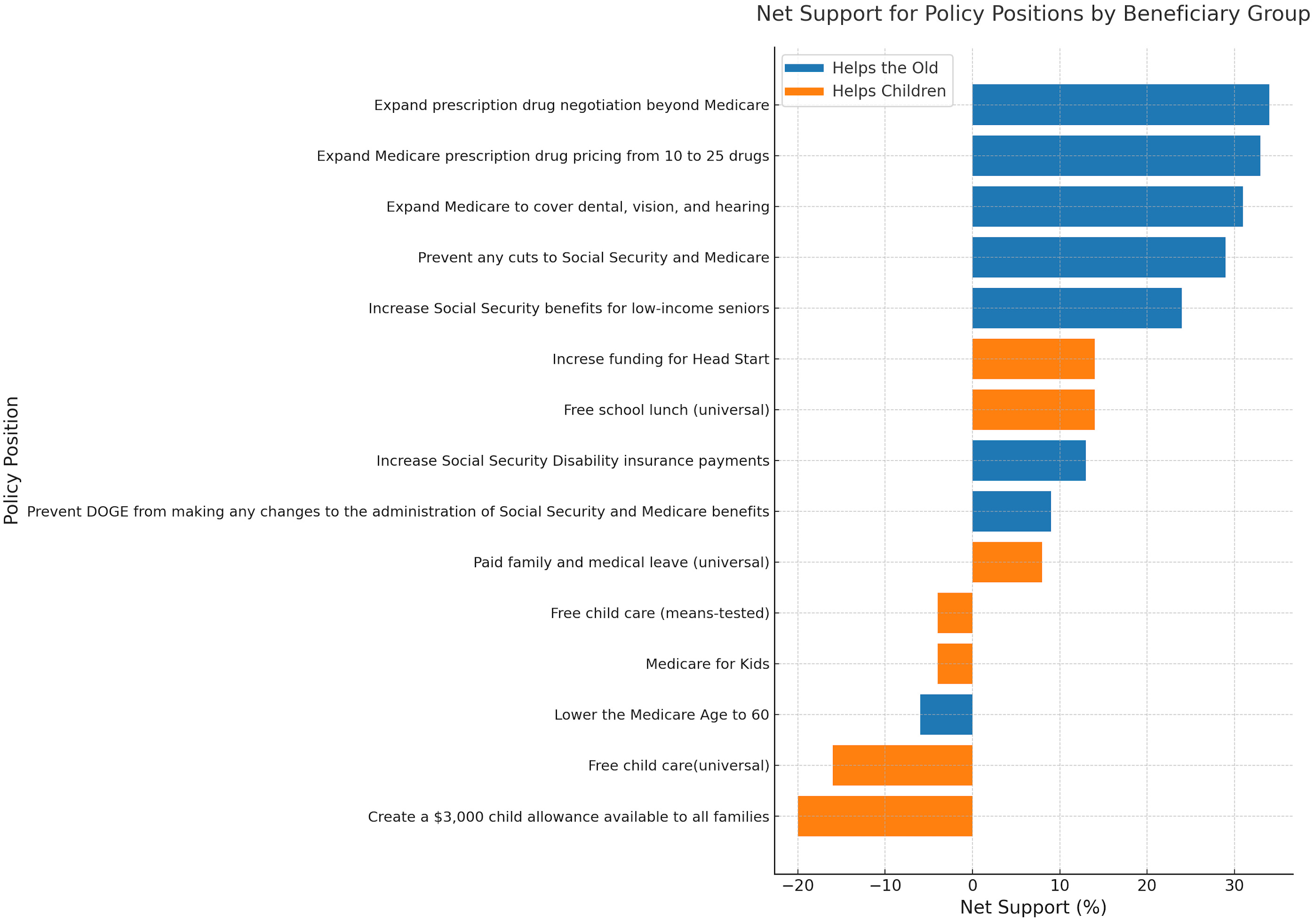
When studying public opinion, it’s shocking how much Americans love Social Security and Medicare. They’re not overwhelmingly in favor of all government programs that give people money or services. Rather, it is these two in particular that seem special.
Looking within the category of policies meant to help families with children, we see a major inclination towards a status quo bias. More funding for Head Start (+14) and making school lunches universal (+14) are both popular, while free child care and a $3,000 bonus to all families are not. The best explanation here seems to be that Head Start and school lunches already exist, while the other policies don’t, so spending more money on what we’re doing strikes people as better than starting a new kind of entitlement. Yet increasing Social Security payments and Medicare coverage poll better than anything involving helping families with children.
Is there something else going on here? Maybe people consider Social Security and Medicare to be things you pay for already, so there’s some illusion where you don’t lose any extra money by funding them further. This of course is stupid, but maybe people do in fact think this way. Hypothetically, if there was a universal child care program that people paid into, maybe the public would support increasing funding for it as much as they do for Social Security and Medicare. Yet Medicare for kids is -4, compared to expanding Medicare to cover dental, vision, and hearing at +31, and increasing Social Security payments to low-income seniors is at +24. Is there some kind of psychological trick here where expanding Medicare to
...This excerpt is provided for preview purposes. Full article content is available on the original publication.