10 scraps from my notebook
Deep Dives
Explore related topics with these Wikipedia articles, rewritten for enjoyable reading:
-
Mass-Observation
10 min read
The author directly references Mass Observation as inspiration for documenting life through notebooks and diaries. This 1930s British social research project that recruited everyday citizens to record their daily lives is a fascinating historical precedent for the author's approach to journaling through uncertain times.
-
Blade Runner
17 min read
Central to the author's metaphor about modern digital interaction - comparing every online exchange to the Blade Runner empathy test for detecting replicants. The fictional test's design philosophy and what it measures about humanity provides rich context for understanding the author's anxiety about AI-generated content.
-
Over the Garden Wall
13 min read
The author dedicates significant discussion to this animated miniseries as an example of exceptional art that 'shouldn't exist.' Understanding the show's unique production history, autumnal New England aesthetic, and Patrick McHale's creative vision illuminates the author's broader point about how process shapes exceptional work.
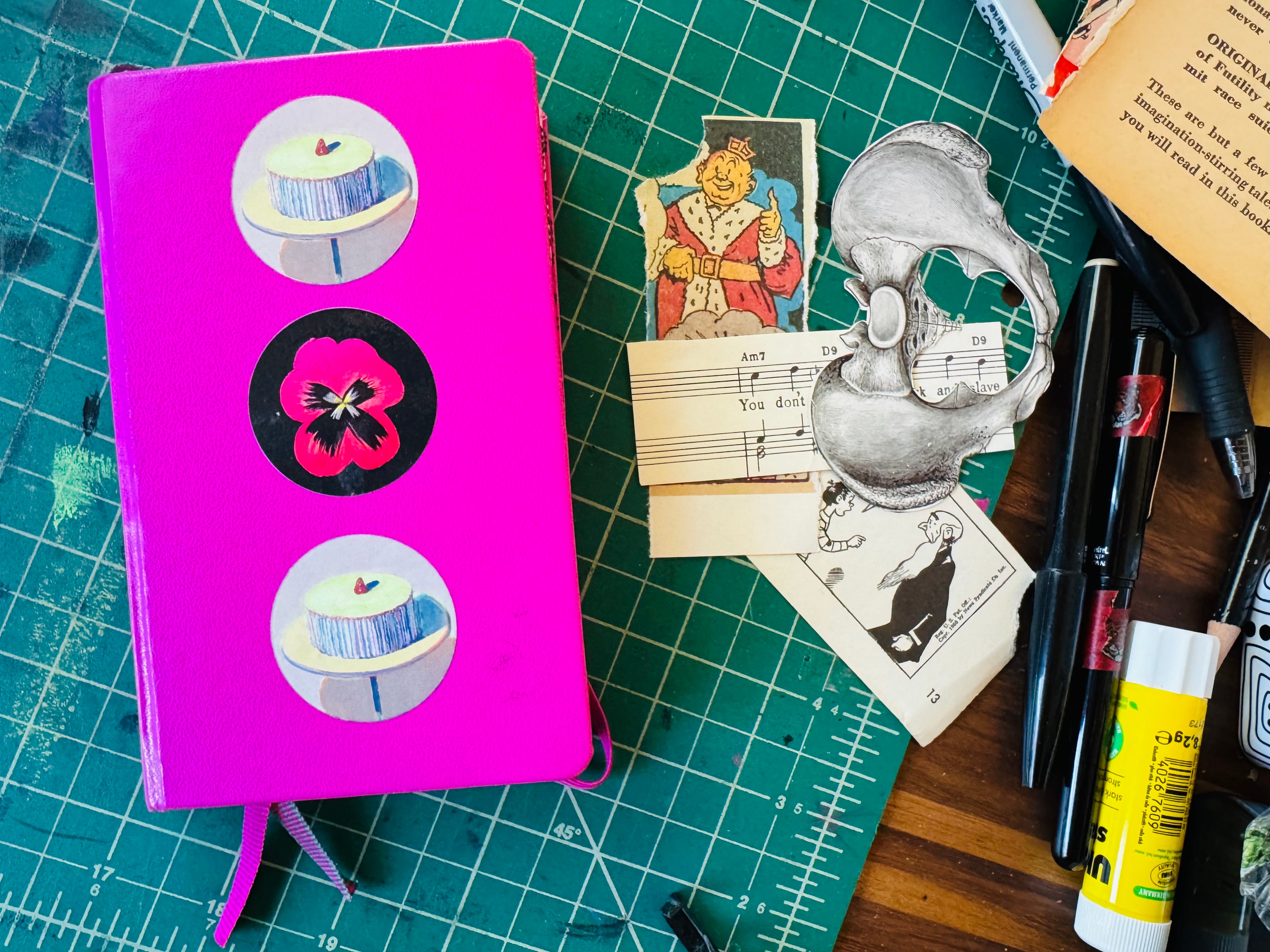
Hey y’all,
On Tuesday I usually take an idea or two from my pocket notebook and expand them into a long letter. But today I have all these half-baked ideas in my notebooks I want to riff on, so instead of one long letter, here are 10 little letters!
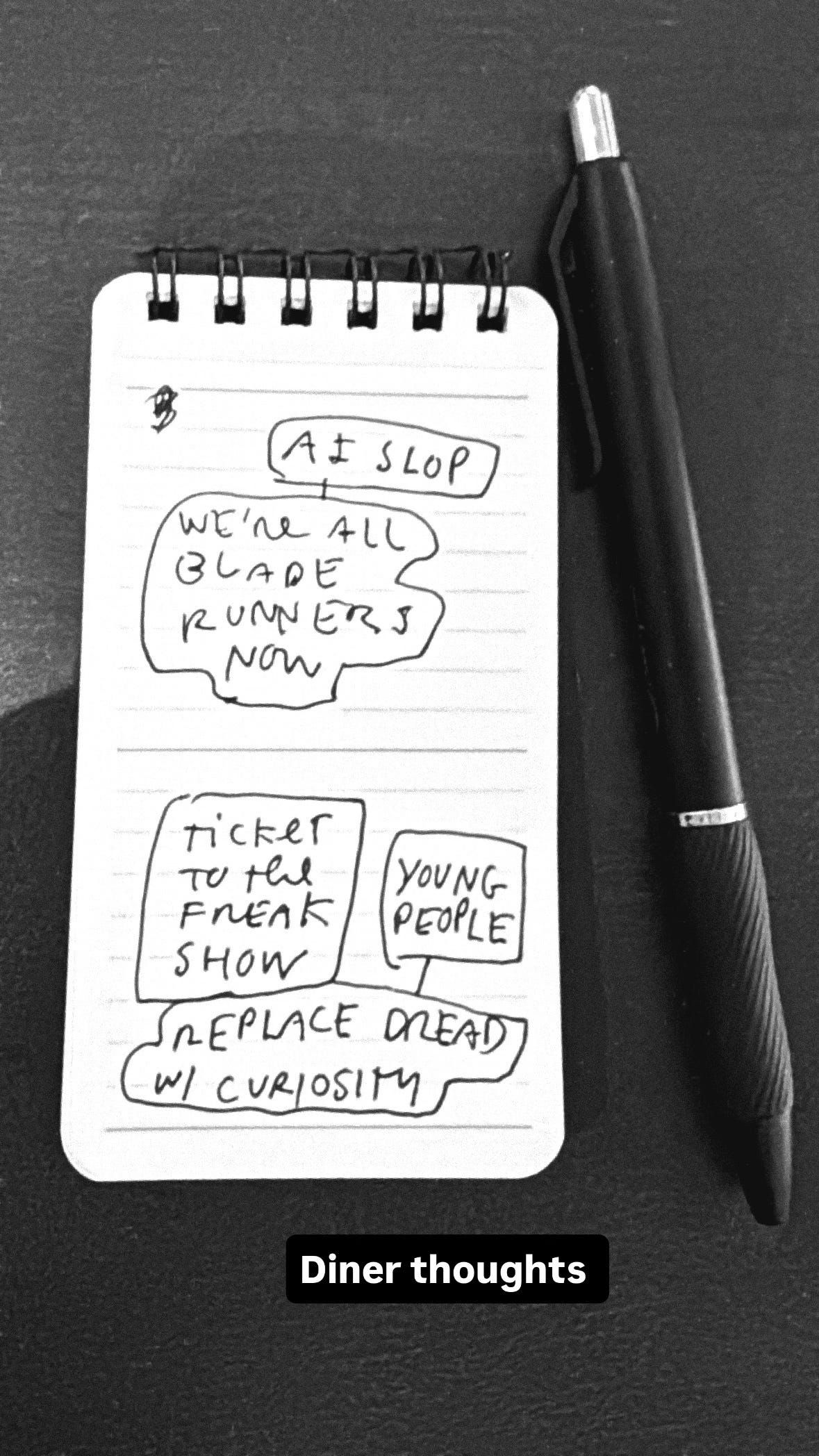
1. In Blade Runner, the LAPD administers a Voight-Kampff test to determine whether or not someone is a replicant. It occurred to me recently that we are living in a world now where every new email — heck, almost every interaction online — is a Voight-Kampff test. Is this a human I’m talking to or a bot? Is this real or is this AI slop? It’s exhausting being a Blade Runner! I doubt most people can handle it. Many will try to fight it, many will disengage as much as possible, and many of us, I fear, will become Cypher with the steak in The Matrix: Willing to be blissfully ignorant of what’s real and what isn’t, giving ourselves over to the machine, and letting the slop float us merrily down the stream...
2. What if you replaced your dread with curiosity? is a question I keep asking myself when I get too worried about the future. George Carlin said, “When you’re born you get a ticket to the freak show. When you’re born in America, you get a front row seat. And some of us have notebooks.” I’ve been thinking a lot about Mass Observation and diaries and how, if I must live through this time, I might as well take notes. How I get myself out of bed down here in the belly of the beast most days: I say, Well, let’s see what kind of crazy shit happens today. It won’t work for everyone, but it’s what’s working for me.
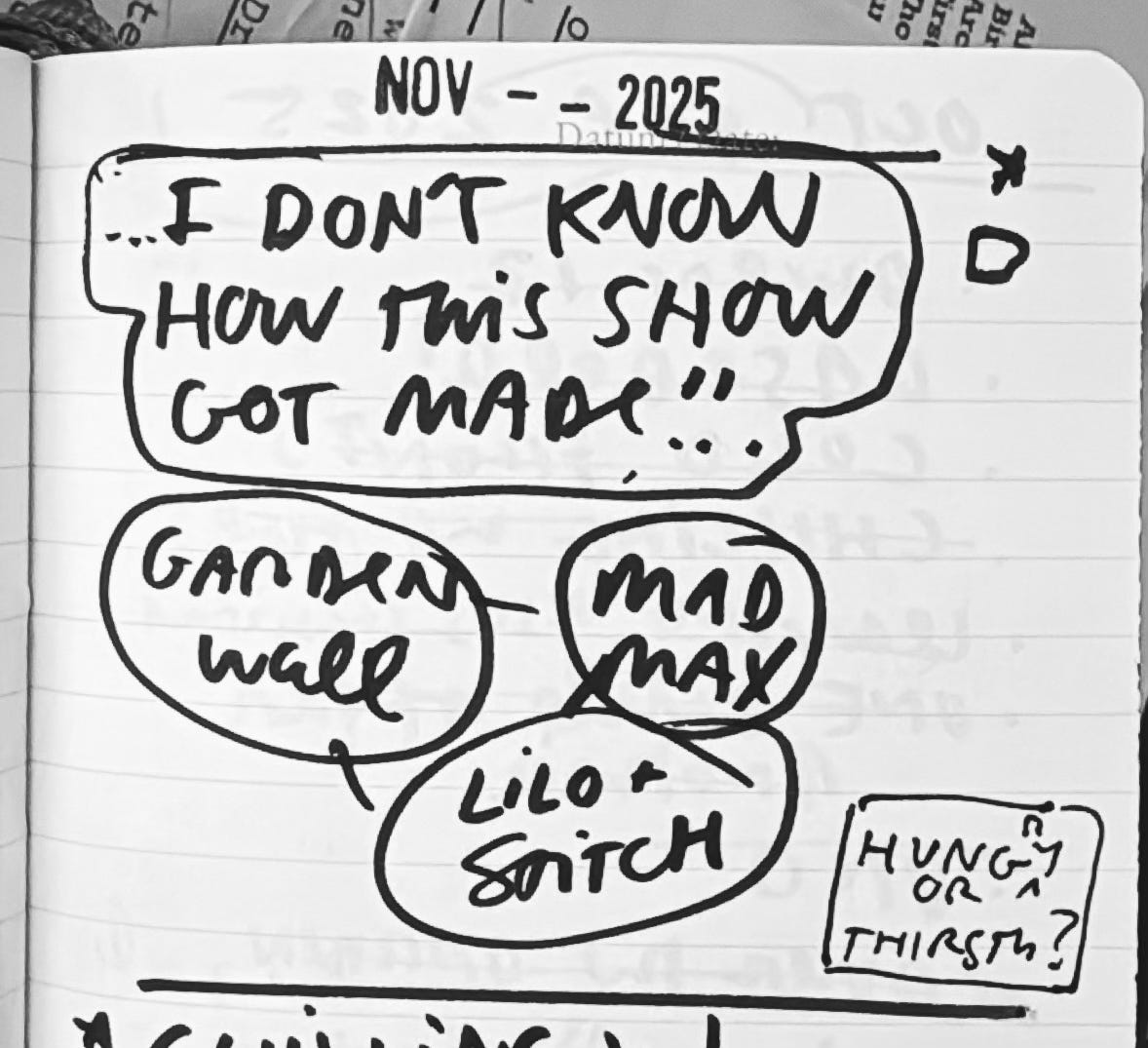
3. The book Art of Over the Garden Wall begins with this quote from art director Nick Cross: “I don’t know how this show got made.” I think that phrase — How did this even get made? — lets you know that you’re experiencing something that deviates from the average. AI is, of course, about averaging large amounts of data, and to quote Harvey Pekar, “Average is dumb.” I’m out here looking for what isn’t average.
If you look into it, the process is often what makes a piece of art exceptionally good…
...This excerpt is provided for preview purposes. Full article content is available on the original publication.