‘Xinjiang policy is correct, scientific, and effective’ — Xi
Last week, I wrote that “there is no TikTok deal, no matter what Trump says.” On September 25, Trump signed an executive order approving a TikTok deal and declaring that the “divestiture outlined in the Framework Agreement…resolves the national security concerns.”
But here’s the thing: No one seems to have seen the text of any actual agreement on divestiture. And if I were making decisions in Beijing about TikTok, I would just keep stringing Trump along, exacting concessions, without committing to anything in black and white.
It’s very clear who really, really wants a TikTok deal, and it’s not anyone in China.
Which does not mean that some kind of China-U.S. trade deal is not coming. All the signs are there, judging by recent media stories, for example that the Chinese premier has signaled “a desire for stable U.S. relations,” and that U.S. and Chinese officials have agreed“to step up communications ahead of possible Trump-Xi summit.”
Update: The well-informed people at research firm Trivium believe the terms of the deal are already clear and that it will go ahead, (and that the terms “very much tilts in Beijing’s favor”).
—Jeremy Goldkorn
This is The China Week, a succinct summary and analysis of news from the People’s Republic Please take out a paying subscription to receive all full newsletters and access to the archive.
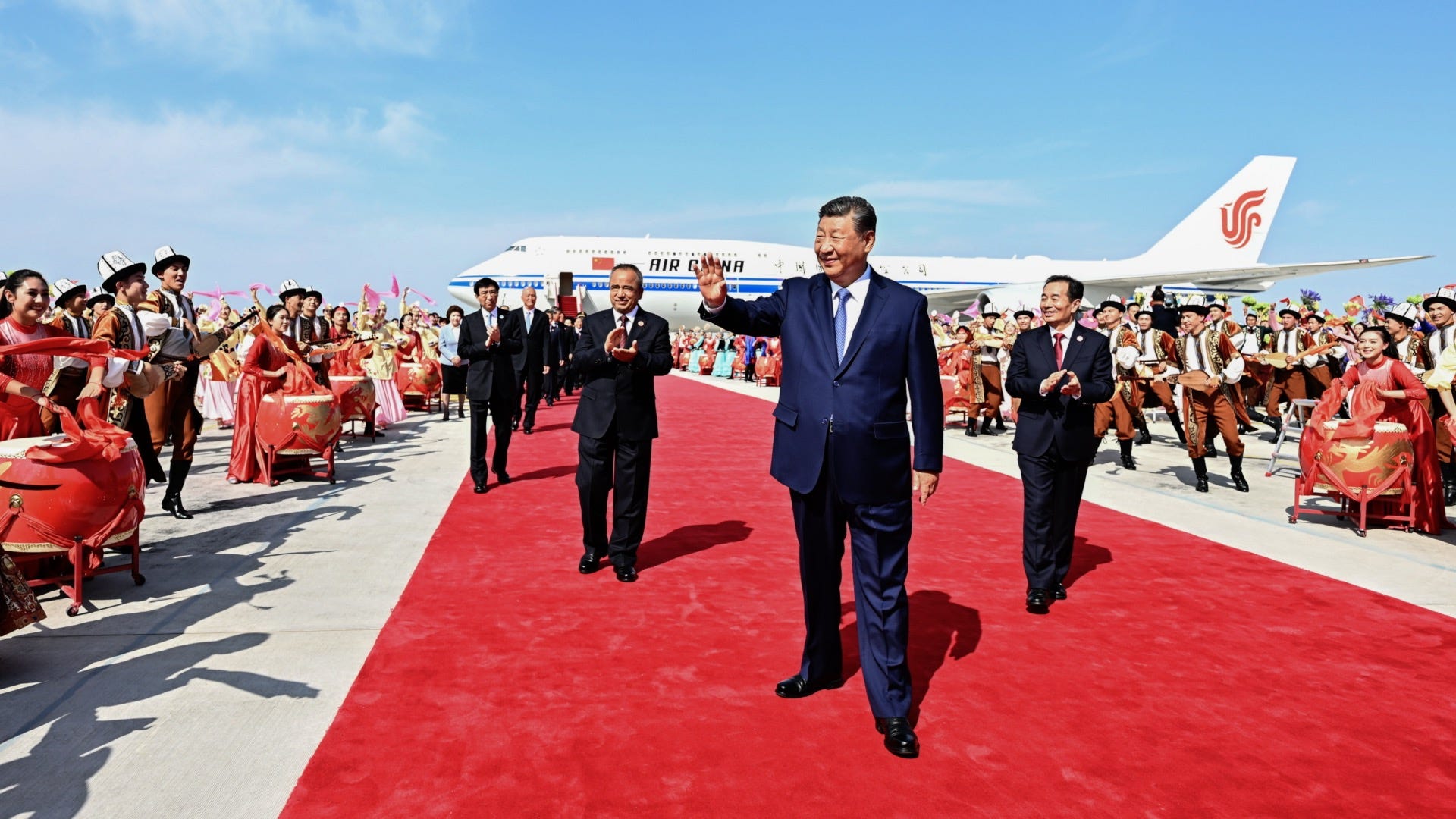
The ‘policy is correct, scientific, and effective’
Xi Jinping’s victory tour of Xinjiang
Xi Jinping and a group of senior Communist Party leaders visited Xinjiang from September 23 to 24 to celebrate the 70th anniversary of the founding of the Xinjiang Uyghur Autonomous Region (XUAR).
Xi was greeted at the airport of the provincial capital Ürümqi like an emperor by hundreds of dancers, musicians, and colorfully clothed people singing “Welcome, welcome, warmly welcome!” (Watch the video to get a sense of the spectacle.) This was a stark contrast to Xi’s reception on April 30, 2014, the final day of a four day visit to Xinjiang, when a bomb-and-knife attack killed 3 people, and injured 79 others in Ürümqi.
That attack was one of a spate of violent incidents in 2013 and 2014 blamed on Uyghur separatists. The attacks were the justification for Beijing’s subsequent campaign of mass detention and
...This excerpt is provided for preview purposes. Full article content is available on the original publication.