#27 An 800-Year-Old Divide: Why Portugal's North and South Vote Differently
If you look at an electoral map of Portugal from almost any election since its transition to democracy, you’ll see that the country is neatly split in two. The North consistently lends its support to parties on the right, while the South, particularly the plains of the Alentejo region, has long been a stronghold for the left, most notably the Communist Party.
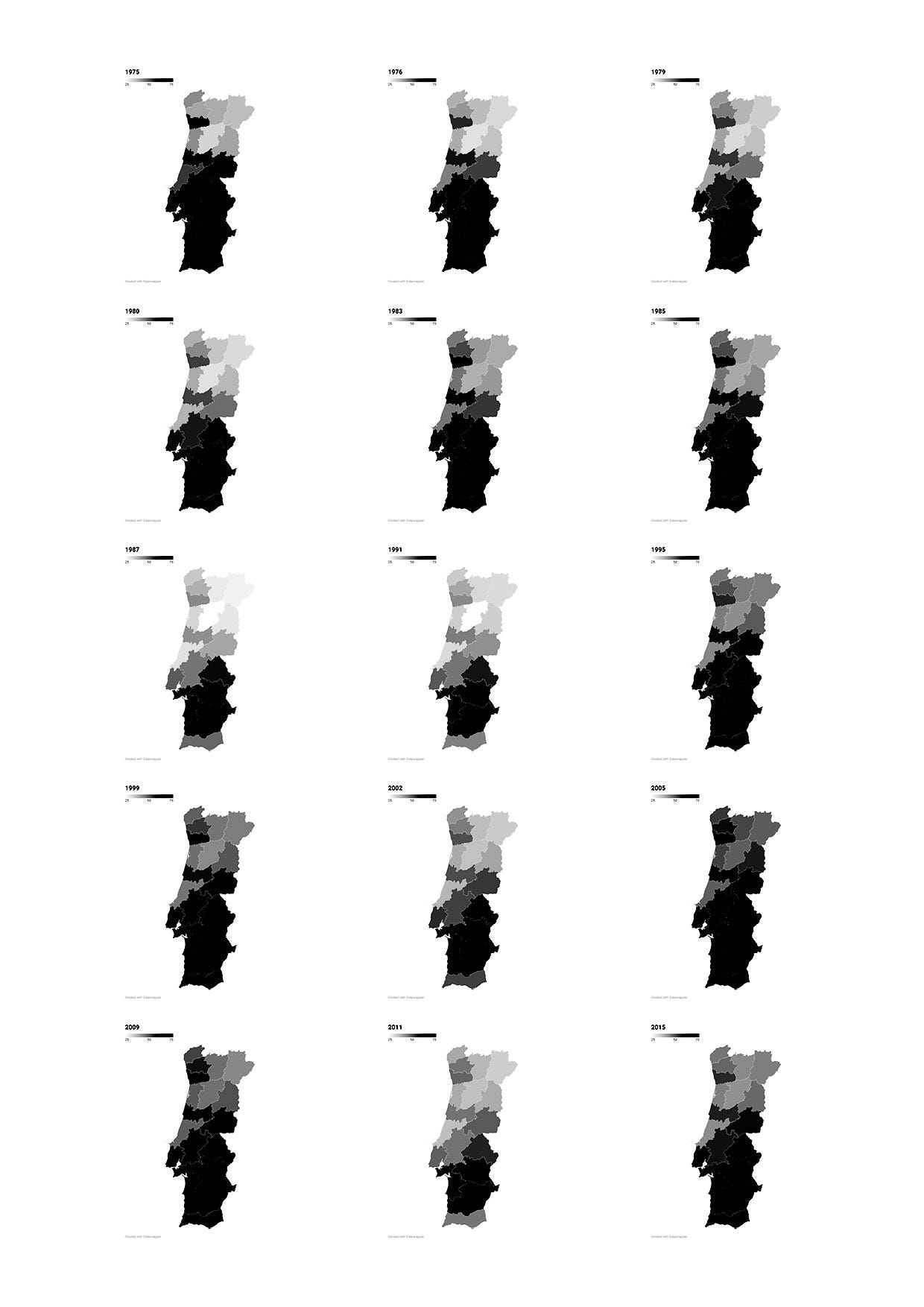
This isn't a recent phenomenon. It’s possible to trace this divide to roots that stretch back not just decades, but centuries. Because I am a big fan of “deep roots” explanations, here’s an attempt at explaining this using data I have been collecting for a a chapter (preprint available here) in a new edited volume on the far right in Portugal. For this we have to travel back to the very formation of Portugal itself—to the Christian Reconquista in the 13th century.
It All Comes Down to Land
The political divide, at its heart, is a story about land. In a society that was agricultural for most of its history, the way land was owned and distributed shaped everything from social structure to religious belief, and ultimately, to politics. The narrative can begin with the long retreat of the Muslim Kingdoms. The Christian reconquest of what is now Portugal happened in two very different ways.
In the North, the process was slow and gradual. Lands were retaken piece by piece over a long period. This resulted in a fragmented but relatively fair distribution of land. The territory was divided among small farmers who owned the plots they worked. This created a society of small independent landowners—a class that was, by nature, more conservative, traditional, and deeply connected to the Catholic Church.
The story South of the Tagus River was different. The reconquest here was swift and decisive. Vast territories were captured in a short amount of time. To reward the powerful nobles and religious military orders who led the fight, the Crown granted them enormous estates, known as latifúndios. This created a fundamentally unequal society. A small, powerful elite owned nearly all the land, while a huge population of peasants worked the fields with no hope of ownership. On the eve of the 1974 Carnation Revolution, this disparity was still staggering: in the Alentejo, just
...This excerpt is provided for preview purposes. Full article content is available on the original publication.