'A Film for All Times'
Welcome! Glad you could join us. This is another Sunday edition of the Animation Obsessive newsletter, and here’s the plan:
1. Why The Mitten is so special.
2. Animation newsbits.
With that, let’s go!
1. “Planned inconveniences”
You can do a lot with a few puppets and a camera — even a phone camera.
By itself, that stuff is enough to shoot a stop-motion film. Adding lights and a set gives you plenty for a full production. The rest is about thinking and execution and soul. Nail those, even on a low-key project, and you might have a gem.
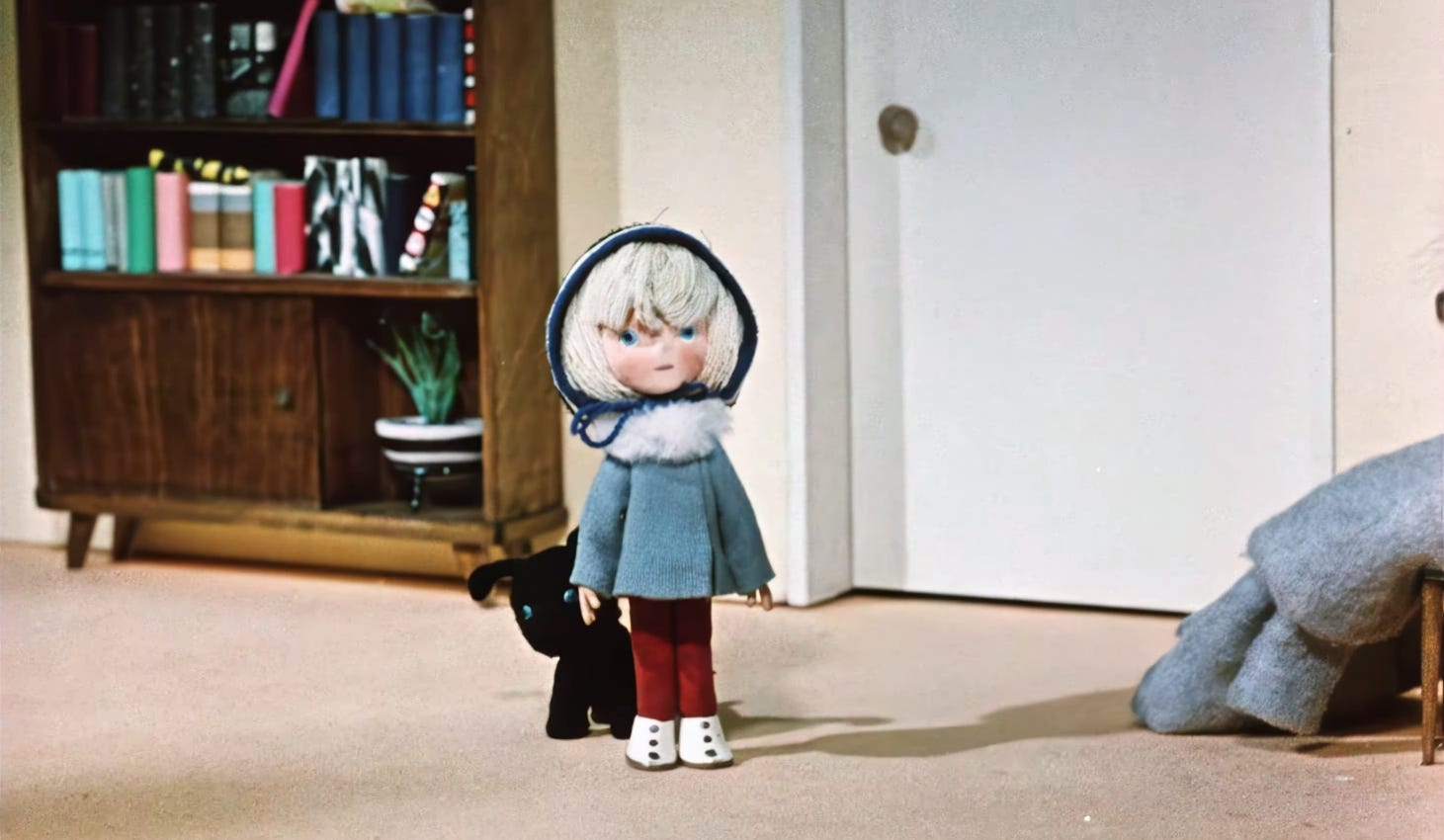
The Mitten (1967) is that kind of piece. It’s a quiet story about a girl who wants a dog — and it doesn’t feel like it aims to be a classic. Even when her red mitten comes to life as a knit puppy, maybe by magic, the film keeps its ambitions small. It’s gentle, and a little funny and a little sad, and then it’s over.
The effect of it sneaks up on you, though. There’s a human warmth here, in everything, that can’t be faked. It became a classic without flash, without pretense. Yuri Norstein (Hedgehog in the Fog) isn’t a huge fan of stop-motion puppets, but he called The Mitten a “deafening discovery” and “a film for all times.”1
Norstein himself animated on The Mitten. It was made behind the Iron Curtain — in the USSR, at the venerable Soyuzmultfilm. A few years later, key members of its team would bring the Cheburashka series to life. But this one stood out in their filmographies even then. The Mitten’s designer, Leonid Shvartsman, remembered an encounter with a colleague once the short was finished:
After the screening of our Mitten, when we were leaving the cinema hall, my childhood friend Lyova Milchin rushed to me and simply kissed me. We both were moved to tears.2
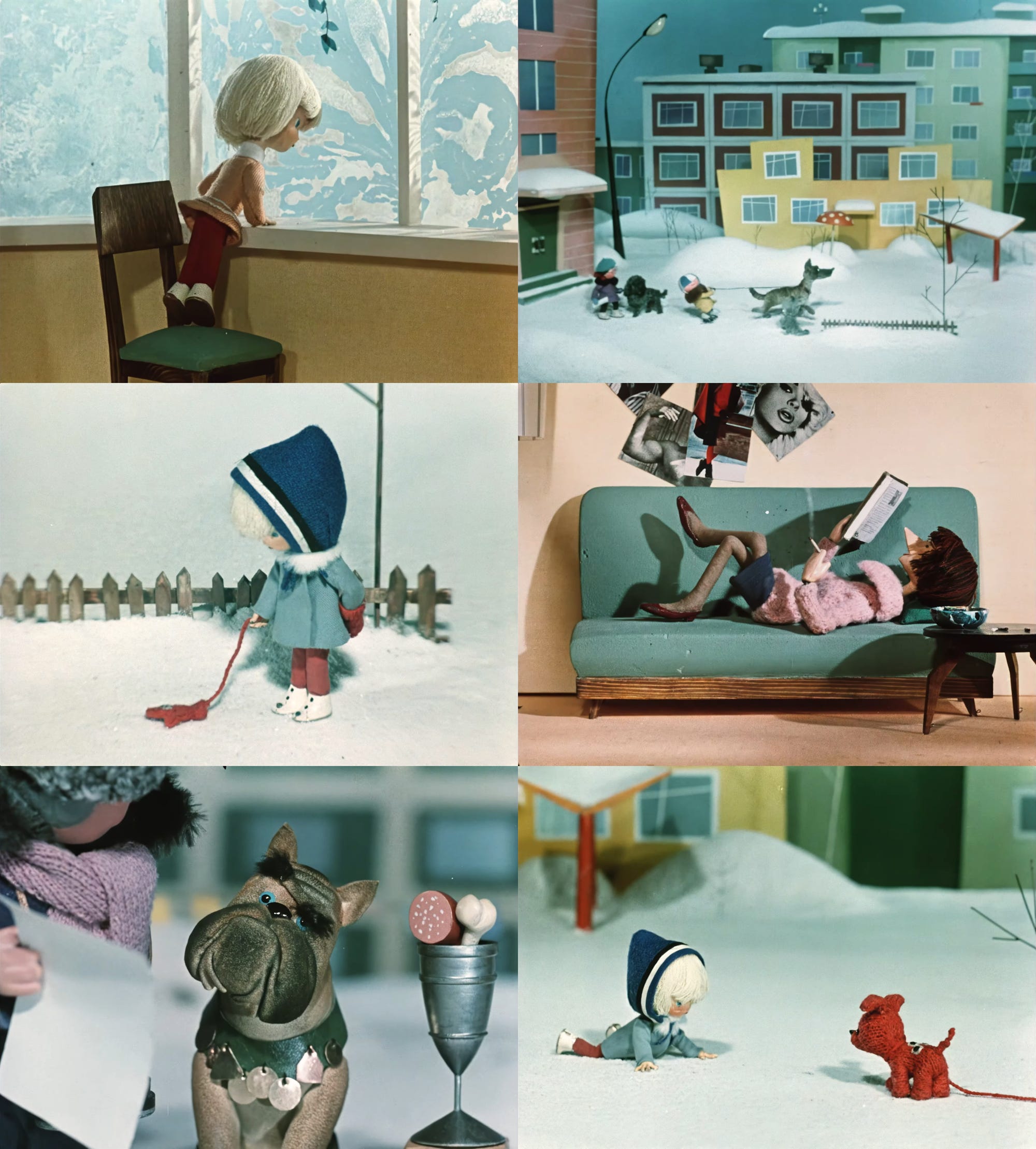
The things that make The Mitten special operate on a subtle level. They’re tiny, but, together, they have power.
Director Roman Kachanov had been working with puppets at Soyuzmultfilm since the late ‘50s. He’d come to realize something in that time. To make an animated character feel alive on the screen, you need unnecessary things. Moving straight from A to B isn’t
...This excerpt is provided for preview purposes. Full article content is available on the original publication.